
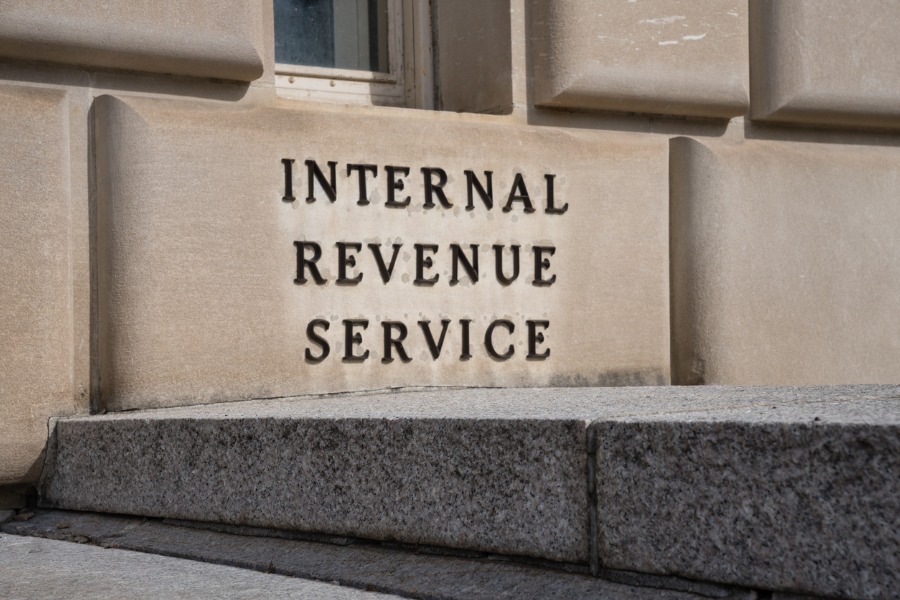
A new law signed by President Donald Trump is set to change how the Internal Revenue Service communicates with taxpayers when it believes they have made math or clerical errors on their returns.
The Internal Revenue Service Math and Taxpayer Help Act, also known as H.R. 998 or the IRS MATH Act, directs the agency to spell out exactly what it is changing on a return and give taxpayers clearer notice of their right to push back.
Each year, the IRS sends out millions of so-called math error notices proposing adjustments to tax liabilities, often without explaining the rationale or warning that failing to respond within 60 days effectively concedes the change.
Under the law approved on Monday, math error notices must identify the line item being altered, spell out the mathematical change, and explain why the IRS believes the original figure was wrong.
The IRS will also have to tell taxpayers that they generally have 60 days from the date of the notice to request that the adjustment be abated or otherwise challenge the agency’s position.
In a statement, House Ways and Means Committee chair Jason Smith said President Trump is “ensuring taxpayers get the fair treatment they deserve,” adding that “Americans must show the math on their tax return, and now the IRS has to as well.”
A pilot program will test out sending a subset of math error notices by certified or registered mail, with a report to Congress on whether that step improves delivery and taxpayer response rates.
A one-page explainer from the commitee says the certified-mail option is meant to underscore the significance of the notice and provide another safeguard for taxpayers.
A precursor of the new law was advanced by Senators Elizabeth Warren and Bill Cassidy, who framed their bipartisan bill as an affirmation of basic consumer protection.
“No one should have to spend a fortune on a lawyer or hours trying to figure out what went wrong on their taxes when the IRS already knows the answer,” Warren said in a statement announcing the bill in October.
Cassidy said the goal is to ensure that “if the IRS thinks someone made an honest mistake filing their taxes, the IRS should be clear about how to correct it.”
The bill cleared both chambers of Congress unanimously. In the House, it was championed by Representative Randy Feenstra and Representative Brad Schneider, supported by an endorsement from the American Institute of CPAs.

The regulator has been trying to reach imprisoned advisor Jason Foley.

Magnificent 7 firm continues to ‘right size’ workforce in AI-related shift also seen in financial services.

Healthcare inflation running at 280% of CPI - and most HSA holders are sitting in cash.

New research identifies the practice habits driving 121% DC AUM growth among the industry's top performers.

Six-figure losses, social media lures and impostor schemes are draining older clients’ savings, report to Congress shows.
Knighthead Life entered the market with a competitive MYGA. A strong launch earned advisor confidence and paved the way for FIAs.
As AI makes financial information more accessible than ever, Lana Hock explains why human judgment, trust, and empathy remain the qualities clients value most in a financial advisor

