
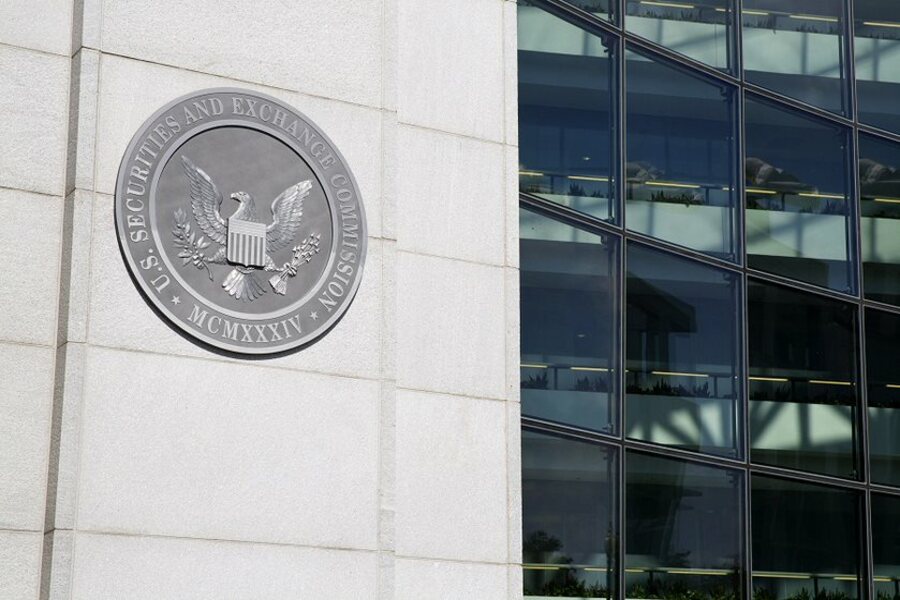
The SEC sent a warning to newly registered investment advisors’ this week to bolster their compliance programs, improve disclosures and tighten up adherence to the agency’s new marketing rule.
The Securities and Exchange Commission found in recent examinations that some advisors had inadequate compliance policies and procedures, according to a risk alert released Monday. For instance, advisors used off-the-shelf compliance programs that were not tailored to their businesses or risks, or they outsourced compliance functions without assessing how third parties were performing them. They also allocated too few resources to compliance.
The SEC also found disclosure omissions and inaccuracies regarding fees and compensation, business or operations, services offered to clients, disciplinary information, websites and social media accounts and conflicts of interest.
In addition, the agency cited ways that new advisors were failing to comply with the marketing rule that went into force last November.
“The staff observed adviser marketing materials that appeared to contain false or misleading information, including inaccurate information about advisory personnel professional experience or credentials, third-party rankings and performance,” the alert states. “Advisers were also unable to substantiate certain factual claims.”
The SEC has been zeroing in on newly registered advisors since 2013, the alert says. The number of RIAs has increased more than 20% over the last five years, now totaling about 15,000.
“If you’re a new registrant, you should be looking at this list and asking how much applies to me,” said Adam Kanter, a partner at Mayer Brown. “Start fixing it now. It’s never too late.”
The SEC has been tightening up on the grace period it allows new RIAs before examining them, said Craig Moreshead, a partner in regulatory compliance at ACA Group, a compliance consulting firm. It used to take two years before a new advisor was examined. The SEC is now knocking on the door in about six to eight months.
“The SEC has been smart to do high-touch exams for new registrants to get a sense of the business model and risks,” Moreshead said.
New advisors should heed the risk alert and be prepared for the SEC’s initial probe.
“An RIA’s goal with that first exam is for a strong first impression,” Moreshead said. “You’re more likely to fall off the regulator’s radar and avoid being prioritized for another exam. It can be painful to deal with multiple exams in a short period of time.”
Although the risk alert targets new RIAs, the admonition about the marketing rule applies to even the most veteran firm, as the entire sector is trying to adjust to the new regulation.
“The staff’s observations regarding deficiencies involving marketing provides pointers on where the examination staff will be focused on as they review the state of compliance with the marketing rule,” Ken Joseph, head of Americas compliance and regulatory consulting at Kroll, said in a statement.
One concern the SEC has highlighted in a previous risk alert and reiterated on Monday was whether advisors are substantiating claims in their advertising with hard evidence.
“The SEC is putting that to a test,” Kanter said.
The other general deficiencies in Monday’s alert have cropped up for years.
“These are old hobby horses of the SEC,” Kanter said. “They come up over and over again during exams, and particularly for new registrants.”
Correction: The number of new RIAs since 2013 was incorrectly stated in a previous version of this story.

A Nationwide survey finds 47% of GLP-1 users have never discussed the drugs’ financial impact with an advisor, even as many dip into savings.

The hundreds of millions of dollars from a sale of Inspired Healthcare properties does not mean an immediate windfall for investors.

Its SEC filings said one thing - a congressional probe said another.

Sham agreements allegedly padded revenue by 345%.

"Most pre-retirees are uncomfortable making key retirement income decisions without an advisor's help," said Chris Bailey of Cerulli.
Knighthead Life entered the market with a competitive MYGA. A strong launch earned advisor confidence and paved the way for FIAs.
As AI makes financial information more accessible than ever, Lana Hock explains why human judgment, trust, and empathy remain the qualities clients value most in a financial advisor

