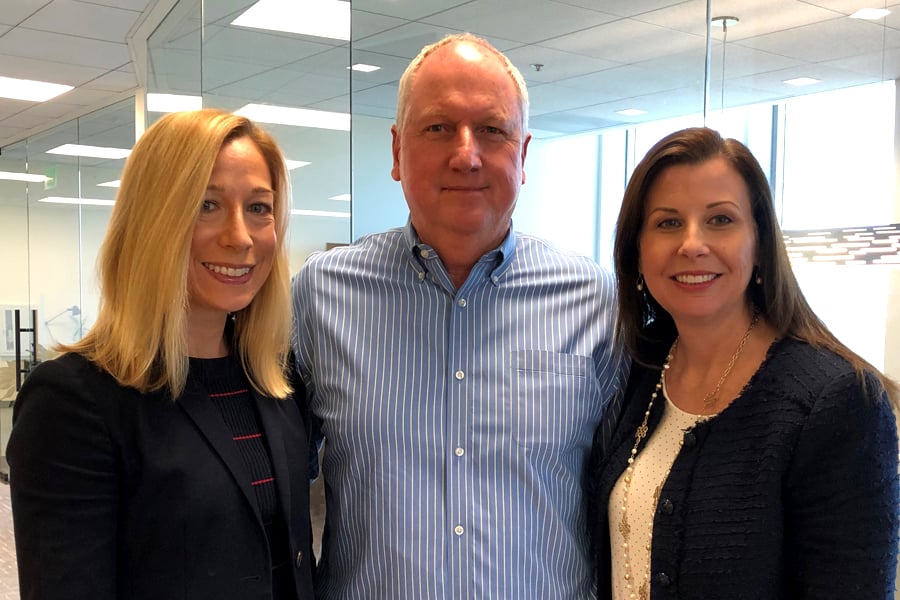
When Kara Duckworth and her father Michael Duckworth began looking for ways to
transition ownership of the advisory firm they launched in 1998, selling the business was not what they had in mind.
"We were originally going to do an internal succession plan to buy my dad out," said Ms. Duckworth, who was one of three minority owners of Duckworth Wealth Advisors.
Under the guidance of David DeVoe, managing director of the investment bank DeVoe & Co., the Duckworths realized a more efficient succession strategy was to sell the $165 million firm to pay Mr. Duckworth for his majority stake.
While the idea of joining a larger firm and working under new owners didn't initially appeal to Ms. Duckworth or the two other minority owners of the Newport Beach, Calif.-based advisory firm, it began to make sense once they considered the big-picture perspective.
"We decided that an internal succession meant more time spent on things like operations and compliance, which is not what we love doing," Ms. Duckworth said. "But we wanted to continue to grow the firm, and I was basically running the business and handling all the HR and compliance."
Consolidation in the registered investment advisory space has occurring at a
record pace for the past several years, so it's old hat to the most active buyers. But for sellers, especially those who didn't set out to sell, the process can be a bit daunting.
"It was surprising what an emotional process it was," Ms. Duckworth said. "It was sort of like professionally dating and trying to see if there's a cultural fit. We had to decide who the people are we want to work with every day."
The entire process, which started with a list of seven potential buyers that was quickly narrowed to three, took about 18 months and resulted in a sale to Mercer Advisors in April 2017, at a time when Mercer was just ramping up its acquisition activity.
Mr. Duckworth, now 72, stayed on for a year after the sale to help with the transition.
Two years after the sale, with Ms. Duckworth and her fellow minority partners Elizabeth deSousa and Mark Doran now Mercer employees, nerves have settled and everyone seems happy with the deal.
During the transition, which included relocating to a nearby Mercer office, all 40 clients made the move over to Mercer.
"Our clients were a little nervous about the change at first, because change is hard and we were going from a small boutique wealth management firm to a much larger entity, but they trusted us," Ms. Duckworth said. "Since then, we've had very positive feedback."
Mercer Advisors, which has 41 offices and 11,000 clients, and manages $16 billion, has acquired 21 registered investment advisers over the past few years. But the Duckworth deal was among its first.
"There are a variety of reasons for selling a firm, but the principal reason is most smaller firms hate those middle- and back-office chores, and that burden is getting bigger every year," said Mercer CEO Dave Barton.
"As firms grow, all the middle- and back-office functions grow, too, so advisers find themselves serving clients 50% of the time instead of 100% of the time like they want to," Mr. Barton said. "That's the No. 1 reason I hear for selling a firm."
Ms. Duckworth admits that removing the business operations part of running an advisory firm was an attractive piece of the deal but said she has also enjoyed other benefits of scale.
"We saw a huge depth of resources, including an internal law firm that prepares
estate planning documents, a tax practice and an investment committee," she said. "Mercer's size gives them access to investment options we didn't have as a smaller RIA."
With the move behind her now, Ms. Duckworth is still impressed with the amount of work and due diligence it involved, which is something she said advisers should be prepared for if they're thinking of selling as a succession plan.
"You definitely need to have time allocated to the due diligence process, and make sure your financial information and client data have been carefully analyzed before starting the process," she said. "Think about what you want your career to look like in the future because you need to be so sure this is the right thing, so you can be all in."