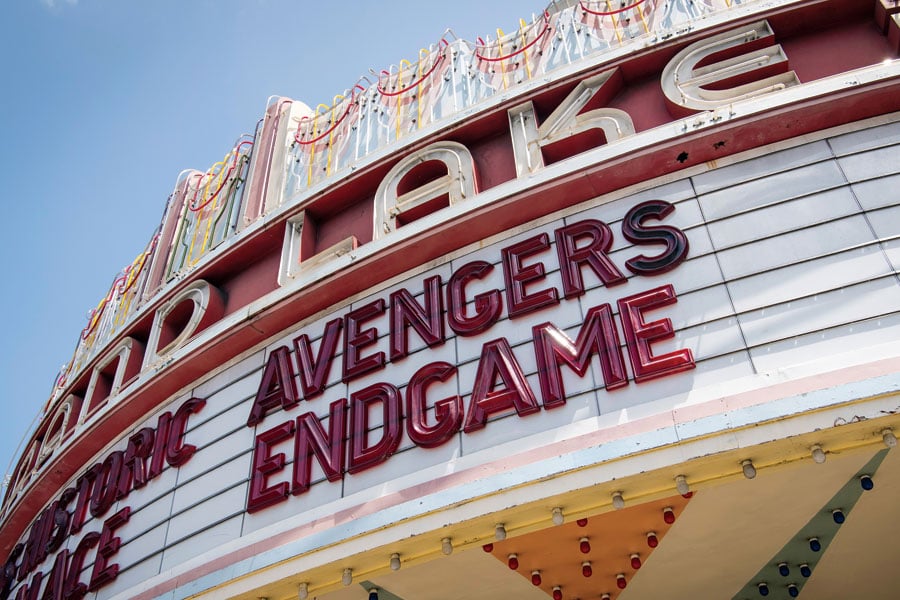
"Avatar" and "Avengers: Endgame" sit as No. 1 and No. 2 on the list of the
highest-grossing movies in history (not adjusted for inflation). Both have taken in over $2.5 billion dollars at the box office. "Endgame" became
China's highest-grossing foreign film of all time just a few weeks after being released this spring. Both movies paint a scene for the future of business for financial advisers, and the tagline is this: Experience is important.
"Endgame" was the culmination of years of build-up: "Iron Man" in 2008 was the first of 22 movies that led up to, well, the end of the game in the Marvel Cinematic Universe — and the end of a huge planning phase for Disney. Nothing is or ever has come close to what Disney has built in the MCU.
Technology has been deemed a disrupter to the traditional movie theater and cinematic experience. Companies like HBO, Netflix and Hulu are delivering top-notch productions to your home. Movie theaters have responded by adding restaurants, full-service bars and comfy recliners. Despite tech disruptions, certain types of movie experiences like that of the MCU are thriving.
"Avatar" created a similar movie theater experience to the MCU. The 2009 movie was filmed in a way viewers had never seen. It was made for the new types of 3D and specialty screens around the country — something you couldn't replicate at home.
(More: James Cameron's family office looks at investments through an ESG lens)
Both "Avatar" and "Endgame" cultivated an experience unlike anything else, and consumers responded en masse. Advisers need to adapt to the changing tide toward experience-based
financial planning and create similarly exceptional client experiences.
Tech disruption is a threat to the
financial planning landscape, too. But much like the movie-viewing experience, technology will bring opportunities for advisers to build a greater experience. Michael Kitces, partner and director of planning research at Pinnacle Advisory Group, has spoken and
written on the topic, using disruption in the travel industry as an example.
Travel agents have better businesses today than before the internet disrupted the industry — they have twice the output they did in 2000. The internet didn't end the need for travel agents, it weeded out those stuck in the transactional nature of their business who couldn't adapt to a more experience-based service.
Today, many advisers also are too transactional. A client comes in with a question and the adviser answers it. Or a client is looking for a product and the adviser simply provides the product. For others, their services might be product-based. These types of practices lack an experiential quality.
As technology continues to get better at identifying clients' product and service needs, the value of a transactional type of practice will diminish. High-level niche planning focused on understanding the client's more comprehensive needs, emotional makeup and behavioral tendencies will be key moving forward.
Developing a world-class experience in a financial planning firm also ties into attracting talent. As firms grow and businesses consolidate, finding the best talent to help you grow is crucial. Providing a great workplace experience — and not just compensation — will help firms bring on and retain the next-generation adviser.
The next time you're watching the latest HBO or Netflix show or "Avatar" movie (yes, they have announced
four sequels), think about how each is developing a unique experience. They aren't just delivering entertainment anymore, but a long-term and involved experience.
Jamie Hopkins is director of retirement research and vice president of private client services at Carson Group.