Two weeks after
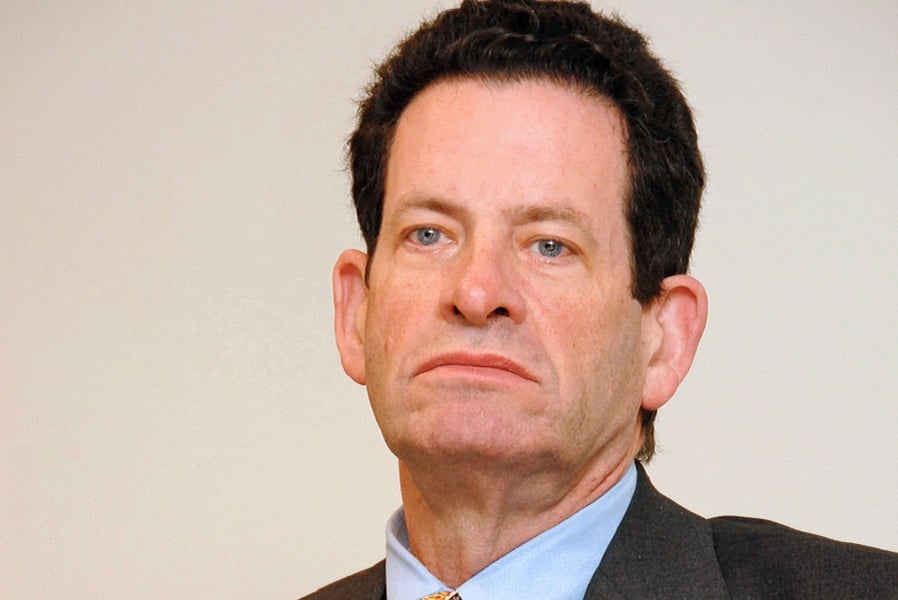
Ken Fisher's infamous comments at the Tiburon CEO Summit took social media by storm the question has evolved from "How could he?" to "How could he still be the company's chairman?"
"For Ken Fisher, it's already too late," said Jeff Gitterman, co-founder and partner of Gitterman Wealth Management.
"If I was his public relations person, I would say you need to put your head on a platter and bring in a woman who is a branding person," Mr. Gitterman added. "He has to step down and put in diversity officer."
The momentum is working hard against Mr. Fisher's Camas, Wash.-based registered investment advisory firm, and crisis management experts say drastic measures are needed.
The latest tally shows more than
$3 billion in client assets pulled from Fisher Investments since the Oct. 8 comments were initially criticized in a video posted on Twitter.
Most of those departing assets are represented by public pension plans and high-profile companies like
Goldman Sachs that are showing their own PR prudence by distancing themselves from Fisher.
But
Fisher Investments, as the nation's second-largest RIA behind Financial Engines Advisors, has over the past few years undertaken an aggressive retail branding campaign and could also be vulnerable on the consumer side.
"I consider Fisher to be one of the most retail visible brands, and this issue has already spread like wildfire," said Kirsten Plonner, crisis management specialist and chief of communications at FiComm Partners.
"We're still talking about Ken Fisher two weeks after the fact, and that shows how widespread the ripple effects are," she added. "This will not be self-contained, because a crisis doesn't just blow over."
Published reports indicate that the firm has hired crisis management firm Edendale Strategies, founded by Tony Freinberg. Mr. Freinberg declined to comment for this story and referred media inquiries to
Fisher Investments, which did not respond to a request for comment for this story.
It doesn't look like Mr. Fisher is planning to step down anytime soon. A representative of the company told Bloomberg News that he's too important to the firm to resign.
Mr. Fisher, 68,
owns at least 75% of the privately held company, according to the most recent Securities and Exchange Commission filing.
Ms. Plonner said Fisher Investments' PR problem was compounded out of the gate by what has been described as an insincere initial apology on social media from Mr. Fisher.
Even a more
formal corporate-level reaction showing Mr. Fisher apologizing to employees and clients of the firm, along with the launching of an internal diversity task force has been viewed as falling short at this point.
"Fisher Investments needs to separate itself from Ken Fisher the best way they can that is definitive and that goes way beyond press releases and talking points," said April Rudin, president of financial services marketing firm The Rudin Group.
"They should move him to a vanity position where he has less direct involvement in the business, which they could turn into a positive by saying they are transitioning to next generation," Ms. Rudin added.
Ms. Rudin also said the company could change its name and rebrand itself into separate retail and institutional businesses.
"They should consider changing the name, because they will suffer from [internet searches] forever," she said. "Instead of just making overtures and small moves, they need to make some definitive moves."
Ms. Plonner agrees that big moves are needed to get a handle on the crisis at Fisher Investments, but she doesn't believe Ken Fisher will necessarily have to step down.
"There are ways they can exit out of this without Ken Fisher leaving, it just depends on how they're thinking about it and how they're approaching it," she said. "A crisis never goes away, even when you're successfully out of it there will always be that memory, even decades later."
Ms. Plonner said Fisher Investments needs to first find a way to "gain control of the narrative."
She cited as an example of a crisis that was turned into a positive, the product tampering of Tylenol that resulted in seven deaths in 1982.
Johnson and Johnson, the maker of Tylenol, was widely criticized at the time for ignoring the risks of product tampering, but responded by revolutionizing the industry with tamper-proof caps.
"Right now, what Fisher Investments is addressing is damage and they have zero control over the narrative because everyone else is telling their narrative for them," she added. "The industry is watching, and a lot of people believe people don't change. It's important that they show they are listening."