
The top U.S. derivatives regulator is ratcheting up scrutiny of family offices after last year’s blow up of Archegos Capital Management exposed significant blind spots in the swaps market.
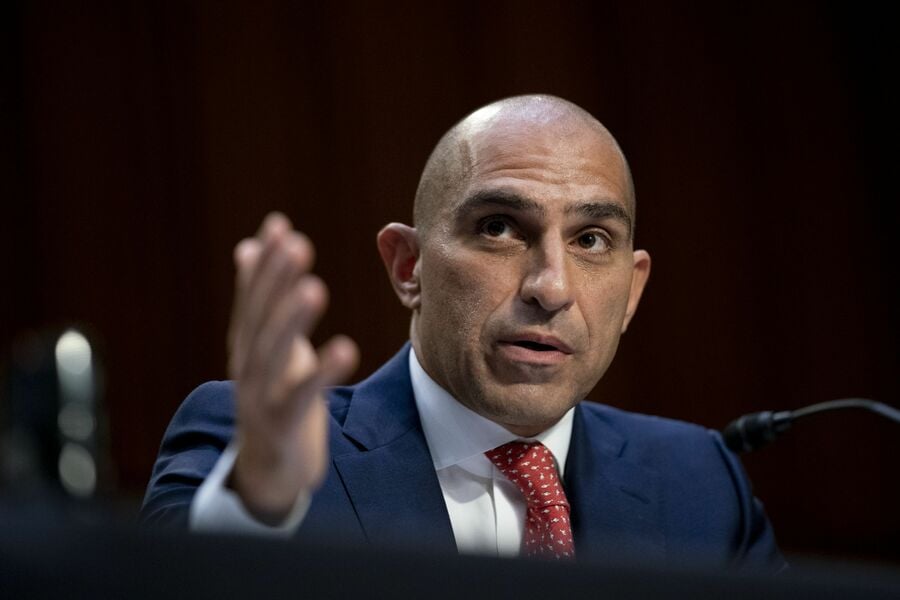
Commodity Futures Trading Commission Chairman Rostin Behnam said Monday that the collapse of Bill Hwang’s firm shows a need to rethink some of the agency’s rules. The episode also underscored the danger of one investor building up a massive swaps position while leaving regulators unaware, he added.
“It would not surprise me if there were other Bill Hwangs,” Behnam said in an interview at Bloomberg’s Washington office. “Clearly there was a failure across many different desks and I think there’s a role for regulators to play in terms of data that we collect, reporting that’s required and, again, a more macro review of stability and resiliency issues.”
The implosion of Archegos has been held up as an example by regulators pressing for more transparency in financial markets. The firm’s wrong-way derivatives bets sent shares in companies from ViacomCBS Inc. to Baidu Inc. tumbling in March 2021. The latest twist came last month when Hwang and his chief financial officer were arrested after being indicted on criminal charges including racketeering conspiracy. Hwang and Patrick Halligan, the CFO, have pleaded not guilty.
Two former executives agreed to cooperate with authorities, including the CFTC. Even as court cases advance, Behnam said one thing is already clear: more visibility into family offices like Archegos is needed.
The CFTC may propose additional rules for individual investors that have significant swaps positions, according to Behnam. The regulator is also reviewing reporting requirements and risk management at private funds, prime brokers and banks, he added, noting that most of Hwang’s trades were in equity swaps which are not under his agency’s jurisdiction.
Regulators need to have a macro view of markets and the full network of counter-party relationships “so we know where risk pockets may exist,” Behnam said. “This isn’t the traditional family office that we are accustomed to,” Behnam said about the size of the positions held by Archegos.
Hwang’s bets set off panic on Wall Street when he was was unable to make payments due on risky bets he made using billions of dollars lent to him by major banks, including Credit Suisse Group AG, Morgan Stanley and Nomura Holdings Inc. The trading led to several investigations, including one into how banks exited their souring positions.
During a wide-ranging interview, Behnam also discussed the CFTC’s plans for crypto regulation and stepping up efforts to regulate other derivatives, including those used by some companies to reduce their net emissions by buying carbon offsets. That market “deserves scrutiny and has a lack of credibility at this point,” he said.

Daejon Love and Taylor Chan's $1.3 million romance fraud scheme exposes how AI search engines can be manipulated by fabricated online identities

“It was a third party scam,” said the attorney representing the claimants.

Meanwhile, &Partners draws another Commonwealth practice, and Wealthcare welcomes a $550 million planning practice in the Northeast.

Palo Alto AI platform recruits RIA and fintech leaders as industry data show AI adoption reshaping advisor staffing.

Meanwhile, Raymond James, Wedbush, and LPL recruited veteran advisors from across Texas, North Carolina, and California.
Northern Trust’s Ken Lassner shows advisors how to convert volatility into after-tax portfolio gains
Dan Biagini of American Equity says the steady decline of pensions, longer lifespans and a reset in interest rates are rewriting how advisors build retirement income

