
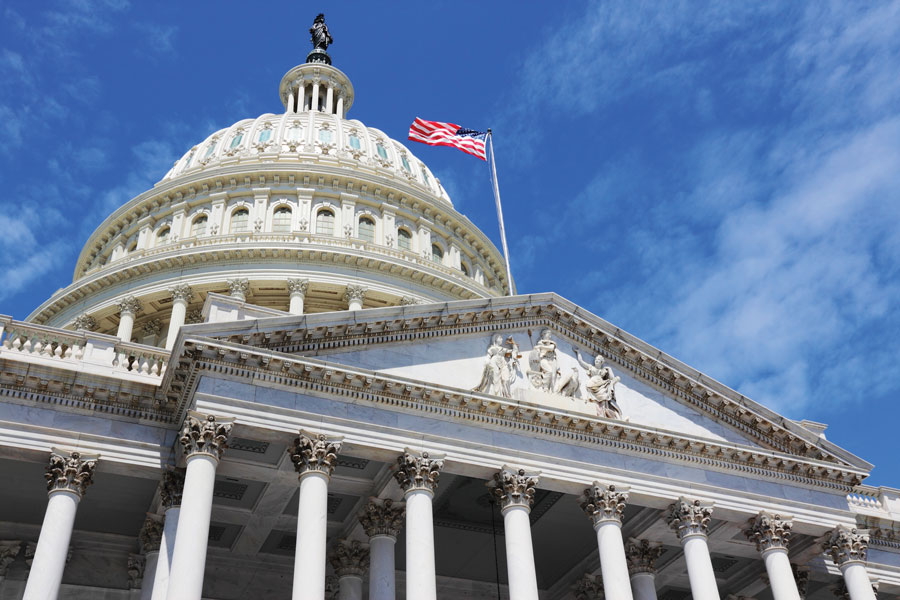
Lawmakers removed from a defense bill a provision that would have required investment advisers to establish anti-money laundering programs.
The House is scheduled to vote later this week on the National Defense Authorization Act, a massive bill that sets military policy and sets the framework for Pentagon spending. The 4,408-page measure was released Tuesday night after congressional negotiators settled on a final bill.
Separate versions had been approved earlier this year by the House and Senate. The latest iteration is likely to be adopted in the lame-duck session of Congress and sent to President Biden to be signed into law.
One of the few pieces of legislation that annually overcomes partisan gridlock, the bill often attracts many non-defense provisions. One of the riders added to the measure as it moved through Congress was the AML legislation, the Establishing New Authorities for Business Laundering and Enabling Risks to Security Act.
Under the provision, advisers would have to establish anti-money laundering and due diligence programs, report suspicious transactions, and identify and verify account holders. It was opposed by the Investment Adviser Association, which applauded its demise.
“The Investment Adviser Association is very pleased that the ENABLERS Act provisions that were added by the House and would have imposed AML regulation on investment advisers have been dropped from the National Defense Authorization Act (NDAA),” Neil Simon, IAA vice president for government affairs, said in a statement early Wednesday morning. “We believe that policymakers should refrain from imposing overbroad AML regulation on advisers whose business models or activities do not raise money laundering risks and actively advocated on behalf of investment advisers to ensure that these provisions be removed from the NDAA.”
The measure was tucked into the bowels of the NDAA by House Democrats who are concerned about money being hidden by Russian oligarchs during Russia’s war in Ukraine. But it was opposed by House and Senate Republicans on committees with jurisdiction over financial services policy.
The AML provision overlaps with a regulation being developed by the Treasury Department’s Financial Crimes Enforcement Network, Simon said at an IAA conference in September.
In addition to the NDAA, Congress is expected to take up an economic policy package during the lame-duck session that includes major retirement savings legislation known as SECURE 2.0.
Lawmakers are racing against the clock. Any legislation not approved by Congress before the congressional session concludes at the end of the month must be reintroduced in the new Congress next year.

Focus Partners Wealth’s Jeffrey Levine says a Democratic House or Senate would make new legislation on Trump Accounts much harder to pass

Docupace also rebuilt its wealth operations platform around a single client record, while Focus Financial picks Nevis to bring AI to its advisors.

Consolidators handled 53% of deals through September as smaller sellers stalled amid market volatility, DeVoe & Company finds.

Shook Research has a new name and brand, Veritant, and will continue its coveted rankings of financial advisors.

The Supernova-powered lending line follows a Flourish Cash rollout as the insurer pushes private-bank-style tools to its 6,000-plus advisors
Knighthead Life entered the market with a competitive MYGA. A strong launch earned advisor confidence and paved the way for FIAs.
As AI makes financial information more accessible than ever, Lana Hock explains why human judgment, trust, and empathy remain the qualities clients value most in a financial advisor

