
This article is one in a series of outlooks for 2022 by the InvestmentNews team.
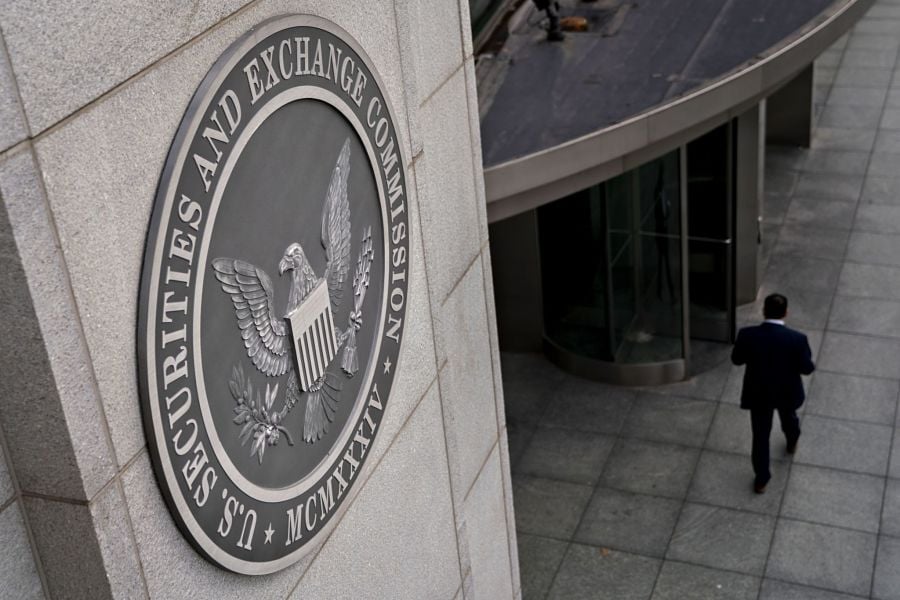
Political tension on the Securities and Exchange Commission could permeate the agency’s work in 2022, and the first tangible evidence will come early this year.
SEC Commissioner Elad Roisman announced Dec. 20 that he would resign from the commission by the end of January. He gave no reason for his departure, but it’s likely he felt marginalized as one of two Republican members on the five-person, Democratic-majority panel.
Roisman, who did not respond to an interview request, and fellow Republican Commissioner Hester Peirce have resisted SEC Chairman Gary Gensler’s push to draft proposals on mandatory environmental, social and governance disclosures for public companies.
They recently released a statement criticizing the agency’s expansive regulatory agenda. They took umbrage that the SEC intends to redo some rulemakings — including easing private-market rules for ordinary investors — promulgated in 2020 when the commission had a GOP majority.
Scott Kimpel served as counsel for former SEC Republican Commissioner Troy Paredes during a Democratic administration. He understands the frustration of arguing against rulemakings in the minority rather than shaping them in the majority.
“That gets tiresome,” said Kimpel, a partner at Hunton Andrews Kurth. “There doesn’t seem to be a lot of bipartisan consensus around issues on the SEC’s 2022 agenda.”
The SEC recently approved several rulemakings, including one on money market reform, by 3-2 votes. Until the Senate confirms Roisman’s successor, the breakdown could often be 3-1.
“That’s the nature of the SEC today,” said Kurt Wolfe, counsel at Quinn Emanuel Urquhart & Sullivan. “They build consensus when they can. When they can’t, the chair has to have the fortitude to proceed with a 3-2 vote. There’s no reason to believe that Chair Gensler will shy away from 3-2 votes.”
The leftward tilt of the agency has been enhanced by appointments Gensler has made to his senior staff. They include a longtime progressive advocate Barbara Roper, former director of investor protection at the Consumer Federation of America.
“The current composition of the SEC is the most investor-protection friendly that I’ve seen in 20 years,” said Michael Edmiston, president of the Public Investors Advocate Bar Association.
Edmiston credits the whole commission with that focus. He pointed out Roisman’s strong advocacy on senior investor safeguards. Although PIABA and Peirce don’t often agree on the approach to investor protection, “I know she also cares,” he said.
The SEC under Gensler has emphasized several issues that also are being targeted by state securities regulators, such as private-market reform, online practices of financial firms and payment for order flow.
North American Securities Administrators Association President Melanie Senter Lubin said the agreement is not necessarily because of the commission’s Democratic majority but because the regulators have a common cause.
“It’s an alignment of interests,” said Lubin, Maryland Securities commissioner. “We’re always hopeful regardless of the makeup of the commission that everyone’s moving forward on our mutual objective of investor protection.”
The SEC likely will be productive on investor protection and other issues in 2022 despite political friction.
More articles in this series:

A Nationwide survey finds 47% of GLP-1 users have never discussed the drugs’ financial impact with an advisor, even as many dip into savings.

The hundreds of millions of dollars from a sale of Inspired Healthcare properties does not mean an immediate windfall for investors.

Its SEC filings said one thing - a congressional probe said another.

Sham agreements allegedly padded revenue by 345%.

"Most pre-retirees are uncomfortable making key retirement income decisions without an advisor's help," said Chris Bailey of Cerulli.
Knighthead Life entered the market with a competitive MYGA. A strong launch earned advisor confidence and paved the way for FIAs.
As AI makes financial information more accessible than ever, Lana Hock explains why human judgment, trust, and empathy remain the qualities clients value most in a financial advisor

