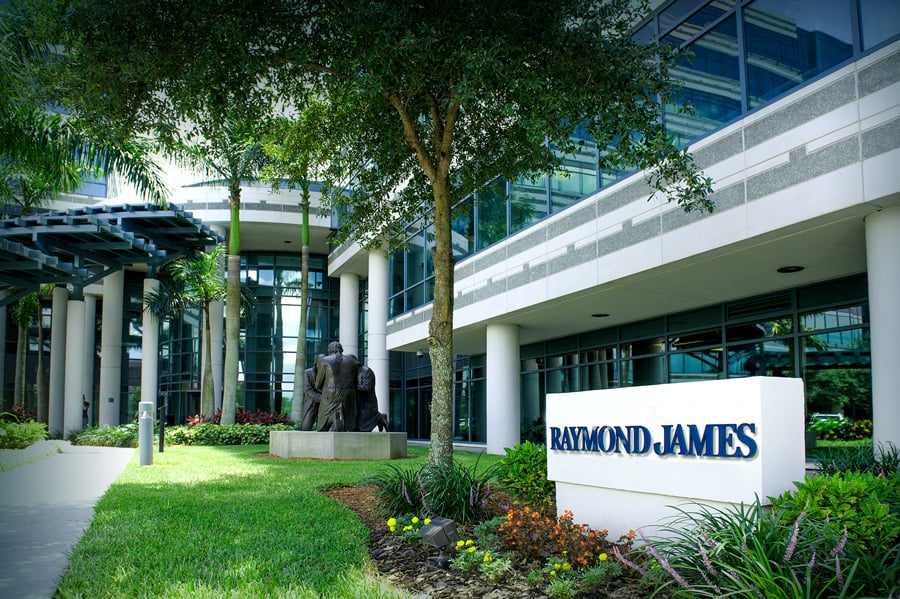
Three different business groups under the
Raymond James umbrella
will pay $15 million as part of a settlement with the Securities and Exchange Commission, which found that the businesses had improperly charged advisory fees on inactive retail client accounts and charged excess commissions for brokerage customers who bought certain unit investment trusts.
The SEC order found that that Raymond James & Associates Inc. and Raymond James Financial Services Advisors Inc. failed to consistently perform promised ongoing reviews of advisory accounts that had no trading activity for at least one year, according to a statement by the SEC. Because they did not conduct the reviews properly, they failed to determine whether the clients' fee-based advisory accounts were suitable.
[Recommended video: Financial planning wasn't even a thing 50 years ago]
The SEC also found that the same two Raymond James groups recommended that their brokerage customers sell UITs before their maturity and buy new UITs without adequately determining whether these recommendations were suitable.
This resulted in the customers incurring, and the Raymond James entities receiving, greater sales commissions than would have been charged had the customers held the UITs to maturity and then purchased new UITs, according to the SEC's statement.
The sales and trading of UITs have drawn the focus of securities regulators over the past few years. The
Financial Industry Regulatory Authority Inc. has been cracking down on brokerage firms for failing to give clients discounts for large purchases of investment products, and in 2016 it
ordered three firms to pay $1.2 million in fines and restitution.
To settle the charges, the three Raymond James entities, which included Raymond James Financial Services Inc., agreed to be censured and to disgorge approximately $12 million representing inappropriate client advisory fees and unit investment
trust commissions, together with prejudgment interest, and to pay a $3 million civil penalty. The three Raymond James business units have agreed to make distributions to harmed investors.
"We are pleased to have these matters concluded and have revised our policies and procedures to address the supervisory enhancements required by the SEC at Raymond James and a number of competitor firms," company spokesman Steve Hollister wrote in an email.