
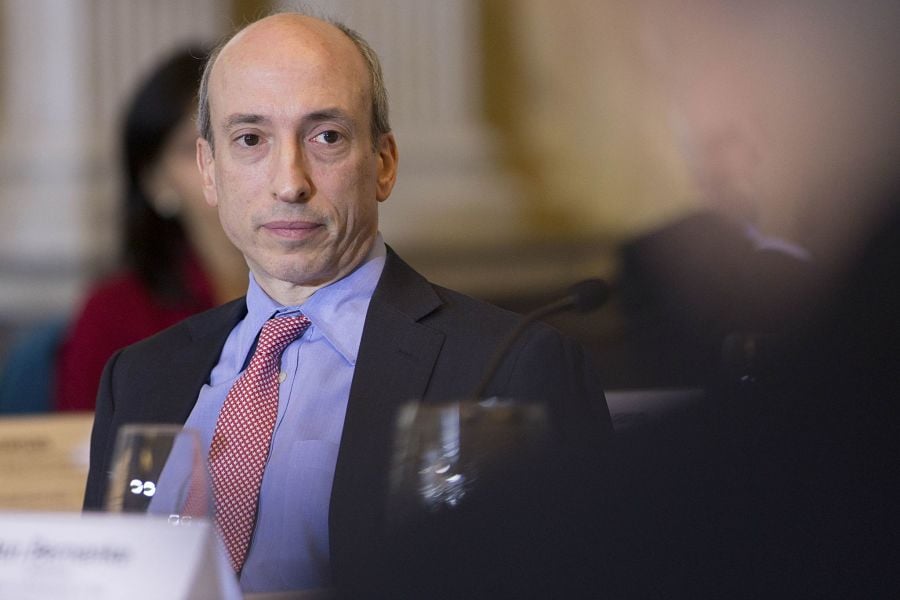
Gary Gensler had little room to spare in Wednesday’s Senate vote that confirmed him as the new chairman of the Securities and Exchange Commission, but nearly unanimous Republican opposition probably won’t slow his agenda.
The Senate approved Gensler, 53-45, with three Republicans joining the chamber’s 50 Democrats in one of the closest votes for a Biden administration nominee. The slim margin reflects GOP concerns about the aggressive approach Gensler has signaled on issues like expanding corporate disclosures related to environmental, social and governance factors.
Gensler knows his way around Washington, having previously served as chairman of the Commodity Futures Trading Commission, where he pushed through major derivatives reform following the financial crisis. He’s not likely to be daunted by a lack of Republican love.
“He was very goal-oriented at the CFTC,” said Susan Schroeder, a partner at the law firm WilmerHale. “He perceived he was given a mandate and he was intent on fulfilling that mandate. I anticipate he’ll take the same approach at the SEC.”
John Taft, vice chairman of the financial firm Baird, anticipates the SEC under Gensler will be tougher on oversight and enforcement than previous commissions.
“He is going to focus on doing what he thinks is right,” Taft said. “He won’t have his eye on vote numbers.”
The close Senate tally could signal more congressional attention to the agency, said Michael Zona, vice president of the Bullpen Strategy Group and a former Republican aide on the Senate Finance Committee. Unlike many other Biden nominees, Gensler, a former Goldman Sachs executive, didn’t get much deference from Republicans.
“The tighter-than-normal vote margin shouldn't have much effect on the SEC's regulatory process, especially with unified Democratic control of government, but it does indicate tougher oversight from Congress is likely,” Zona wrote in an email. “When a nominee doesn't earn enough trust from a senator to get their vote, that's usually a sign that the agency will be a target for tougher scrutiny down the road.”
One area where Gensler and Republicans are likely to clash is ESG regulation. During his confirmation hearing last month, Gensler indicated support for a broad range of ESG disclosures in areas such as climate risk, political spending and racial diversity.
“Based on his record and statements during the nomination process, I’m concerned he will cause the SEC to use its regulatory powers to advance a liberal social agenda focused on issues such as global warming, political spending disclosures, and racial inequality and diversity,” Sen. Patrick Toomey, R-Pa. and ranking Republican on the Senate Banking Committee, said during the debate over Gensler's nomination.
With Gensler on board, the SEC now has a 3-2 Democratic majority.
In the months prior to Gensler’s confirmation, Democratic SEC member Allison Herren Lee enhanced the agency’s ESG oversight by establishing an enforcement task force, among other moves. She drew pushback from the Republican members Hester Peirce and Elad Roisman.
But the agency hasn’t yet undertaken writing new ESG rules.
“The fact that the SEC is talking about enforcing existing standards instead of creating new standards is likely an indication that they’re thinking about both sides of the aisle,” said Schroeder, a former enforcement chief at the Financial Industry Regulatory Authority Inc.
Addressing ESG standards is likely to garner bipartisan support but expanding required corporate disclosures is likely to increase partisan tension, Taft said. “It depends on what aspect of the issue you’re talking about.”
Congressional GOP skepticism won’t have a direct impact on how the SEC develops ESG policy under Gensler, said Ken Joseph, managing director of Kroll, a regulatory compliance consulting firm.
Nonetheless, Gensler does have to keep politics in mind.
“Although the commission is an independent agency, one has to be sensitive to the concerns of the minority party when fulfilling the majority agenda,” Joseph said.

Salespeople at the firm often went beyond the matching algorithm to recommend network advisors on its Zoe Wealth platform, according to the regulator.

The Protect College Sports Act would cap school payments and codify NIL rights, with implications for advisors guiding young athletes.

"I know the number that I want to be able to retire on, and now I just want out," says Wilmington Trust's Marguerite Weese, describing a common refrain among business-owner clients.

Bessemer and Brown Brothers Harriman veteran Robert Ludricks III and private markets specialist Olof Akesson join the ultra-high-net-worth push on the East Coast.

765 investors were promised 260% annual returns on truck leases
As AI makes financial information more accessible than ever, Lana Hock explains why human judgment, trust, and empathy remain the qualities clients value most in a financial advisor
Northern Trust’s Ken Lassner shows advisors how to convert volatility into after-tax portfolio gains

