
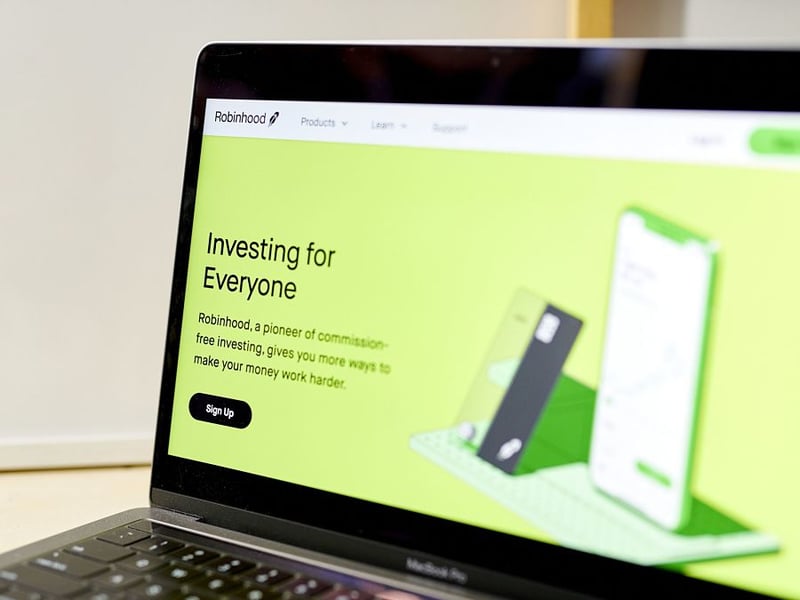
Robinhood Financial agreed on Thursday to settle a 2020 case brought by the Secretary of the Commonwealth of Massachusetts, William Galvin, over the online trading platform’s use of gamification strategies to attract and manipulate customers, according to a statement from Galvin's office.
As part of that settlement, Robinhood has agreed to pay an administrative fine of $7.5 million and overhaul its digital engagement practices. In unusual language in such settlements, Robinhood Financial, a broker-dealer registered with the Financial Industry Regulatory Authority Inc. since 2013, neither admitted to or denied certain factual allegations by the regulator, while admitting to others connected to a 2021 data breach.
In 2020, the Massachusetts regulator filed its complaint against Robinhood relating to the trading app’s use of gamification strategies to attract inexperienced investors and its failure to prevent frequent outages and disruptions on its trading platform.
The Massachusetts complaint alleged that Robinhood, which earns revenue on executed trades, gave inexperienced investors the ability to make a potentially unlimited number of trades without properly screening them.
As detailed in the consent order, Robinhood has previously used confetti animation, digital scratch tickets, free stock rewards and other game-like features to push customers to interact with the app, according to the statement Thursday morning from Galvin's office. The app also employed push notifications and “most popular” lists to encourage frequent trades.
Despite the settlement, a spokesperson for Robinhood said in an email that while it was pleased to put the matter behind it, it denied the assessment that its app had elements of playing a game, or gamification.
"We reject the premise that any part of our app, past or present, is 'gamified,'" the spokesperson wrote in an email to InvestmentNews. "The settlement concerns historical practices related to supervisory controls and procedures, and the order does not find that digital engagement practices in the app themselves violated the regulations or the state’s fiduciary rule, or that they negatively influenced customer behavior."
In 2021, Robinhood sued Galvin’s office in an attempt to block the administrative proceedings against the broker-dealer, according to the statement. After a decision in Suffolk Superior Court and a subsequent appeal to the Massachusetts Supreme Judicial Court, Galvin’s authority to promulgate the Massachusetts Fiduciary Rule was upheld and the case was allowed to proceed in August 2023.
"While Robinhood ceased many of its gamification tactics after complaints were filed by the Securities Division, the settlement in this case ensures that for Massachusetts customer accounts, Robinhood will cease any future use of celebratory imagery tied to the frequency of trading, push notifications highlighting specific lists, and features that mimic games of chance," according to the statement.
The settlement also addresses cybersecurity issues identified by the Securities Division after a November 2021 data security breach that affected approximately 117,000 customers in Massachusetts.
“It is clear from the facts gathered in our investigation that Robinhood’s internal cybersecurity policies and procedures were deficient,” Galvin said in the statement. “Not only did the company not have the necessary technological safeguards in place to protect investor information, but the failure to ensure that an employee could immediately and easily report a data breach to an actual human is unacceptable.”
The Robinhood spokesperson noted in the email that since 2021, the company has "taken numerous steps to safeguard our systems including enhancing our internal security controls and training, as well as building upon our threat detection, threat intelligence, and incident management programs."
In 2021, Robinhood Financial agreed in a settlement with Finra to pay a total of $70 million in fines and restitution to settle allegations that the online brokerage brought significant harm to millions of customers as a result of false or misleading information, system outages and approval of trade options when it was not appropriate.

A Nationwide survey finds 47% of GLP-1 users have never discussed the drugs’ financial impact with an advisor, even as many dip into savings.

The hundreds of millions of dollars from a sale of Inspired Healthcare properties does not mean an immediate windfall for investors.

Its SEC filings said one thing - a congressional probe said another.

Sham agreements allegedly padded revenue by 345%.

"Most pre-retirees are uncomfortable making key retirement income decisions without an advisor's help," said Chris Bailey of Cerulli.
Knighthead Life entered the market with a competitive MYGA. A strong launch earned advisor confidence and paved the way for FIAs.
As AI makes financial information more accessible than ever, Lana Hock explains why human judgment, trust, and empathy remain the qualities clients value most in a financial advisor

