
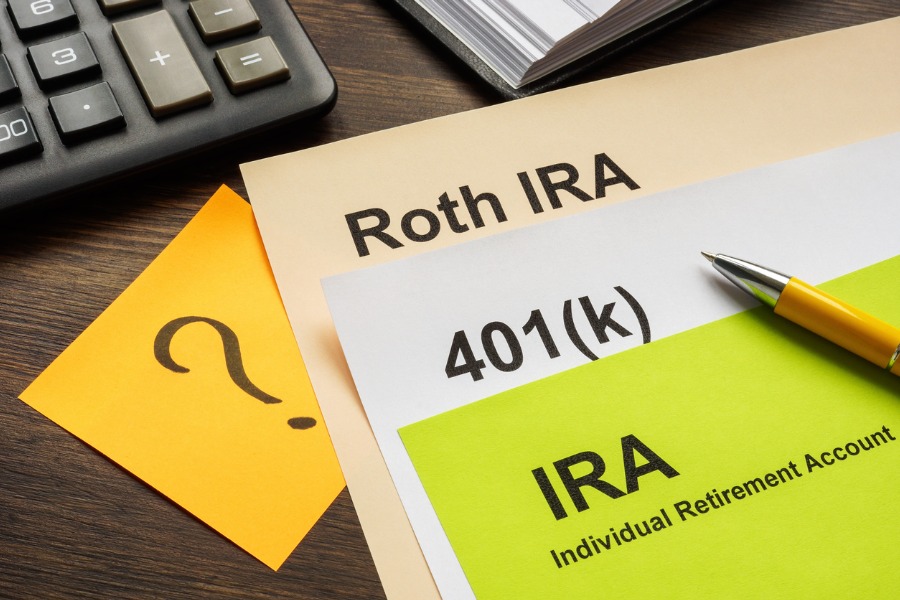
When a grandparent arrives with a generous impulse - fund a grandchild's Roth IRA - advisors face a question that is deceptively simple on the surface and surprisingly layered underneath. The key is knowing which questions to ask first.
Paul Jordan, executive director of financial planning at Edelman Financial Engines, walks clients through that process routinely. His first move is always the same: establish whether the child actually has earned income and how much.
"Roth IRA contributions cannot exceed the child's eligible earned income or the annual contribution limit, whichever is less," Jordan told InvestmentNews. "Money earned from babysitting, mowing lawns or a part-time job may qualify, but gifts and allowances don't count."
For families where a child's earnings are informal or inconsistently documented, Jordan recommends a disciplined verification step before any contribution is made. And he is quick to remind clients there is no urgency to act in December - contributions for a given tax year can generally be made up to the filing deadline the following April.
Jordan's broader philosophy is that advisors should not automatically accept the framing a client arrives with. A grandparent who wants to contribute to a Roth IRA may not have fully considered whether that vehicle is the right fit for the family's actual goals.
"As a rule of thumb, advisors shouldn't automatically accept the premise of a client's plan," he said. "It's important to talk through the goals and intent behind the gift."
That conversation frequently surfaces the need to compare the Roth IRA against other options - most commonly a 529 plan for education expenses or a Uniform Transfers to Minors Act (UTMA) account. When the more immediate priority is college costs, Jordan will often redirect grandparents toward a 529.
He also notes that unused 529 funds may, under certain conditions, be rolled into a beneficiary's Roth IRA - a flexibility point that opens strategic planning possibilities for families navigating both education and retirement goals simultaneously.
When the grandparent's generosity exceeds what the child has earned, the earned-income ceiling becomes a hard constraint that no workaround can remove. If a child earns $1,500, a $1,500 Roth IRA contribution is the maximum - regardless of how much more the family wishes to give.
"I encourage families to think about what they want the additional money to accomplish," Jordan said. "It's also important to make sure parents and grandparents aren't sacrificing their own retirement security to fund these gifts."
As advisors serving high-net-worth and multigenerational clients continue to refine their gifting strategies, the InvestmentNews Rising Stars 2026 report highlights how the next generation of wealth managers is approaching exactly these kinds of complex, family-centered planning conversations.
For many families, the mechanics of a custodial Roth IRA are entirely new territory. Jordan keeps the explanation grounded. The account belongs to the child, but an adult - typically a parent - manages the investments until the child reaches the applicable age and takes control.
"I also encourage families to use those years as an opportunity to teach and introduce the child to investing," he said. "That way, when the child eventually takes control, they're better prepared to manage the money on their own."
He recommends reviewing account statements and investment performance with the child periodically - not just to monitor returns, but to cultivate a mindset of discipline and patience toward market cycles.
Beyond the tax mechanics, Jordan sees the custodial Roth IRA as a vehicle for financial education that few other gifting tools can replicate. A grandparent who matches a teenager's summer earnings with a Roth IRA contribution, for example, creates a direct link between work, savings, and long-term wealth.
"When children can connect the money they've earned to something they're building for the future, investing becomes a lot more meaningful," Jordan said.
The long investment horizon is also central to the case. A teenager beginning to invest at 16 or 17 could have 50 years or more for compounding to work before retirement - a runway that few financial products can match.
Jordan ultimately favors a flexible approach. He encourages families to explore all available gifting options - Roth IRA, 529, UTMA, and newer vehicles such as Trump Accounts - before committing to one structure. The right answer, he says, is rarely singular.
"Perhaps the outcome is that they use more than just the Roth IRA," he said. "Flexibility wins the day."
Advisors looking to deepen their approach to family wealth planning can also reference InvestmentNews coverage of retirement and education planning strategies for additional context and case studies.

New Bain & Company research finds finance leaders are flying blind on AI agent costs even as deployments accelerate.

Merrill recruits from Morgan Stanley and Janney as Janney adds an RBC veteran to a Maryland wealth management team now overseeing more than $800M

Phillip Patrick Williams sold private Forex funds to “investment advisory clients,” according to an SEC lawsuit.

The wealthtech firms' latest updates extend growth insights, custodian-linked planning and family office data access for financial advisors

His own messages allegedly spell out the plan
Advisors are broadening the conversation beyond savings to help clients prepare for the realities of longer lives
Growing wealth, evolving priorities, and untapped opportunities are reshaping how women approach long-term investing.

