
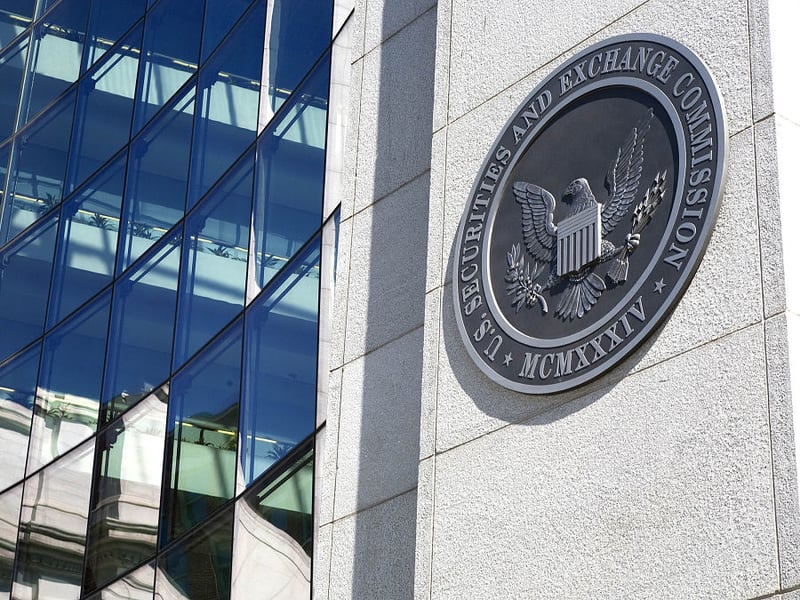
The Securities and Exchange Commission Monday penalized a Minnesota registered investment advisor $60,000 for violating industry pay-to-play rules after a firm associate contributed $4,000 to the campaign of a politician sitting on a government board that has influence in selecting money managers that work for the state.
The SEC and the firm, Wayzata Investment Partners, which manages private equity investments, settled the matter without the firm admitting or denying the SEC's findings.
A call Wednesday morning to Wayzata Investment Partners was not returned. The firm has $376 million in assets, according to its Form ADV.
Commissioner Hester Peirce responded to the fine by calling it overreach by the SEC.
"This case is yet another illustration of the overbreadth of the pay-to-play rule and another reminder of the way the rule hampers legitimate political participation," Peirce wrote in a statement released separately from the settlement. "Accordingly, I did not support the case."
"The Commission’s order, however, does not allege any link between the donation and the investments," Peirce wrote. "In fact, the state investment board had invested in closed-end funds advised by [Wayzata] several years prior to the contribution."
The firm's "violation stems not from any attempt to obtain additional investments from the state investment board, but from the fact that it continued to provide advisory services for compensation in connection with the board’s longstanding closed-end fund investments," she added.
The Minnesota State Board of Investment made two $150 million investments, the first in 2007 and then another six years later, in private equity funds managed by Wayzata Investment Partners, according to the SEC.
In 2022, an unnamed employee or partner made a $4,000 contribution to a government official sitting on the state board of investment, the SEC said.
SEC rules prohibit certain investment advisers from providing services for compensation to a government client for two years after the adviser, certain firm executives or employees make a campaign contribution of more than $350 to elected officials or candidates who can influence the selection of investment advisers.
"The office of the government official had the ability to influence the selection of investment advisers for" the Minnesota State Board of Investment, or SBI, according to the SEC. "Specifically, the government official is on the board of SBI.
"The SBI board has influence over investments by SBI and the selection of investment advisers and pooled investment vehicles for SBI," the SEC said. "As of the date of the contribution in 2022, SBI had already invested in the funds."
One industry attorney said that a $4,000 political donation seemed a trivial amount to be penalized over.
"Is four grand really going to influence a politician’s thinking?" asked Sander Ressler, managing director of Essential Edge Compliance Outsourcing Services. . "Is that enough to create a material conflict of interest?
"I just don’t think so," Ressler said. "Yes, it's a technical violation of the SEC rule, but perhaps the limit should be addressed. If the donation was $40,000 or $400,000, then there should be a discussion of conflicts."

The financial advice industry has been facing inquiries into its cash sweep programs for years now.

Investor money allegedly went to strip clubs, exotic cars, and landscaping

Procyon adds $415 million in assets under management in New Jersey while Savant picks up a $213 million Southern California planning firm

With a growing number of real estate-rich Baby Boomers aging into retirement, some advisors may be failing to consider all the options available for those clients' assets.

Cornerstone Advisors study reveals compliance bottlenecks stall campaigns weeks after customer opportunities close.
As AI makes financial information more accessible than ever, Lana Hock explains why human judgment, trust, and empathy remain the qualities clients value most in a financial advisor
Northern Trust’s Ken Lassner shows advisors how to convert volatility into after-tax portfolio gains

