
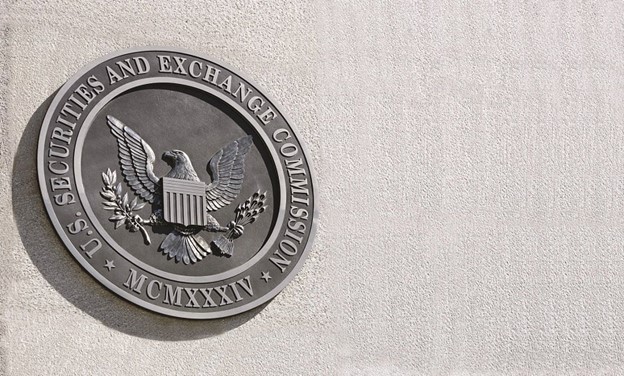
The Securities and Exchange Commission has seen a marked decline in enforcement activity this year, with a new analysis suggesting the agency is prioritizing clear-cut investor fraud over more technical violations of its rules.
A review by King & Spalding found the SEC initiated 67 enforcement actions from February through July, down from 127 in the same period last year and 198 during the comparable stretch in 2021. That amounts to a 47% decrease from 2024 and a 66% drop from 2021.
The law firm’s report points to several potential causes, including a shift in regulatory priorities and a significant reduction in staff.
“Multiple factors likely contributed to the lower numbers for 2025,” the report’s authors wrote. “First, the results almost certainly reflect an emphasis on pursuing clear-cut frauds and away from more ‘creative’ theories pursued by the SEC during the last administration.”
The analysis comes as the SEC, now under the leadership of Paul Atkins, appears to be moving away from the aggressive enforcement style seen during Gary Gensler’s tenure. Gensler, who led the agency during the Biden administration, was known for his assertive approach – particularly in the crypto sector, where he consistently fought for broad regulation of digital assets. Atkins, who previously co-chaired a crypto lobbying group, has signaled a more accommodative stance toward the industry.
The drop in enforcement actions coincides with a roughly 15% reduction in the SEC’s workforce, part of a broader government downsizing effort. A separate note recently published by Winston & Strawn observed that the SEC had 5,000 employees and 2,000 contractors by the end of the 2024 fiscal year, which declined to 4,200 employees and 1,700 contractors as of May 6.
"The agency has effected this staff reduction through a mix of different programs, including the SEC’s recently offered buyout program," the note by Winston & Strawn read.
Some observers have also noted that the rush to finalize cases in the final months of the previous administration may have left fewer pending actions for the current leadership. King & Spalding reported that from October 1, 2024, to January 19, 2025, the SEC brought 173 enforcement actions – an unusually high number for such a short period.
Securities offerings and cases involving RIAs or investment companies accounted for most of the enforcement actions in the first half of the year, often involving alleged misappropriation of client funds. Broker-dealer cases, by contrast, dropped sharply, with only two actions brought from February to July, compared with 18 in the same period last year.
“One major factor contributing to this decline is the absence of actions related to the use of off-channel communications, which was a key (and controversial) priority for the SEC during the last administration,” the report noted, adding that this shift contributed to both fewer cases and lower aggregate sanctions.
Mark Uyeda and Hester Peirce, two of the three remaining commissioners currently at the agency along with Caroline Crenshaw, have previously dissented against the agency’s aggressive stance on off-channel communications, emphasizing the need for a balanced approach. In a statement last year, they argued that the SEC’s actions in this area “raise serious questions about fairness and regulatory overreach.”
Compliance priorities among RIAs have shifted along with the change at the SEC leadership. The latest Investment Management Compliance Testing Survey found off-channel communications are becoming less of a focus, though they remain an area of ongoing scrutiny. The impact of staff reductions and buyout programs at the SEC is still unfolding, leaving many in the industry watching closely for signs of how enforcement trends may develop in the coming months.
The future direction of SEC enforcement remains uncertain, especially as the agency recently appointed a permanent enforcement director, a role that will help shape priorities.
“Given the many factors that likely have contributed to the slowdown, it will be interesting to see whether these six months foreshadow the direction of SEC enforcement for the next three-and-a-half years, or whether the pace will increase and the mix of cases will evolve,” the King & Spalding report said.

Just over 10% of advisors' wealth clients come from defined contribution plans, as capacity, data and technology gaps block the bridge to wealth

Deal creates a $20B-plus custody platform for private market investing in IRAs, months after Schwab closed its Forge Global purchase

Despite the good times, advisors should tread carefully, said one veteran industry executive.

Gallagher data reveals a huge gap in financial confidence between employees who work with an advisor and those who don't.

PEP assets hit $34bn at year-end 2025 as advisors navigate mandate deadlines and a 48% employer interest rate.
Knighthead Life entered the market with a competitive MYGA. A strong launch earned advisor confidence and paved the way for FIAs.
As AI makes financial information more accessible than ever, Lana Hock explains why human judgment, trust, and empathy remain the qualities clients value most in a financial advisor

