
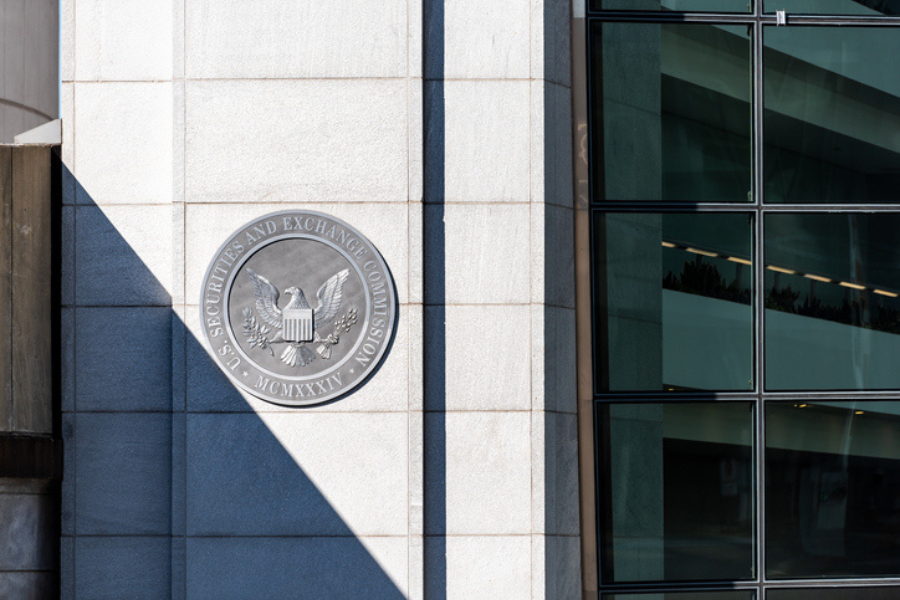
The SEC has charged Cantor Fitzgerald with causing two special purpose acquisition companies it managed to make misleading statements ahead of their initial public offerings.
The investment giant headed by Howard Lutnick, whom President-elect Donald Trump has nominated as his commerce chief, agreed to a $6.75 million civil penalty to settle the allegations, without admitting or denying the findings.
According to the SEC, the SPACs – CF Finance Acquisition Corp. II and CF Acquisition Corp. V – raised $750 million from investors in 2020 and 2021, during the height of the SPAC mania that was one of the defining investment booms of the Covid era.
The SEC's order published late Thursday explained how Cantor Fitzgerald's SPACs claimed in filings they had not engaged in substantive discussions with potential targets prior to their IPOs.
However, the SEC found that Cantor Fitzgerald personnel had already begun negotiations with certain companies, including View, Inc. and Satellogic Inc., which ultimately became their merger partners.
“Cantor Fitzgerald misled investors about a critical investment consideration by repeatedly stating in public filings that it had not identified or approached any potential merger targets, despite having had substantive discussions with several private companies regarding a potential merger,” Sanjay Wadhwa, acting director of the SEC’s division of enforcement, said in a statement Thursday. “This enforcement action reflects the straightforward proposition that any disclosures about substantive discussions with potential targets must be materially accurate.”
The SEC charged the firm with causing violations of antifraud and proxy provisions under federal securities laws. As part of the settlement, Cantor Fitzgerald agreed to cease and desist from further violations.
Also on Thursday afternoon, SEC Commissioner Mark Uyeda, who at one point was a rumored contender for SEC chair after Gary Gensler, issued a dissenting opinion questioning whether the alleged misstatements were significant enough to warrant action.
In his statement, Uyeda noted that the SEC has brought three cases against SPACs since July 2023, including the latest action against Cantor Fitzgerald. He argued that since SPACs by their nature are blank-check companies created to swallow other companies, disclosures related to potential merger discussions may not hold the same materiality in SPAC filings as they would for operating companies.
"When an operating company seeks shareholder approval for a merger, information about the history of merger discussions ... can help shareholders assess whether the board satisfied its fiduciary duties," Uyeda said. "In contrast, the sole job of a SPAC’s board and senior management is to identify a target company for acquisition."
There wasn't any evidence brought up pointing to financial harm in any of the cases, he added, noting that SPACs typically give investors the right to redeem their shares in the SPAC upon completion of its de-SPAC transaction for an amount roughly equal to its IPO price, plus interest.
Earlier this year in January, the SEC approved new rules to make SPAC deals more like traditional IPOs. Under those rules, the regulator revoked legal protections that protected sponsors of the deals from investor lawsuits over embellished statements, specifically when it comes to forward-looking disclosures in the later de-SPAC phase of those transactions.
In his statement on the Cantor Fitzgerald order, Uyeda also stressed that in all three of its SPAC actions, the SEC did not find their corresponding disclosures misled investors on the risks and financial performance of their targets.
“To make an informed voting decision, a SPAC’s investors do not require a ‘play-by-play’ in how the SPAC’s board arrived at its decision to select a particular target company for acquisition,” Uyeda said. "While certain aspects of a SPAC’s merger negotiation history can be material, the allegations against the SPAC respondents do not arise to that level."

Merrill's latest hires span Colorado to Louisiana, even as industry-wide recruiting data suggests the firm is losing almost as many advisors as it gains.

The $36 million buy allegedly hid inflated books and a $50 million diversion.

“An award citing emotional distress is very unusual,” an industry executive said.

New EBRI research found workers who participated in employer financial education reported higher confidence, literacy and financial satisfaction.

Beyond operational excellence, the winning advisors of the future are the ones who can reach across multiple disciplines without discarding specialist skills.
Northern Trust’s Ken Lassner shows advisors how to convert volatility into after-tax portfolio gains
Dan Biagini of American Equity says the steady decline of pensions, longer lifespans and a reset in interest rates are rewriting how advisors build retirement income

