
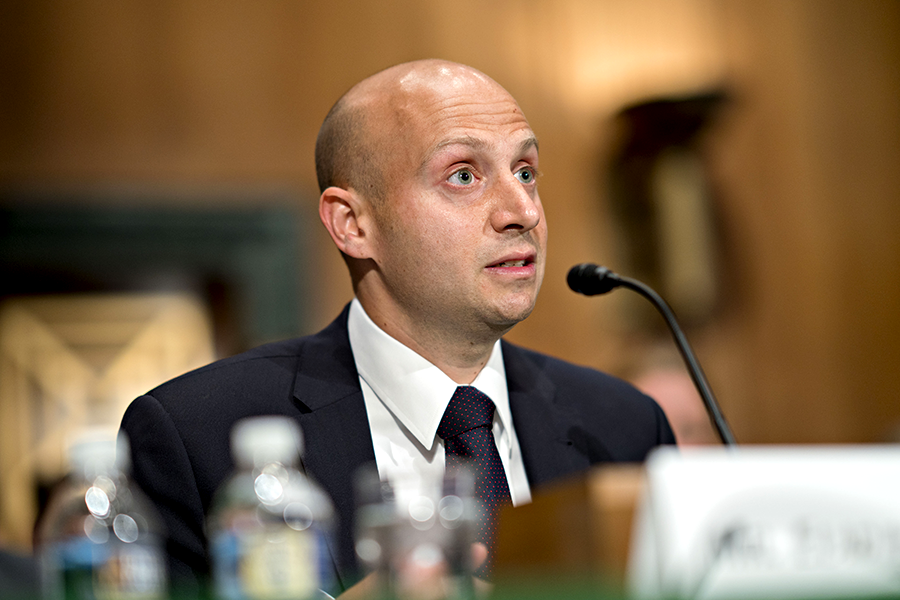
Elad Roisman, one of two Republicans on the U.S. Securities and Exchange Commission, said Monday that he plans to step down by the end of January.
His departure will leave Hester Peirce as the only GOP commissioner at the agency as Gary Gensler pursues an ambitious rule-making agenda that is opposed by some business groups. Gensler, who took over in April, is joined by Democrats Allison Herren Lee and Caroline Crenshaw.
Roisman, who has been a commissioner since 2018, played a key role in Trump-era efforts by the SEC to rein in proxy advisory firms and to make it easier for companies to block submissions from newer stockholders who don’t own many shares. He pushed back on the agency’s efforts under Gensler to undue those changes.
“It has been the utmost honor to work alongside my extraordinary SEC colleagues, who care deeply about investors and our markets,” Roisman, who briefly served as acting chair of the SEC at the end of the Trump administration, said in a statement. He didn’t say what he plans to do next.
Roisman, who is an attorney, previously worked as a staffer on the Senate Banking Committee and as a lawyer for the New York Stock Exchange early in his career.

Retiring RIA seller David Laidlaw alleges the Carnegie valued his stake on $11.7 million EBITA while pitching potential buyers on $21.3 million.

New tool gives RIAs and family offices AI help vetting private market deals, with some users reportedly halving review time.

Investors got projected returns dressed up as real ones, SEC says

Parents must still act to get the $1,000 federal seed and employer contributions, giving financial advisors a role in the rollout.

FINRA booted Rudy Anguiano from the industry for “conversion - the intentional and unauthorized taking of another person’s property.”
As AI makes financial information more accessible than ever, Lana Hock explains why human judgment, trust, and empathy remain the qualities clients value most in a financial advisor
Northern Trust’s Ken Lassner shows advisors how to convert volatility into after-tax portfolio gains

