
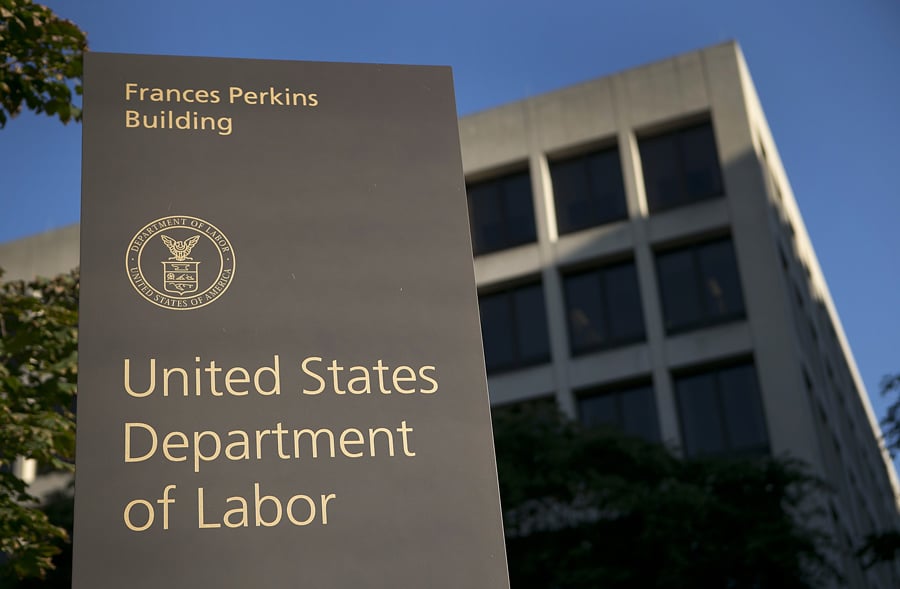
The US Department of Labor has moved to end its legal battle over the controversial Biden-era fiduciary regulation that would have tightened investment advice standards for retirement rollovers, signaling a shift in the administration's regulatory approach to retirement security rules.
The DOL's Employee Benefits Security Administration filed an unopposed motion to dismiss its appeal before the US Court of Appeals for the Fifth Circuit on Monday, according to court documents reported first by Bloomberg Law.
The withdrawal effectively concedes the fight over the Retirement Security Rule without further contest, ending a legal challenge that has stretched across several years and multiple administrations.
The regulation, finalized in 2024, would have expanded the definition of a fiduciary to cover investment advisors guiding 401(k) rollovers and small employer plans. The rule was designed to impose stricter standards of conduct on brokers and advisors providing one-time rollover advice, an area previously outside the fiduciary framework under ERISA.
Critics of the rule argued that it could end up restricting Main Street investors' ability to access advice related to retirement and insurance products, as it would be difficult for advisors that don't have ongoing relationships with clients to meet the high bar of client protection set by the fiduciary standard.
Consumer advocacy and financial industry groups including the American Council of Life Insurers, the National Association of Insurance and Financial Advisors, and the Insured Retirement Institute mounted swift and aggressive opposition to the rule shortly after its finalization. Following that, two federal district courts in Texas – one in the Northern District and one in the Eastern District – issued stays that blocked the rule's implementation before it could take effect in September last year.
The stays were based on legal arguments that the rule conflicted with the plain language of ERISA. In a July 2024 ruling, Judge Jeremy Kernodle of the US District Court for the Northern District of Texas found that "the plaintiffs are likely to succeed on the merits of their claim that the 2024 fiduciary rule conflicts with ERISA's text" and would face irreparable harm without relief.
Kernodle's decision also noted historical precedent, pointing out that the Fifth Circuit had previously vacated an earlier fiduciary rule from the Obama administration on similar grounds. The judge wrote that the 2024 rule "suffers from many of the same problems," citing concerns that the regulation treated financial services providers inconsistently with the ERISA definition of fiduciaries.
In May this year, a coalition of financial planning organizations including CFP Board, the Financial Planning Association, the National Association of Personal Financial Advisors, and XY Planning Network urged the Labor Department under Secretary Lori Chavez-DeRemer to keep up the fight for regulations supporting clients' best interests.
But in September, the Trump administration signaled its intent to scrap the rule as part of its initial regulatory agenda.
The DOL has indicated it plans to rewrite the regulation rather than defend the Biden version, though specifics about the new approach have not yet been detailed.

LPL Financial and Raymond James also add independent advisors from Osaic and Edward Jones in Michigan and Arizona.

The SEC-registered RIA advises on more than $1 billion in client assets, with no advisory fee through 2027 and no human financial advisors.

The four wirehouse firms lost 1,449 experienced advisors and recruited 932 in the first six months of the year, according to Diamond Consultants.

Merit's 10th Commonwealth addition deepens its Western New York reach, while another Hightower partner joins its Signature Wealth platform in Michigan.

Report on Climate Action 100+ signals risk for passive managers' 13G status heading into the 2027 proxy season.
Knighthead Life entered the market with a competitive MYGA. A strong launch earned advisor confidence and paved the way for FIAs.
As AI makes financial information more accessible than ever, Lana Hock explains why human judgment, trust, and empathy remain the qualities clients value most in a financial advisor

