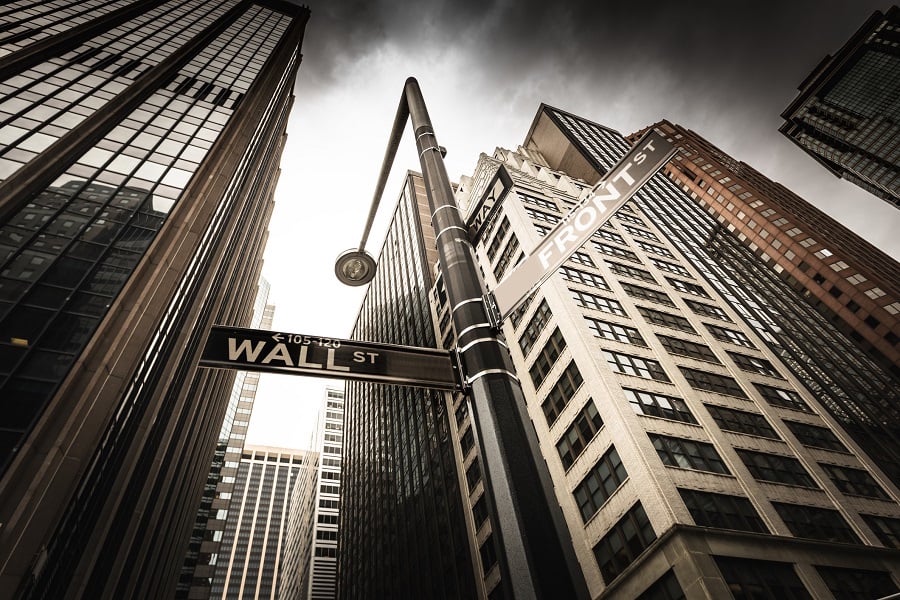
For Wall Street banks and other companies accused of malfeasance, the risk of getting slapped with a big fine by the U.S. Securities and Exchange Commission will soon drop significantly.
That's because Kara Stein, the SEC's lone Democratic commissioner, has to leave the regulator at the beginning of next year. Until President Donald J. Trump nominates a successor -- something his business-friendly administration may have little incentive to do -- Republican commissioners will have outsize influence to block cases.
The implications of the SEC's looming vacancy haven't gone unnoticed on Capitol Hill. Democratic Senator Elizabeth Warren, a vocal critic of banks, said in an interview she's concerned it will lead to companies getting off easy.
Although SEC enforcement lawyers investigate wrongdoing and negotiate fines with companies, the agency's chairman and its commissioners must approve any penalties through a majority vote. The SEC has five politically appointed officials when at full strength. It will be down to two political independents and two Republicans once Ms. Stein departs. That means when Republicans oppose fines, the regulator will be gridlocked.
SEC attorneys are already having anxious conversations, privately questioning whether they will be able to settle cases that include corporate penalties, said two people with direct knowledge of the discussions who asked not to be named because the exchanges were private.
In a possible nod to the coming challenges, a number of fines against companies have been approved this month while Ms. Stein still has a vote. This week alone, the SEC has announced penalties against
UBS Group, Bank of New York Mellon Corp. and Banco Santander.
Ms. Stein, in an interview, declined to discuss how her departure might affect SEC investigations. She did say the agency needs "to have all the tools in the toolbox, including penalties."
Natalie Strom, a spokeswoman for SEC chairman Jay Clayton, declined to comment.
The soon-to-be shorthanded SEC is but one example of how Mr. Trump and GOP control of Congress have affected Washington's oversight of corporate America. Despite the daily turmoil that seems to engulf the White House, the Trump administration has been successful in weakening regulations and installing officials across government who've ended the multibillion-dollar fines that were a staple of Barack Obama's presidency.
The White House didn't respond to a request for comment.
Republican lawmakers and business groups, including the U.S. Chamber of Commerce, have long criticized corporate penalties. Their main argument is that fines are ultimately paid by shareholders, who've already been hurt by the slumping stock prices that often accompany the disclosure of investigations by regulators.
Mr. Clayton, a former lawyer to Wall Street banks, hasn't been as opposed to punishing companies as his resume might suggest. An independent nominated by Mr. Trump, he ultimately has control over which cases come up for a vote.
Mr. Clayton has sided with Ms. Stein and Commissioner Robert Jackson Jr. over the past year in approving fines against a number of corporations, including Tesla Inc. and
Citigroup Inc.
Mr. Jackson, an independent whose appointment came at the recommendation of Democratic lawmakers, declined to comment.
"Without the Democratic vote, I do expect enforcement to change," said Urska Velikonja, a Georgetown University law professor who tracks SEC cases. "I do expect fewer cases against public companies and Wall Street firms, and when those cases are brought, I expect to see lower fines or no fines."
Republican SEC commissioner Hester Peirce has been an outspoken critic of many corporate penalties. Fellow Republican Elad Roisman, a former Senate aide who joined the SEC in September, sided with her in voting against a $34.5 million fine for Walgreens Boots Alliance Inc. and a $1 million sanction involving Putnam Investment Management.
"I expect the commission to continue doing its work and considering each case on its facts and circumstances," Ms. Peirce said in an interview. She declined to discuss Ms. Stein's departure. Mr. Roisman declined to comment.
Some progressives blame a surprising target for Ms. Stein's leaving without a Democratic successor in place: Senate Minority Leader Chuck Schumer.
They argue that Mr. Schumer didn't do enough to make sure Senate Majority Leader Mitch McConnell paired Mr. Roisman's nomination with a Democratic candidate, as is often customary when both political parties have pending openings at the SEC.
"Bad deal-making," Jeff Hauser, executive director of the Revolving Door Project, said of Mr. Schumer. "I don't think it was a priority."
A spokesman for Mr. Schumer declined to comment.
Ms. Warren said she disagrees with the criticism of Mr. Schumer, arguing the fault lies purely with Republicans.
"It has been the tradition of the Senate that nominees that are from the Republican side and the Democratic side to commissions like these move together," she said. "Leader McConnell violated that understanding."