
Asset managers are rolling out new products to give retirement plan participants access to private market investments, amid the Trump administration’s push to expand private equity into 401(k) portfolios.
Alternative asset manager Constitution Capital Partners' new Constitution Capital Horizon CIT launched this week to provide defined contribution plan participants with access to private equity investments. The CIT (collective investment trust) netted over $50 million in assets from 18 different retirement plans, with near-term commitments bringing total assets to more than $1 billion.
SEI Trust Co., a subsidiary of SEI Investments Co., is the trustee for the Horizon trust, which will be available to eligible defined contribution plans that use Principal Financial Group’s Principal 401(k) recordkeeping platform. Horizon’s exposure to private equity can be included in target date funds, managed accounts and other multi-manager structures.
Principal Financial Group announced last week that it was expanding its Principal Featured Partner program for U.S. retirement plans that combine public and private strategies. Private market managers participating in the expanded program include AllianceBernstein, Apollo, Ares, Blackstone, Blue Owl, Carlyle, Franklin Templeton, Goldman Sachs, KKR, Morgan Stanley Investment Management, Neuberger, Partners Group, PGIM, and Principal Asset Management.
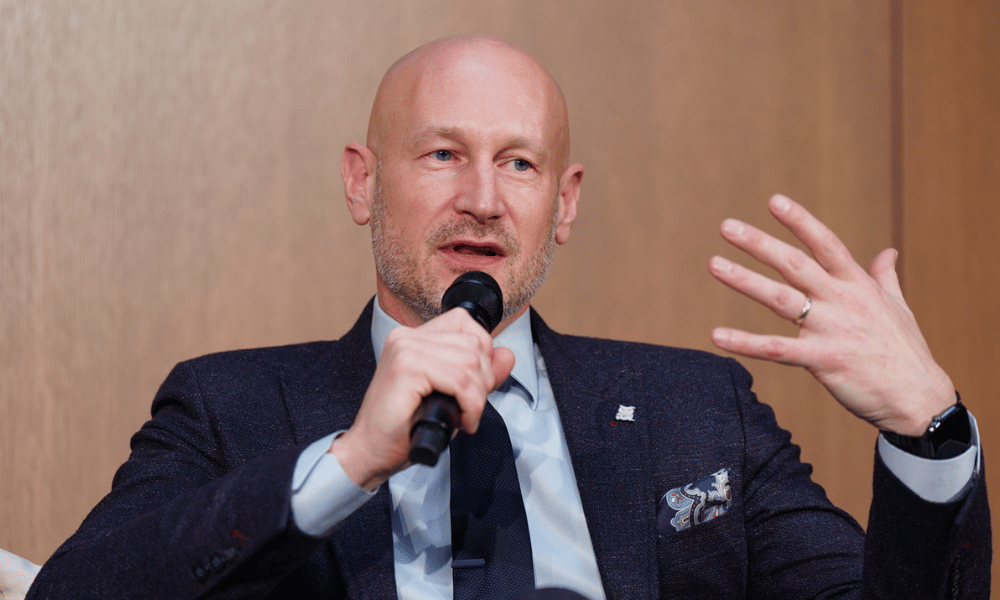
Vestwell CEO Aaron Schumm, pictured, whose retirement fintech works with asset managers and retirement providers, said the opportunity for alternatives in defined contribution plans is significant, but private-market products need to be adapted to the economics of workplace retirement. The Department of Labor issued a proposed rule in March clarifying how fiduciaries can evaluate alternative investments for use in retirement plans.
“Obviously, for the alternative asset managers, they all want additional product distribution,” Schumm told InvestmentNews. “And I think there's a lot of great alternative assets out there that the private sector should have access to. A lot of them are getting super close to having products that I think are going to be really well consumed by the overall population.”
According to Schroders 2025 US Retirement Survey, 45% of investors participating in 401(k), 403(b) or 457 workplace retirement savings plans say they would invest in private equity and private debt investments, which was up from 36% in 2024. The 2025 survey polled 1,500 investors.
“The products themselves have to be constructed in a way that's more palatable for a defined contribution long-term retirement asset,” said Schumm, whose Vestwell platform provides retirement and savings infrastructure for financial firms including JPMorgan Chase, Morgan Stanley and BlackRock.
Last year’s survey from Schroders found that 51% of plan participants would allocate less than 10% of workplace retirement assets to private assets, with 36% saying they would allocate between 10% and 15%. Above 15% allocation was chosen by 6% of plan participants.
Constitution Capital said in its announcement that Horizon’s “dedicated liquidity sleeve is intended to support participant transactions and plan cash flows.” The firm, which focuses on private equity and private credit investments, has $7.6 billion in assets under management.
“The fees have to come down in offering it, because right now if you’re in a pure alt-asset class, it is more expensive than someone should be paying within their retirement program,” Schumm added. “Because those [fees] will erode the upside that someone's going to have, and ultimately what they save over time.”

From using projects as strategic thinking exercises to real-world challenges as problem-solving exercises, indie firms can make for more powerful talent incubators.

New BCG research names financial services among the world's most AI-exposed industries and the US as a top-tier AI economy.

Rockefeller Capital Management's Mallory Findley on how avoiding conversations risks derailing even the best-laid estate plans.

New Empower research reveals a "retirement drift" problem that hands financial advisors a direct opening to add client value.

Nevis joins Jump at RIA platform Focus as both vendors’ AI tools aim to handle account opening and notetaking.
Knighthead Life entered the market with a competitive MYGA. A strong launch earned advisor confidence and paved the way for FIAs.
As AI makes financial information more accessible than ever, Lana Hock explains why human judgment, trust, and empathy remain the qualities clients value most in a financial advisor

