
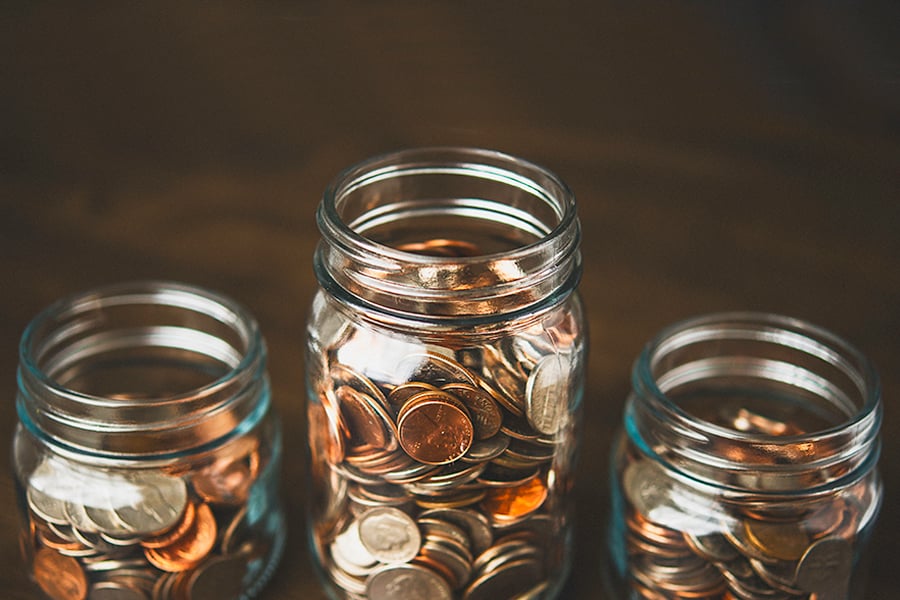
The COVID-19 crisis has illuminated the dire financial situations faced by many Americans who have little to no savings to help carry them through furloughs or unemployment.
Even prior to the record unemployment claims seen over the past several weeks, 39% of U.S. workers reported they would be unable to cover a $400 emergency expense, according to Federal Reserve data. But that lack of emergency savings is something that employers are increasingly interested in helping their workers address.
About 44% of employers with an interest in financial wellness programs said they either offer, or plan to offer, an emergency savings program, according to a February report from the Employee Benefit Research Institute.
Workers appear to be receptive to such programs, even gig workers who are not technically employees.
Nearly three-quarters of people who make at least some of their income selling goods on Etsy said they would like the company to provide help with emergency financial concerns, according to a survey of about 1,800 sellers published Tuesday. That report was commissioned by BlackRock’s Emergency Savings Initiative, which Etsy recently joined. Through its partnership with the initiative, Etsy is planning to add an emergency savings program for its U.S. sellers this year, according to the groups.
About 30% of Etsy sellers said they aren't saving for emergencies. More than 60% said they have been hit with emergencies costing more than $400 over the past year, and nearly a quarter had to pay more than $2,000.
One founding partner in BlackRock’s initiative, Commonwealth, a research development shop, is working with retirement plan record keepers on designs for emergency savings plans that firms will eventually offer to 401(k) clients.
The effort to add emergency funds is particularly relevant at a time when Americans are getting easier access to their 401(k) assets under withdrawal provisions in the recently passed Cares Act. While advisers urge against emptying retirement accounts, many workers have no other savings to fall back on.
“Retirement plan record keepers and plan sponsors have a lot at stake in not having people raid their long-term savings for short-term needs,” said Timothy Flacke, executive director of Commonwealth. “And it’s pretty clear that a lot of us don’t do as well in short-term saving as we need to.”
Commonwealth, which thinks of itself as “a laboratory,” is recruiting institutional partners, such as retirement plan record keepers, to help develop and implement emergency savings designs under the BlackRock initiative, Flacke said.
“The whole point is that we’d really like to see a shift in the landscape in terms of how easy it is for people to build and use emergency savings – and how institutions can play a role in that,” he said.
Commonwealth is also working with smaller entities, those without access to 100,000 workers, to help test savings designs, he noted.
“We’ve seen already that there is broad interest in the industry,” Flacke said. “It just makes sense that people have a buffer of some kind that stands between them and their long-term savings.”
Emergency savings programs can vary in design, but generally, they need to provide people with speedy access to cash, he said. One approach can include offering workers different “buckets” for their pay, with one bucket specifically marked as an emergency account.
In some cases, employers might just connect workers with financial institutions that can help them save, Flacke said. But the key is providing help and concrete steps, rather than just financial education.
“There is a lot of evidence to suggest that simply educating people doesn’t result in different action or behavior,” he said. “Putting quality emergency savings opportunities in front of people, in addition to financial education, is an obvious move.”
The federal government’s forthcoming stimulus checks provide one way to immediately fund emergency accounts, at least for people who will receive those payments and do not need access to the cash, he said. “Windfalls are a moment for emergency savings.”
In addition, people can consider taking advantage of the payment holidays banks are offering on debt, including mortgages, Flacke said. That can allow people without savings to fund an emergency account and resume their debt payments later.
One hang-up that people can have with emergency savings is that they avoid tapping into that money even when it's necessary.
“It’s important to remember that the whole reason why you build liquid savings is to use it,” Flacke said. “People should not necessarily feel like that’s a failure. That’s the reason it’s there.”

Hendershott Wealth Management's Hilary Hendershott on turning a niche for women into an operating strategy, not a marketing pitch.

Iowa's Greenwood Wealth Partners exits D.M. Kelly as UBS and Ameriprise win Merrill Lynch recruits in California and Florida

Less than 1% of pool funds went to actual trading, CFTC says

Plus, SEIA builds a governed data foundation for its in-house AI and Snappy Kraken debuts a read-only marketing coworker for advisors.

He owes $364 million but pays $100 a month
As AI makes financial information more accessible than ever, Lana Hock explains why human judgment, trust, and empathy remain the qualities clients value most in a financial advisor
Northern Trust’s Ken Lassner shows advisors how to convert volatility into after-tax portfolio gains

