
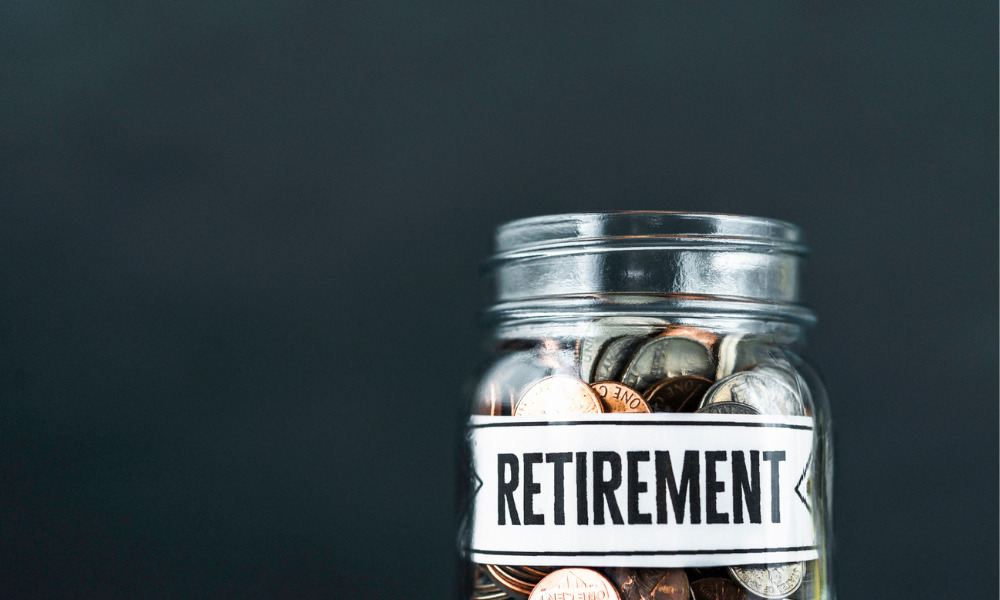
Millions of American workers may be at risk of losing significant portions of their retirement savings as small, left-behind 401(k) balances are automatically rolled into Safe Harbor IRAs – a process that, according to new research from PensionBee, is quietly eroding wealth for a highly mobile workforce.
The report, which draws on data from the Employee Benefits Research Institute and proprietary modeling, estimates that by 2030, 13 million accounts worth a combined $43 billion could be swept into Safe Harbor IRAs through automatic rollovers.
The conclusion is that most of these accounts, intended as temporary holding vehicles, instead become long-term traps, with excessive fees and low returns steadily draining balances over time.
The proliferation of job changes in the US – workers are expected to hold an average of 12 jobs over their careers – has led to a surge in modest, forgotten retirement accounts. One-third of all retirement accounts are currently under the $7,000 threshold for automatic force-out, making them vulnerable to being moved into Safe Harbor IRAs if left behind.
Employers are required to notify departing workers about the fate of their retirement accounts, but communication gaps persist. According to PensionBee’s research, only one in five workers recalled receiving a clear explanation of their retirement options when leaving a job, and just one in ten received instructions in writing. As a result, many are unaware their accounts have been transferred, often to their financial detriment.
Safe Harbor IRAs were originally designed as a short-term holding space where small, left-behind 401(k)s can get rolled over. In practice, however, such accounts mostly linger for years in cash-heavy investments, where monthly fees of $1 to $5 and enrollment charges as high as 20% can quickly erode small balances. By Pensionbee's calculations, the average Safe Harbor IRA holds just $2,718, making even modest fees disproportionately damaging.
Interest rates paid to account holders often lag behind inflation and prevailing market rates, with some providers offering less than 1% interest while retaining the difference as a servicing fee. In the worst cases, these factors can reduce account balances to zero over time, particularly for those who change jobs frequently and accumulate multiple small accounts.
PensionBee’s analysis found that a single $4,500 account left in a Safe Harbor IRA could grow to just $5,507 by retirement, compared to $25,856 if invested in a typical 401(k) or Traditional IRA. For workers with several such accounts, the lifetime shortfall could exceed $90,000 – more than the median American retirement savings.
Legislative changes over the years – including the SECURE Act and the more recent SECURE 2.0 Act in 2022 – have expanded the eligibility for automatic rollovers, raising the threshold from $5,000 to $7,000. While intended to improve access to retirement plans, these changes have also increased the number of accounts at risk. Only 12.8% of Safe Harbor IRA accounts are moved out within the first year, and after three years, three-quarters remain, often forgotten and steadily losing value.
Romi Savova, chief executive of PensionBee, said the data “provides much-needed numerical clarity on the scale and acceleration of the Safe Harbor IRA problem.”
She added that the likelihood of having at least one prior retirement account sitting in a high-fee, cash-like account “without your knowledge is strikingly high.”
The report urges reforms to mitigate the risks, including capping fees, banning penalties for small balances, and requiring clearer communication so workers can consolidate their savings. It also calls for standardized, low-friction transfer protocols to ensure portability and protect retirement wealth as Americans continue to change jobs at a rapid pace.
“Safe Harbor IRAs were intended as a parking lot,” the report concludes. “They’ve become a graveyard. Without reform, millions of workers will lose compounding – their most powerful retirement tool.”

Retiring RIA seller David Laidlaw alleges the Carnegie valued his stake on $11.7 million EBITA while pitching potential buyers on $21.3 million.

New tool gives RIAs and family offices AI help vetting private market deals, with some users reportedly halving review time.

Investors got projected returns dressed up as real ones, SEC says

Parents must still act to get the $1,000 federal seed and employer contributions, giving financial advisors a role in the rollout.

FINRA booted Rudy Anguiano from the industry for “conversion - the intentional and unauthorized taking of another person’s property.”
As AI makes financial information more accessible than ever, Lana Hock explains why human judgment, trust, and empathy remain the qualities clients value most in a financial advisor
Northern Trust’s Ken Lassner shows advisors how to convert volatility into after-tax portfolio gains

