
It’s still too early in the season to identify the pop song that will ear worm its way into America’s consciousness through unending plays on the country’s beaches and boardwalks. As a result, music fans will have to wait a few weeks before the soundtrack of summer ‘24 reveals itself.
Wall Street, on the other hand, seems to have already found its hit single for the season. It’s called “higher-for-longer,” and it’s been blaring all over the place.
The benchmark 10-year Treasury note was yielding 4.5 percent at last check, up from 3.9 percent at the start of the year. That’s a heck of a step higher for the so-called riskless rate, especially when Wall Street’s prognosticators were calling for up to 6 rate cuts only a handful of months ago.
Yet for all those rate reduction predictions, the federal funds rate stubbornly remains at 5.25 percent to 5.5 percent thanks to better-than-expected growth and stickier-than-expected inflation.
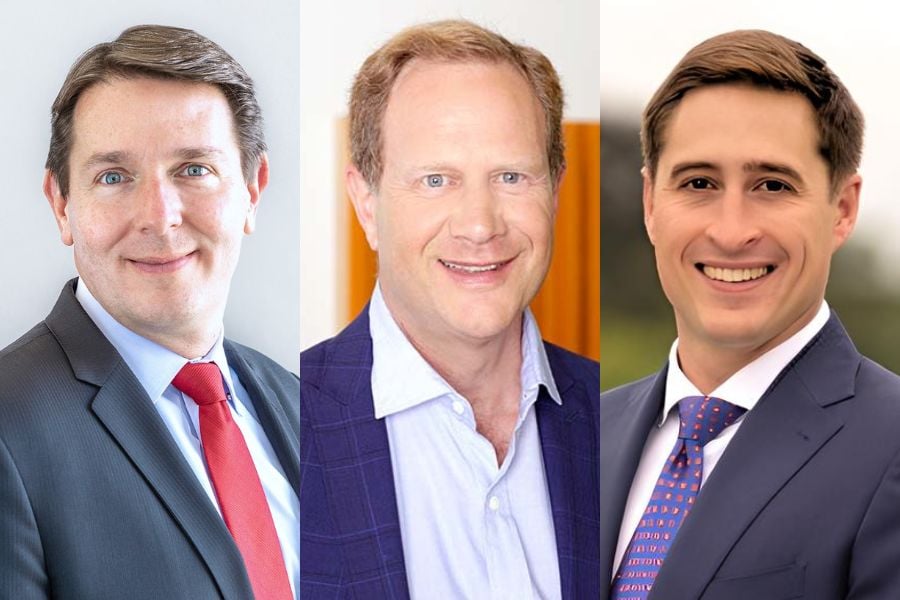
Phil Kosmala, managing director at Taiko, an OCIO for RIAs, was early in adopting the view that the Fed would need to maintain a higher-for-longer posture on Fed Funds policy, making the call back in January. At the time, his view was based on resilient economic conditions, relatively tight labor markets, and the inflationary combination of de-globalization, trade wars, and trillion-dollar deficits for the foreseeable future.
As a result, he maintained equity weights at targets, but kept a very short duration posture in anticipation of a more prolonged yield curve inversion.
“In our view, the only reason to increase duration was to hedge against an imminent recession. We did not believe recession was in the cards for at least nine to twelve months,” said Kosmala.
Going forward, he continues to believe the proverbial “last mile” of inflation (aka the Fed’s target of 2%) will be difficult to achieve absent a recession. That said, he says he is beginning to see the impact of the Fed’s 500 basis point tightening cycle working through the economy.
“Rising 10-year bond yields pose a risk to the expansion as sustained higher yields will curtail 2024 business expansion and hiring,” said Kosmala. “Furthermore, defaults are starting to mount for CCC high yield and senior loan issuers at the same time consumer delinquencies are rapidly approaching levels last seen in the Great Financial Crisis.”
Putting it all together, he believes recession risks for late 2024 or early 2025 are increasing and in turn he is “increasing duration and trimming equity gains.”
Meanwhile, Michael Rosen, chief investment officer at Angeles Investments, believes the market has been “wrong about inflation, wrong about the economy, wrong about monetary policy for the past three years, expecting inflation to fall to target, the economy to fall into recession and the Fed to cut rates quickly and imminently.”
In his view, it is all too clear that the economy is running above trend, inflation has been stuck between 3 percent and 4 percent, and the Fed is not cutting rates anytime soon.
Based on this vision of an overly strong economy, Rosen has generally kept duration short in his fixed income portfolios in the face of the inverted yield curve, while staying long high-yielding securities.
Ted Brooks, chief investment strategist at Nordwand Capital, also places himself in the higher-for-longer camp. To be clear, that does not mean he sees 5 percent or more short-term rates on the horizon. But he does see a departure from the “artificially low-rate environment we’ve been in since the global financial crisis and then Covid.”
To adjust to this new environment, Brooks says he has been rethinking sources of return and how he budgets for risk exposure.
“If global growth moderates over the next handful of years and rates remain higher then instruments like cash and various forms of credit or fixed income may be more appropriate places to seek return for clients,” said Brooks. “We have been positioning for that in client portfolios and would expect to continue to do so.”
Additionally, Roshan Weeramantry, partner & co-head of Wealth Management at Helium Advisors, says the macroeconomic data of the last few months has led him to believe that interest rates will stay higher for longer than the market currently anticipates. In his opinion, while there is some deterioration in labor market data and consumer spending, overall economic strength implies the Fed should maintain its stance.
“Our strategy hasn’t adjusted significantly, as we have been positioned for higher rates since the third quarter of 2023,” said Weeramantry. “Currently, we are on the lookout for equity weakness and allocating to shorter duration fixed income strategies to take advantage of higher yields.”
Finally, Stephen Carrigg, director of investment analysis at Integrated Partners, says he is believer in higher for longer for one main reason: “the Fed has not been faced with a reason to lower rates yet.”
“The broader economy is still chugging along smoothly, inflation has tampered down a bit,” said Carrigg. “Once there are cracks in the economy or reasons to cut rates then the fed will make that decision, but, simply put, there just isn’t much of an economic reason to cut rates at this time.”
In terms of adjusting his investment strategy, Carrigg says the shift to higher rates for longer allows him to take less duration risk in client portfolios to gain the same level of income.
“We are also taking a much deeper dive on any active managers to see if they are providing alpha or if their performance was just due to a low interest rate environment,” said Carrigg.

LPL Financial and Raymond James also add independent advisors from Osaic and Edward Jones in Michigan and Arizona.

The SEC-registered RIA advises on more than $1 billion in client assets, with no advisory fee through 2027 and no human financial advisors.

95.8% of house trades were winners. For clients? The SEC says just 14.9%.

The complaint says Duolingo added friction on purpose, then lied about it.

The four wirehouse firms lost 1,449 experienced advisors and recruited 932 in the first six months of the year, according to Diamond Consultants.
Knighthead Life entered the market with a competitive MYGA. A strong launch earned advisor confidence and paved the way for FIAs.
As AI makes financial information more accessible than ever, Lana Hock explains why human judgment, trust, and empathy remain the qualities clients value most in a financial advisor

