
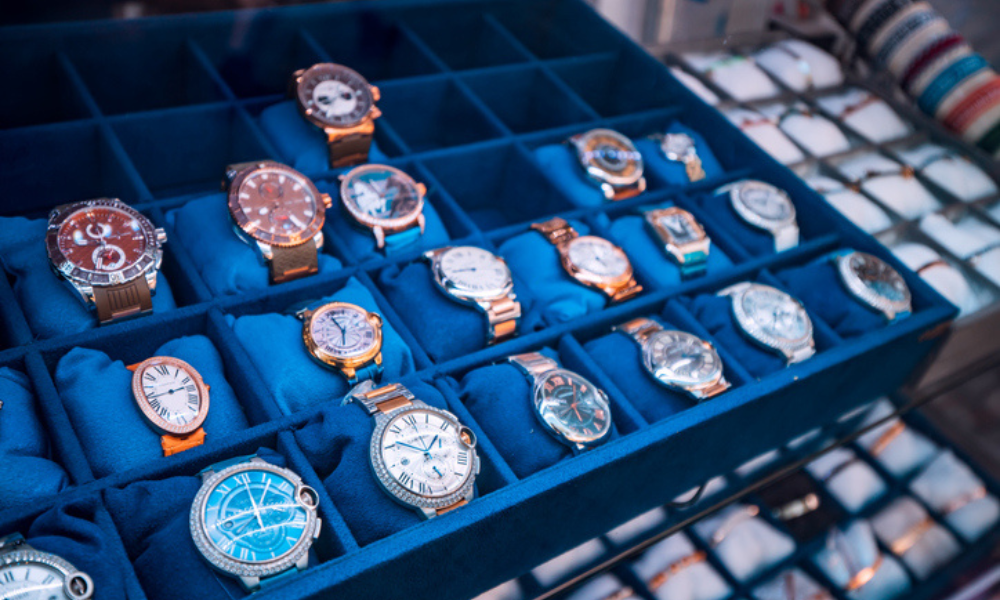
Prices for pre-owned Rolex watches kept falling on the secondary market last month while entry-level models and brands like Cartier and Omega fared comparatively better.
An index of Rolex timepieces declined by 2.2% in September, according to market prices tracked by the Bloomberg Subdial Watch Index. An index of 100 entry-level watches, typically priced below £7,500 ($9,120), fell by 0.8% over the same period.
The results show collectors and enthusiasts are still wary of shelling-out for the most-hyped models from the top Swiss brands after a surge in prices in 2021 and into 2022. Prices for Rolex, Patek and other top pre-owned models soared to records on the secondary market during the pandemic only to pull back sharply beginning in April 2022 amid higher interest rates and the collapse of many cryptocurrencies.
Cartier watches, including models such as the Tank and Santos, were the best performing brand index, declining 0.4%. An index of Omega models, including the Speedmaster Moonwatch, fell 1.2%. An index of models by Tudor, Rolex’s lower-priced sister brand, dropped 1.8%.
Over the previous six months, lower-priced, entry-level timepieces have outperformed the overall market as well as the Rolex and Patek Philippe indexes.
The Bloomberg Subdial Watch Index, which includes a group of the 50 most traded watches by value from Rolex, Patek Philippe and Audemars Piguet, has dropped about 5% in six months while the Entry-Level 100 index has fallen by just 0.7% over the same period.
The Cartier index, which includes many models priced below £7,500, has been the best performer, gaining 2% over six months.
The exception to the cheaper watches outperforming trend has been Rolex sister brand Tudor, whose entry-level priced watches have dropped 4.8% in six months, the Subdial data shows.
Still, the majority of the watches in the Bloomberg Subdial Watch Index from Patek, AP and Rolex continue to fetch prices on the secondary market above their listed retail price.
Most entry-level priced models, from Breitling to Cartier to Omega, tend to trade at levels below their retail price on the secondary market.
The Bloomberg Subdial Watch Index has dropped 12% in a year while the Entry Level 100 index has gained 1.2%.
This story was produced with the assistance of Bloomberg Automation

According to a federal charges Bradley Heppner, 60, received more than $150 million in payments through funneling money from GWG Holdings to a shell company.

A $1B fund allegedly skimmed 30% off the top, then swapped cash for locked-up stock.

Insiders allegedly rewrote projections three times in four days.

TCI Wealth Advisors also has also tapped JIFFYAI to unify onboarding and servicing, while TradePMR adds ICE market data to its Fusion advisor platform

Also, CAPTRUST adds a $300 million planning team from Sanctuary in its home market of Raleigh, and Sequoia Financial Group buys a Boulder family office.
Knighthead Life entered the market with a competitive MYGA. A strong launch earned advisor confidence and paved the way for FIAs.
As AI makes financial information more accessible than ever, Lana Hock explains why human judgment, trust, and empathy remain the qualities clients value most in a financial advisor

