
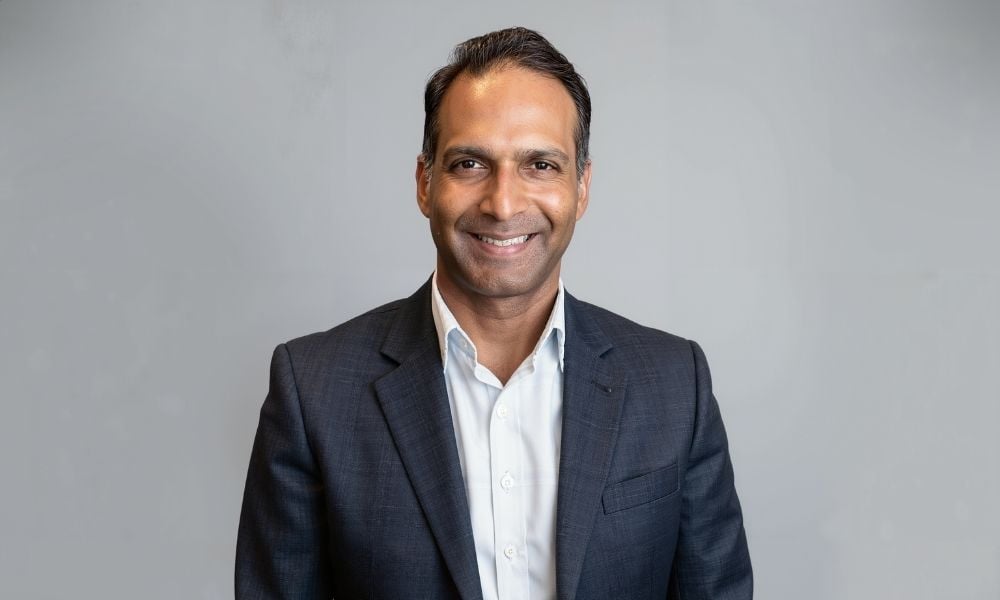
Merit Financial Advisors has named John Rajes as its first chief technology officer, adding a dedicated technology executive to a leadership bench the Atlanta-based registered investment advisor has been expanding as its acquisition pace accelerates.
Rajes, who started at Merit on July 13, will be responsible for the firm's technology architecture, data strategy, integrations and artificial intelligence efforts, according to a release from the company.
He arrives at a firm managing approximately $30.1 billion in assets across more than 55 offices nationwide, and one that has closed 61 acquisitions to date, including nine so far in 2026.
Rajes is based in Charlotte, North Carolina, and will also spend significant time at Merit's headquarters in Alpharetta, Georgia.
The hire follows a now-familiar pattern in wealth management, where firms that have scaled quickly through M&A are adding specialized executives to manage the operational weight of that growth. For PE-backed consolidators looking for an IPO exit, the ability to integrate operations may be a make-or-break factor.
Merit has made three other senior additions in recent months: Doug Moore as chief financial officer and Sarah Mouser as executive vice president of financial planning, both named earlier this year, along with Alex Hansen as chief advisor success officer.
Read more: Merit hires ex-Edelman and Verdence executives, launches leadership initiative with ClientWise
"Merit has experienced tremendous growth, and we have been very intentional about making sure our leadership structure and infrastructure evolve along with the organization," said Chrissy Lee, Merit's chief operating officer. "Technology is now central to virtually every aspect of how we support our advisors, integrate new teams and create scale across the firm. John brings the wealth management experience, technology expertise and strategic perspective we need to connect the investments we are making today with a much broader roadmap for where Merit is going."
Rajes joins from an independent consulting practice and previously spent time at LPL, UBS, Barclays and Goldman Sachs. At LPL, he served as head of strategic partnerships, overseeing a fintech ecosystem of roughly 90 providers along with investment product relationships spanning asset managers, insurance companies and separately managed account providers.
"Technology becomes more important as an organization grows, but simply adding more technology isn't the answer," Rajes said. "Merit already has a strong foundation. Now we can build on it by connecting our data, integrations and AI capabilities in ways that make information more useful, accessible and actionable for advisors and employees."
Rajes described his approach as working "at the core and at the edges" – keeping mind of data and integrations on one side, and advisor- and employee-facing tools, including emerging AI applications, on the other. He will work alongside Brian Green, Merit's chief product officer, with both executives reporting to Lee.
"As Merit has grown, technology and product have each become significant enough to require dedicated leadership," Lee said. "Having strong leaders focused on each area gives us the ability to move faster while being much more intentional about how everything works together."
The timing lines up with what has become one of the industry's most active acquisition campaigns. Merit's most recent deal, the $900 million Bridgeway Group in Southern California, closed this summer as the firm's ninth partnership of the year. Six of Merit's nine 2026 acquisitions have come from advisors formerly affiliated with Commonwealth Financial Network, the broker-dealer LPL acquired last year. In 2025, Merit inked 16 acquisitions, making it the third-most active acquirer for the year according to deal tracking by Echelon Partners.
Merit's own capital structure has also shifted amid that growth. The firm took a minority investment from Constellation Wealth Capital last year after its original private equity backers, Wealth Partners Capital Group and HGGC's Aspire Holdings, exited their positions.
Industry researchers say the emphasis on technology integration reflects where consolidators are increasingly differentiating themselves. According to research by Cerulli, 55% of advisors identify an integrated technology platform as one of the most valued services a consolidator can offer – a factor the research firm ranks alongside succession planning, which nearly three-quarters of RIAs consider when deciding whether to join a larger platform.
Lee framed the hire as part of a longer-term buildout rather than a response to any single transaction. "Our growth strategy has always been about much more than completing transactions," she said. "We want to make sure that when great firms choose Merit, we have the leadership, technology, resources and support infrastructure to help them become even stronger."

Donated SpaceX stock generally can’t be refused or sold for years, leaving advisors to explain concentration risk to families

Aging populations and underfunded systems are forcing wealth managers to rethink how they prepare clients for retirement.

A new Morgan Stanley survey signals a fundamental shift in how employees view retirement benefits - and raises the stakes for plan advisors.

Proposition 40 wealth tax could raise $30 billion, not $100 billion, as departures erode the base and voters remain split.

Jump is piping FMG marketing content into post-meeting workflows as Zocks opens its platform to more than 32,000 LPL financial advisors.
Knighthead Life entered the market with a competitive MYGA. A strong launch earned advisor confidence and paved the way for FIAs.
As AI makes financial information more accessible than ever, Lana Hock explains why human judgment, trust, and empathy remain the qualities clients value most in a financial advisor

