
A decade-long stretch of record-level merger and acquisition activity has painted a picture of a wealth management industry riding waves of growth and prosperity.
A closer look, however, shows an industry that might have gotten too complacent and is mistaking market performance with actual business growth.
That was among the sobering realities presented to financial advisors in Nashville Wednesday as the DeVoe Elevate conference kicked off with the main themes of marketing and organic growth.
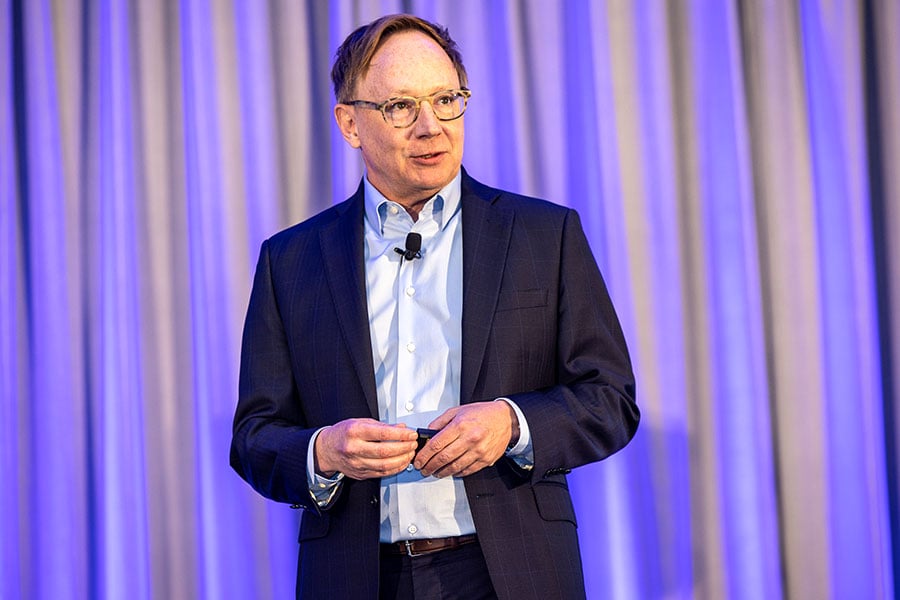
During his opening keynote, DeVoe & Co. Chief Executive David DeVoe cited the average RIA growth rate in 2017 of 23%, which he underscored as a perfect example of why private equity investors are falling over themselves to get a piece of the action.
But “peeling back the onion,” DeVoe pointed out that in the 2017 example, 13 percentage points of that 23% growth rate came from market returns and another percentage point came from M&A activity, leaving 9 percentage points for organic growth.
The organic growth rate fell to 7% in 2018, 4% in 2019 and 3% in 2020.
Last year saw a slight uptick to 4% average organic growth for RIAs.
“This is a tragedy from my perspective,” DeVoe said. “This industry should be growing faster than 3% or 4%. I think we have a challenge because as an industry we took our eye off the ball.”
He said it’s easy to understand how market returns can mask a lack of organic growth, and he also cited the impact of the Covid pandemic as something that distracted firms from business development.
But on the topic of business development, he said the average advisory firm reduced investment in business development by 50% over the past few years, “and now we’re seeing the implications of that.”
“For years, people would just look at the AUM from the year before and say everything is great, because AUM can create an illusion of growth,” he said.
DeVoe, whose firm closely tracks M&A activity among RIAs, is seeing a rare plateau developing this year. Deals have posted record highs on an annual basis dating back at least a decade, but the number is now leveling off.
“Some advisors are realizing their growth is down and that they’re not growing much organically,” he said. “It’s becoming a bit of a wake-up call.”
The recognition of the muted growth, DeVoe said, is contributing to the slowdown in M&A activity because of the close connection between asset growth and valuations.
“Some advisors have taken a pause on the concept of selling their firm,” he said.
What this all comes down to is the need to focus on growth, and not just for growth’s sake, DeVoe said.
“I don’t think growth is necessary, but it will help you run a better firm and help you have happier employees,” he said. “People will learn to understand the interdependency between talent and growth because it helps you have a more institutionalized process and ultimately, it affects clients in a very positive way.”
It comes down to the benefits of scale, which are mentioned in just about every press release announcing an acquisition.
“The No. 1 reason everyone has been selling their RIA is to gain efficiency and scale,” DeVoe said. “It’s not necessary that firms grow but it’s necessary that they get better at what they’re doing, and you have to grow to do that.”

Chicago-based Mesirow Fiduciary Solutions adds flexPATH's plan-level outsourced fiduciary book, boosting its retirement market reach to $164 billion.

Also, Raymond James's employee advisor channel adds breakaways from Wells Fargo and Stifel, while UBS welcomes an ex-Morgan Stanley duo in Indiana.

It promised guaranteed principal and 10% monthly returns. The SEC says it invested nothing.

Ten years after entering the fee-based annuity market, MassMutual Ascend says nearly half its lifetime sales came in the past two years alone – but barriers remain among fee-only advisors.

Amplify, WealthReach, Zeplyn and Zocks have unveiled partnerships aimed at automating portfolio management, content creation, account opening, and client communication.
Northern Trust’s Ken Lassner shows advisors how to convert volatility into after-tax portfolio gains
Dan Biagini of American Equity says the steady decline of pensions, longer lifespans and a reset in interest rates are rewriting how advisors build retirement income

