
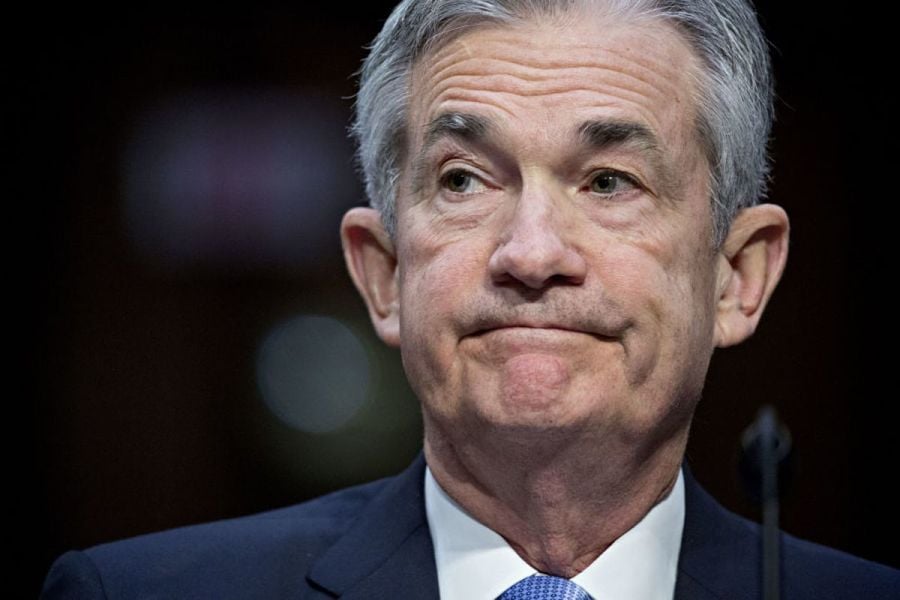
Federal Reserve Chair Jerome Powell said the US central bank must be patient and wait for evidence that inflation continues to cool, doubling down on the need to keep borrowing costs elevated for longer.
The Fed chief said recent inflation figures indicate it will likely take more time than previously thought to attain the confidence needed to lower interest rates, echoing comments he made earlier this month.
“We did not expect this to be a smooth road, but these were higher than I think anybody expected,” Powell said Tuesday, referring to the lack of inflation progress in the first quarter. “What that has told us is that we’ll need to be patient and let restrictive policy do its work.”
“It looks like it will take longer for us to become confident that inflation is coming down to 2% over time,” he added.
During the event hosted by the Foreign Bankers’ Association in Amsterdam, Powell described current policy as restrictive by “many, many measures” but noted time will tell whether rates are sufficiently high to bring inflation back to the central bank’s 2% goal. The Fed chief reiterated it wasn’t likely that the central bank’s next move will be a hike.
“We think that it’s probably a matter of just staying at that stance for longer,” Powell said.
US central bankers, including Powell, have expressed disappointment at the lack of inflation progress in the first quarter. Earlier this month, policymakers kept their benchmark policy rate unchanged at a 23-year high, a level Powell said he was prepared to maintain “for as long as appropriate.”
During the moderated discussion between Powell and European Central Bank Governing Council member Klaas Knot, Powell said that he expects inflation will move lower on a monthly basis. However, price figures in the first quarter have tempered his confidence.
“Today was a big exercise in reiterating the previous stance that they don’t expect to be hiking rates and if they need to stay at this level for longer, they will,” said Luke Tilley, chief economist at Wilmington Trust.
Producer Prices
The producer price index, a measure of wholesale prices, topped all economists’ forecasts in April, a government report showed Tuesday. That said, several components from the report that feed into the calculation of the Fed’s preferred inflation gauge — the personal consumption expenditures price index — were more mixed.
Powell described Tuesday’s report as “mixed.” The consumer price index for April will be released Wednesday, and economists surveyed by Bloomberg estimate prices rose a firm 3.4% from a year earlier.
The US economy continues to show resilience even with the Fed settling in with higher-for-longer rates. Non-farm payrolls have averaged 246,000 a month so far this year, and unemployment remains low. The April jobs report, however, did show some signs of moderation, with a slower pace of job growth and an unexpected tick up in unemployment.
Powell described the labor market as “very strong” with signs of gradual cooling and re-balancing, in part driven by an increase in labor supply from immigration as well as an easing in demand. He added the labor market is about as tight as it was before the pandemic in 2019.
European Outlook
ECB officials including President Christine Lagarde have signaled they’ll begin to lower borrowing costs at their June meeting, a sentiment Knot echoed Tuesday. What happens after is less clear and more controversial.
Some European policymakers favor a series of quick rate cuts to reduce the burden on the euro-area economy, while others call for caution, arguing with persistent risks to consumer prices. Though ECB officials insist on being independent from the Fed, there seems to be some disagreement on how much the ECB’s monetary policy can diverge from that of its US counterpart.

The financial advice industry has been facing inquiries into its cash sweep programs for years now.

Investor money allegedly went to strip clubs, exotic cars, and landscaping

Procyon adds $415 million in assets under management in New Jersey while Savant picks up a $213 million Southern California planning firm

With a growing number of real estate-rich Baby Boomers aging into retirement, some advisors may be failing to consider all the options available for those clients' assets.

Cornerstone Advisors study reveals compliance bottlenecks stall campaigns weeks after customer opportunities close.
As AI makes financial information more accessible than ever, Lana Hock explains why human judgment, trust, and empathy remain the qualities clients value most in a financial advisor
Northern Trust’s Ken Lassner shows advisors how to convert volatility into after-tax portfolio gains

