
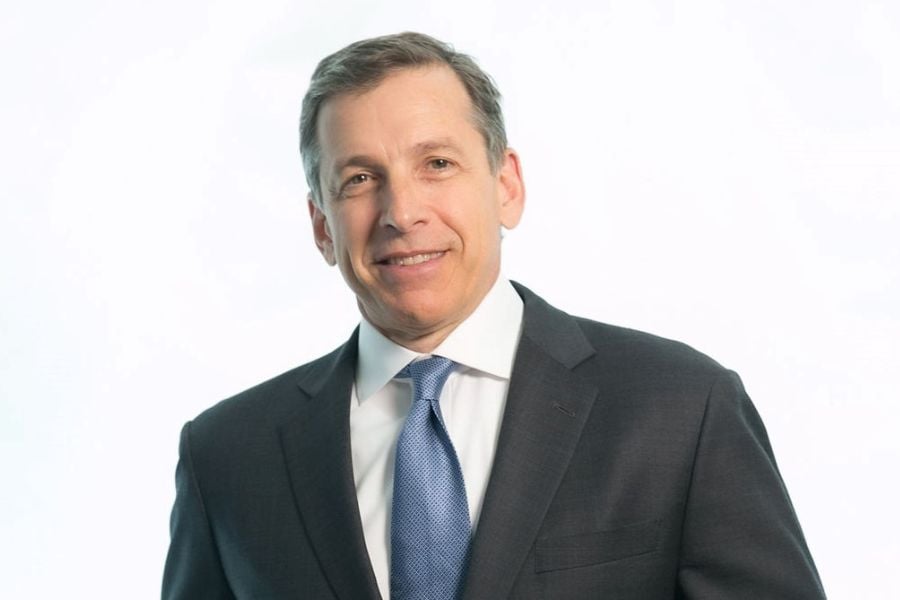
Over his 40-year career in financial services, Richard Saperstein has witnessed and adapted to seismic shifts – from typewriters to computers, from dial phones to iPhones. Now, as founder and chief investment officer of Treasury Partners, a New York City-based investment firm, he’s seen an evolution in financial practices that has directly impacted client and business models.
“We had this major transformation in the tools of the trade that had to be embraced,” he says. “The business went from transactional to advisory – where we restructured our practice towards financial planning, asset allocation, and advice surrounding portfolio management – ultimately providing a better outcome for clients.”
A pivotal element in Saperstein’s narrative is the integration of technology in money management. Saperstein describes the move from manual data generation to electronic data capture, highlighting its role in creating sophisticated analytics to evaluate performance, risk, and volatility.
“It now enables us to actually create portfolios and measure the historical volatility,” he notes. “All that had a tremendous impact on what we were able to do for clients.”
Saperstein’s personal career trajectory mirrors the broader changes in the industry. His stints at various financial institutions, including EF Hutton, Janney Montgomery Scott, CIBC Oppenheimer, and Bear Stearns were punctuated by mergers, acquisitions, and crises.
“There was dramatic upheaval in the firms where I worked, for no fault of my own. Still, it’s important to always embrace change and look at change as an opportunity to improve what we’re doing and how we’re serving our clients,” he says.
In 2009, Saperstein’s Treasury Partners, which provides a variety of financial services for clients, including wealth management, portfolio management, financial planning, estate planning, and cash management for companies, became affiliated with Hightower Advisors, an independent registered investment advisor.
Saperstein’s perspective on change extends beyond technology. He believes that change brings a diversity of experiences and knowledge, broadening one’s skill set and understanding of the industry.
“By embracing change, you open your eyes to a whole new knowledge base,” Saperstein says.
Despite his numerous achievements, including recognition on Barron’s annual list of top financial advisors for 20 consecutive years, Saperstein remains focused on client outcomes rather than accolades.
“I’m focused on the results we’re providing for our clients,” he adds. “The important aspect of what sets us apart is the team approach we take. Not only in how we hire people, but our willingness to give our team members responsibility to act independently, make decisions, and have an impact.
“I want to hire younger people who’ll look at things differently, be more innovative, be more creative. And they’re going to have a positive impact on someone like me, that’s been doing this for 40 years,” he says.

Elsewhere, Wells Fargo Advisors adds a $400 million Morgan Stanley veteran in Naples as an ex-Cetera advisor goes independent with LPL

According to a federal charges Bradley Heppner, 60, received more than $150 million in payments through funneling money from GWG Holdings to a shell company.

A $1B fund allegedly skimmed 30% off the top, then swapped cash for locked-up stock.

Insiders allegedly rewrote projections three times in four days.

TCI Wealth Advisors also has also tapped JIFFYAI to unify onboarding and servicing, while TradePMR adds ICE market data to its Fusion advisor platform
Knighthead Life entered the market with a competitive MYGA. A strong launch earned advisor confidence and paved the way for FIAs.
As AI makes financial information more accessible than ever, Lana Hock explains why human judgment, trust, and empathy remain the qualities clients value most in a financial advisor

