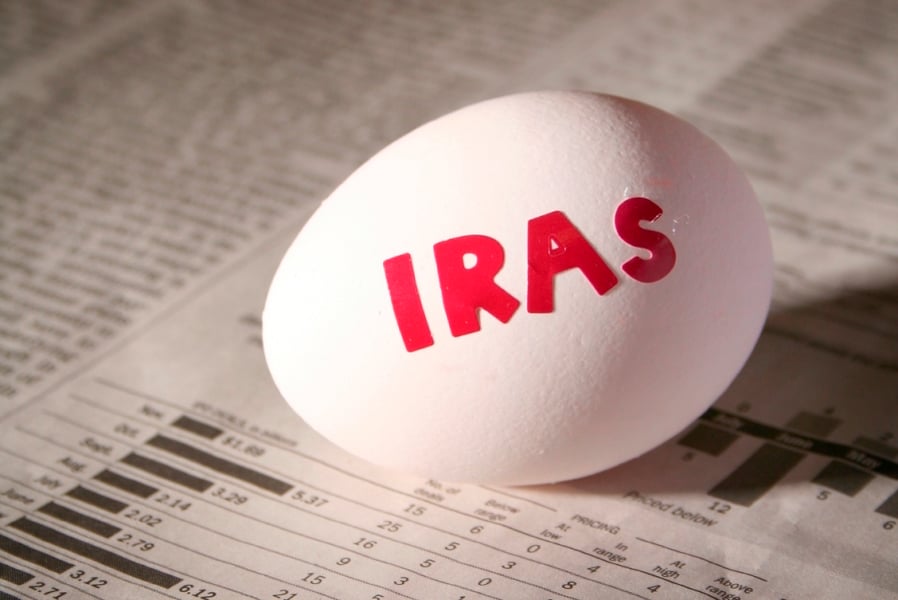
Here's a rollover warning as we approach the New Year: Only use direct trustee-to-trustee transfers when moving IRA funds to another IRA.
This cannot be said enough, so here we go again. Advisers are still getting caught flat-footed when clients violate the once-a-year IRA rollover rule and, in turn, lose their IRA funds. Advisers need to educate clients on this harshly rigid rule for which there is no fix.
The rule
The once-a-year
IRA rollover rule only applies to indirect rollovers in which funds are withdrawn personally to be redeposited to another, or the same, IRA within 60 days of when the funds are received. This is what is commonly referred to as a "60-day rollover."
Withdrawn personally means that the check is made out to the IRA owner personally, as opposed to being transferred directly to another IRA, with the IRA owner never touching the funds.
The once-a-year rule never applies to direct transfers, which is why this is the only foolproof way to move IRA funds.
Under the rule, an indirect rollover from one IRA to another IRA (or from one
Roth IRA to another
Roth IRA) can only be done one time per year. Here's the New Year tax trap: That year is not a calendar year. It is a fiscal year. The rollover can only be done once every 365 days.
Example
On Dec. 20, 2019, Joe withdraws funds from his IRA with a check made out to him personally and then rolls the funds over to another one of his IRAs within 60 days. Joe cannot do another indirect rollover from any of his other IRAs or Roth IRAs until Dec. 20, 2020, one year after the IRA funds were received.
[Recommended video: Ed Slott: Here's why January is the new December for charitable contributions]
Next year's tax trap
Some people are not aware that the one-year period is 365 days — a fiscal year — and not a calendar year. They think they get a fresh start on Jan. 1, once the year has ended, allowing another 60-day rollover at that point. That is not the case.
If a second 60-day rollover is done before the one-year period is met, those funds are not eligible to be rolled over and become a taxable distribution (except for certain Roth IRA distributions that would be tax-free), and subject to the 10% early distribution penalty as well if the individual is under age 59½ and no exceptions apply.
In addition, if an individual does the second rollover, not only are the funds withdrawn taxable, but the funds rolled over would be excess contributions to the IRA they were rolled over to, creating a potential 6% excess contributions penalty if the excess is not timely corrected by Oct. 15 of the following year.
The worst part is that there is no relief available in the Tax Code as there is for other retirement account mistakes. The IRS has no authority to grant relief.
This is a fatal error, especially if the entire IRA was withdrawn to move to a new custodian or financial adviser. The funds can no longer retain their tax-sheltered status and that IRA is no more. That is the death knell for that IRA, all because the once-a-year IRA rollover rule was violated. It does not matter what the reason for the mistake was.
[More: 5 reasons to keep some funds in traditional IRAs, even for Roth IRA lovers]
Rollovers from company plans to IRAs (and vice versa) are exempt from this rule, and so are distributions from IRAs that are converted to Roth IRAs.
The bottom line: Don't do 60-day IRA rollovers.
If the financial institution insists on issuing a check, make sure the check is not made out to the IRA owner, but instead to the receiving IRA custodian. This will be treated as a direct transfer since the IRA owner cannot cash that check, meaning there was no constructive receipt.
As the New Year begins, be careful to keep track of any open 60-day rollover time frames. Unlike most other things, the New Year does not provide a fresh start for 60-day IRA rollovers.
[More: The most misunderstood Roth conversion tax rule]
For more information on Ed Slott, Ed Slott's 2-Day IRA Workshop and Ed Slott's Elite IRA Advisor Group, please visit www.IRAhelp.com.