January's wild ride of stock market volatility has put the
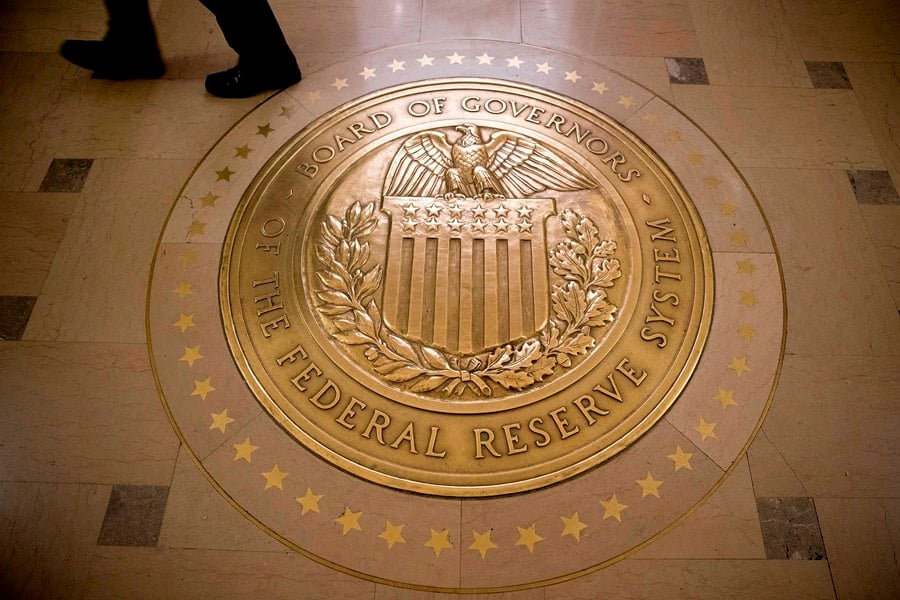
Federal Reserve back into the awkward position of linking its monetary policy to the financial markets.
While that isn't an officially stated position of the Fed, it is widely recognized that the Fed governors will have a difficult time sticking to their previous hawkish statements about four interest-rate hikes this year if the stock market can't find some stability.
“For the very short term, the recent stock market turmoil has pretty much eliminated any chance of the Fed hiking rates in January,” said Mohamed El-Erian, chief economic adviser at Allianz SE.
“I don't expect the Fed to hike four times this year,” he added. “At most, they will hike twice, and that will remain sensitive to both economic data and financial market stability.”
Mr. El-Erian's latest book, “The Only Game in Town: Central Banks, Instability, and Avoiding the Next Collapse” (Random House, 2016), addresses the increasingly intertwined nature of Fed policy and the financial markets.
TAKE BACK RATE HIKE?
It's not supposed to be that way, at least not this openly. The Fed's stated dual mandate is to focus on employment and inflation levels. But ever since the financial crisis, when the
unprecedented quantitative easing programs fueled the stock market rally, investors and advisers have been looking to the Fed for help with the markets.
With the S&P 500 Index down nearly 9% this year through Wednesday, market watchers are not only questioning the Fed's December rate hike, but also doubting
whether the Fed can hike rates again this year.
“Many commentators are suggesting that if the economy doesn't show signs of strength, the Fed will have to undo the rate hike from December,” said Quincy Krosby, market strategist at Prudential Financial.
“Nearly all of the central banks [around the world] that have tried to raise rates over the last couple of years have been forced to lower rates,” she added. “I think the Fed is going to be gradual and careful, and won't take away December's hike unless and until the economy needs it.”
The link to the economy is key, as articulated by Omar Aguilar, chief investment officer for equities at
Charles Schwab Investment Management.
FED MEETING
“This [stock market selloff] is a financial crisis, not an economic crisis,” he said, stressing that there are still opportunities for investors to look for companies with solid fundamentals.
“Nothing has changed in the last three weeks in terms of the economic outlook; I think what consumers don't like is the [stock market] headlines,” Mr. Aguilar added. “Over the last 20 years there was only one time when a financial crisis has translated into an economic crisis.”
Unfortunately, that one time was 2008, which is still a vivid memory for a lot of investors and financial advisers.
“I believe that even before the recent volatility, the market figured out that the Fed's rate-hike policy wasn't going to succeed,” said Steve Stanganelli, a financial adviser with Clear View Wealth Advisors.
“I don't think market participants have any special ESP, but it just seems that the recent volatility supports the view of traders that achieving a higher Fed rate is going to be tough,” he added.
The Fed is scheduled to meet next Tuesday and Wednesday, concluding with a statement on Wednesday afternoon. Even without the
spike in stock-market volatility, expectations were very low for a rate hike in January in the wake of the 25-basis-point hike announced last month.
STAYING THE COURSE
But if the Fed is to stay on course for its
plans to hike four times this year, it is logical that a hike would come in March.
“The stock market drop will surely change the Fed's rate-hike strategy,” said Jonathan Swanburg, financial adviser at Tri-Star Advisors.
“Inflationary pressure is non-existent and their concerns about overheating should be pretty well extinguished, and the yield curve is flattening,” he said. “Those two elements combined with the already strong dollar and incredibly low commodity prices are going to make it very hard for the Fed to continue raising rates.”
David Haas, president of Cereus Financial Advisors, believes the Fed is committed to its original mandate, with the caveat that it also considers the impact on investors.
“The Fed is not directly concerned with the stock market, but indirectly, the Fed cares about the securities markets a lot because they care about the triggers for the current drop and about any impact the drop has on the economy,” he said. “I would not expect another rate increase until the third or fourth quarter, and I do not expect the Fed to loosen in response to the current situation.”
ELECTION YEAR
Pushing the next rate hike out to the second half of the year introduces another factor in the form of the presidential election, which is also supposed to be way outside the scope of the Federal Reserve.
“[President Barack] Obama does not want to leave office with the economy in a
recession,” said Thomas Balcom, founder of 1650 Wealth Management.
“Based on what has happened to U.S. stocks this month, and what's happening to stocks globally, I don't see how the Fed can raise rates even in March, at this point,” he added. “I would anticipate the Fed's next comments will be relating to a pause.”
The Fed's corner seems to get smaller with each passing day. And no matter how much one wants to believe the Fed acts independently from the day-to-day state of the financial markets, most advisers are seeing through that veil.
“The Fed's responsibility is not to manage the stock market, but the Fed is now more connected than ever to the financial markets,” said Kashif Ahmed, president of American Private Wealth.
“I believe the Fed should continue to raise rates, because it's necessary,” he added. “It's not like the stock market has never been down before, and we're not in a
recession.”