
The wirehouse world historically has wanted next to nothing to do with registered investment advisers, who have been siphoning off leading teams of wirehouse financial advisers for decades. RIAs are the direct competitors to wirehouses, which have the wealthiest clients and the biggest revenue-producing advisers in the industry, but have also seen their market share slip in the past decade.
Financial advisers who leave a wirehouse and set up their own business as an independent RIA are betting on themselves; their independent financial advice practice can wind up being worth more on the market than if they finish their career at a big bank like Merrill Lynch, Morgan Stanley, UBS or Wells Fargo Advisors.
Simply put, advisers have the potential to make more money if they leave a wirehouse and move to or launch an RIA.
Networks and aggregators of RIAs are bigger than ever; on Friday morning, shares of Focus Financial Partners Inc. traded above $62, an all-time high for the RIA aggregator that had its initial public offering in 2018.
Private equity managers and other investors keep snapping up RIAs at a blistering pace. Dealmaking is ever more inventive; just last month, two RIAs and a special purpose acquisition company said they were combining in a highly unusual transaction to create a new company, Alvarium Tiedemann Holdings, that will be listed on Nasdaq and has aggressive growth targets for assets and earnings.
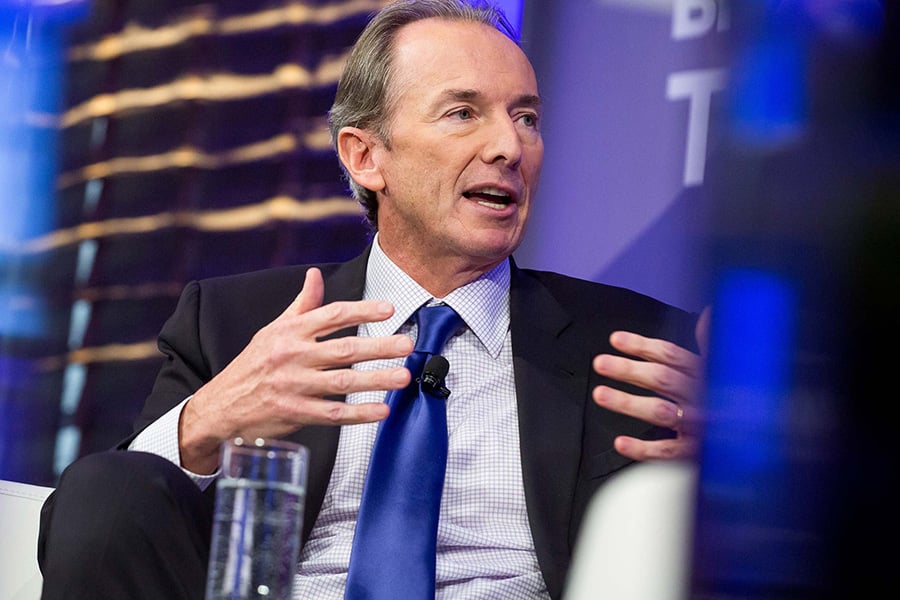
That's why ears in the financial advice industry undoubtedly pricked up this month when not one but two CEOs at major banks and brokerages, Morgan Stanley's James Gorman and Wells Fargo & Co.'s Charlie Scharf, took time to muse a bit about their RIA competitors during conference calls with analysts to discuss third-quarter earnings.
With close to 16,000 financial advisers, Morgan Stanley closed the acquisition last month of Hyas Group, an institutional consulting firm with $43 billion in fee-based assets that manages retirement money for smaller businesses. Morgan Stanley's CEO James Gorman praised the deal as an indication of the firm's growth strategy, with Morgan Stanley moving from one type of adviser-client relationship to a variety.
Gorman called Hyas an "RIA-type team" and added: "We can't predict the future, but it looks like it is set up to have multiple channels of growth in the years ahead, which is the strategy."
"We were losing advisers to RIAs," Gorman said, adding that Morgan Stanley was "losing some of the smaller producers to places like Linsco Private Ledger. That has all turned."
Meanwhile, Wells Fargo Advisors appears be trying to figure out how to make better use of its own RIA custody channel for advisers, which it created a couple of years ago. Over the summer, the firm tapped John Tyers, most recently chief growth officer at AdvisorEngine, to head the independent adviser group at Wells Fargo Advisors.
"We have a platform where people can actually go independent and continue to do the business through us," said Wells Fargo CEO Charlie Scharf, adding that the bank had "underinvested" in the independent adviser business.
It seems that the wirehouses are taking the RIA competition pretty seriously. If you can't beat 'em, join 'em.
Learn the difference between a wirehouse and an RIA here.

Is your 401(k) working as hard as the rest of your portfolio?

A former executive called it "kind of a dumping ground"

A $200M guidance cut and two stock drops tell the story

Carmel-based Elements Group joins the employee advisor channel as Raymond James extends its run of wirehouse and bank recruits

Former Hightower CEO Bob Oros takes a seat at the board of Praxis Solutions as Nuveen taps a private credit distribution lead and FinServ Foundation adds advisory board members
A continuity plan is one of the most important risk tools an advisor has, and the right successor is easier to find among peers

