Despite the presence of global economic turmoil and 8.3% unemployment here at home, the U.S. economy is in a recovery and not a
recession, said William Strauss, senior economist and economic adviser at the
Federal Reserve Bank of Chicago.
Speaking Thursday at the Morningstar Ibbotson Conference, Mr. Strauss laid out some unique challenges facing the economy and explained why we haven't seen a stronger recovery coming off such a deep
recession.
“One of the reasons we're not getting the kind of response you would expect from a deep
recession is that this
recession has been associated with the financial markets,” he said.
The link to the financial markets, he explained, involves a number of issues that still need to be worked through. For example, while the Fed has kept short-term interest rates at near zero, thus freeing up money supply, the banks are still not lending. Instead, they're sitting on excess reserves.
That issue, he said, can be boiled down to supply and demand. "Banks aren't lending right now because, believe it or not, they want to be able to get back the money they lend," he said. "When banks look at the over-supply of real estate in this country, for example, they are not going to want to lend money to builders, but when that pendulum swings back the supply side will be ready to lend again."
Mr. Strauss presented an economic forecast for the U.S. economy to grow by 2.3% this year and by 2.8% next year.
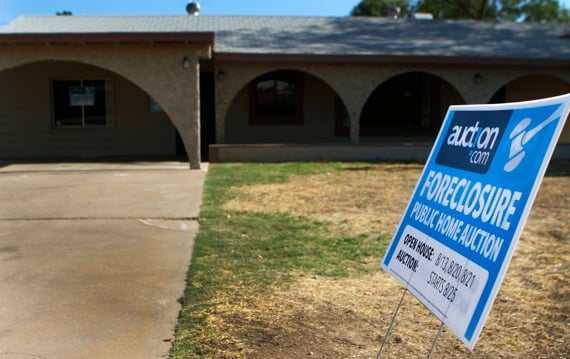
That slow pace of growth, he said, is tied to the housing sector, which continues to struggle.
"Over the past two-and-a-half years, the housing sector has contributed zero to the recovery, and this is the first recovery since the 1930s that the housing sector has not participated," he said.
With lending tight and unemployment high, he said the U.S. is experiencing a pattern of increased co-habitation, "where kids are moving back in with parents, and parents are moving in with the grown kids."
But that pattern, he said, is temporary and ultimately represents growth potential. "Unless we are changing who we are as a society," he noted, "every one of those households that is not being formed represents a pent-up demand for housing."
Even with housing affordability at such attractive levels, "consumer confidence with regard to appetite for home-buying remains lows,” he said. “Nationally, home prices are still falling.”
While Mr. Strauss underscored the fragile nature of the U.S. economy, he doesn't believe gas at $5 per gallon would be enough to “tip us into a
recession.”
A bigger potential risk to economic growth, he said, is the consumer savings rate, which he described as the "paradox of thrift."
"The issue is where the savings rate is headed, because higher savings means less spending, and consumers represent two-thirds of the economy," he said. "I think the savings rate is moving higher."
By Mr. Strauss' logic, consumers have little choice but to save. "Homes are the biggest asset most people have, but people are no longer thinking of homes as an investment," he said. "And the stock market outlook is not that great, so people are doing it the old fashioned way by saving."