
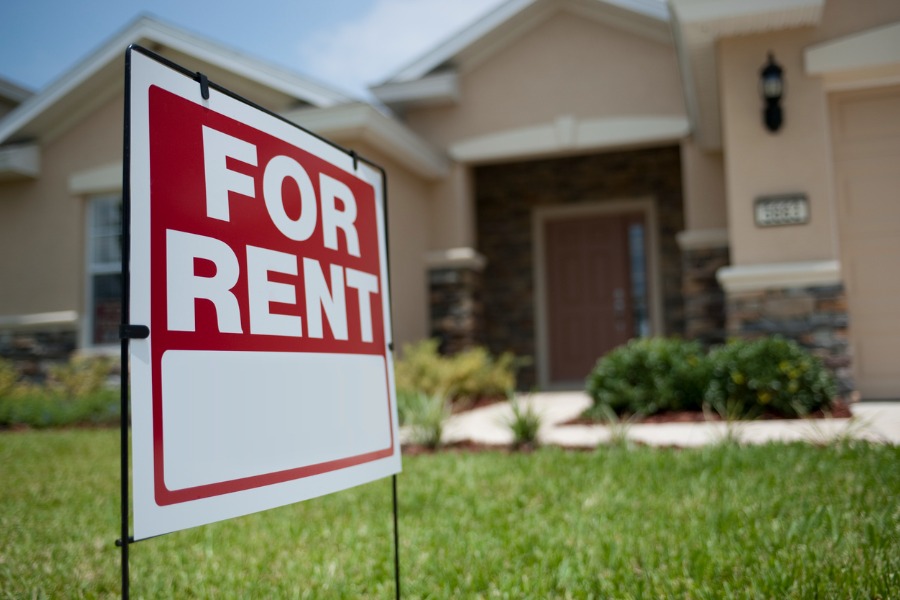
The U.S. housing market sent a sharp signal to home investors this week: the for-sale side is stalling, and the rental side is accelerating.
Three new data releases, from Redfin, Zillow, and Realtor.com, paint a consistent and consequential picture for anyone with real estate in their portfolio.
The weekly average mortgage rate hit 7.4% on October 8, 2026, its highest level in three years, according to Redfin. The typical homebuyer's monthly payment climbed to a record high of $2,777 driven by elevated rates and home prices that, despite softening, have not corrected meaningfully.
For real estate investors who rely on financing, the cost calculus has fundamentally shifted.
The consequences of 7.4% rates are playing out in the demand data. Pending home sales declined year over year in all 50 of the most populous U.S. metro areas during the four weeks ending October 11, 2026, according to Redfin; the first time that has happened in three years.
The median U.S. asking price of a home for sale fell 0.3% year over year, the first decline since March 2026, while 22% of sellers with active listings cut their asking price, a record high in Redfin's data.
For investors, these figures suggest that the for-sale market is losing pricing power while the volume of transactions remains suppressed. That combination of fewer deals at softer prices constrains the short-term return potential for buyers seeking appreciation-driven gains.
Rental demand, meanwhile, is running in the opposite direction. Zillow's Observed Renter Demand Index rose 19.2% year over year in September 2026 as elevated borrowing costs pushed would-be buyers to rent instead, according to Zillow's September 2026 Rental Market Report. Typical U.S. rent reached $1,932 per month, up 2.7% annually, but that figure understates the divergence between the cost of renting and the cost of buying.
"Elevated mortgage rates have pushed home shoppers straight into the arms of rentals," said Kara Ng, senior economist at Zillow. "Homeownership has long been a way for families to build wealth, but with the rise in borrowing costs, we're seeing the rise of the deliberate renter, someone who chooses to bank the difference between a buyer's monthly payment and rent and build wealth without owning a home."
The gap Ng is describing is significant from an investment standpoint: the typical new homebuyer's monthly payment has risen 5% year over year to $3,037, nearly double the 2.7% growth in rents, according to Zillow.
Zillow's demand index for single-family rentals rose 21.6% year over year in September 2026, more than double the 10.1% increase recorded for multifamily units.
At a typical rent of $2,266, a single-family rental offers the space and lifestyle that aspiring homeowners want - without a down payment or the hidden carrying costs of ownership - and costs $771 less per month than a typical new homebuyer's payment.
For advisors working with clients who hold investment properties or are considering adding them, this data suggests that single-family rentals in markets with strong population inflows may be worth a closer look. The challenge, as always, is financing: at 7.4%, the debt service on a rental property is substantially higher than it was even 18 months ago, compressing yields and demanding tighter underwriting.
Realtor.com data adds geographic texture to the opportunity set. Its September 2026 Rent Report identifies three distinct forces reshaping rental demand: the cooling of a post-pandemic supply wave in Sun Belt metros, migration toward affordable alternatives to high-cost cities, and AI-driven job growth in the Bay Area.
San Jose and San Francisco stand out. Median asking rent in San Jose rose 6.0% year over year to a new high of $3,565 in September 2026, while San Francisco rent increased 4.8% to $3,057, according to Realtor.com.
"Rising rents and vanishing concessions are a one-two punch for Bay Area renters," said Jiayi Xu, senior economist at Realtor.com. "The share of San Jose listings offering concessions has fallen by more than half in a year, from 51.9% to 24.3%, while rents have climbed to record levels."
Elsewhere, metros including St. Louis, Minneapolis, Virginia Beach, Riverside, and Las Vegas have reversed course, shifting from year-over-year rental declines to gains as affordability-seeking renters leave high-cost markets. St. Louis moved from a 4.4% annual decline to a 2.0% increase; Minneapolis from a 3.4% decline to a 1.7% gain, according to Realtor.com data.
In the Sun Belt, the news is more measured. Austin's annual rent decline narrowed from 7.8% in September 2025 to 2.3% in September 2026 as the post-pandemic construction wave begins to exhaust itself. Investors who bought into markets like Austin, Phoenix, or Orlando on the rental income thesis may find conditions stabilizing - though not reversing sharply in their favor.
The widening gap between the cost of homeownership and the cost of renting has a direct implication for real estate investors: sustained rental demand is likely as long as rates stay elevated.
A household in the United States needs an income of approximately $77,278 to afford a typical rental versus approximately $121,496 to afford a typical home, according to Zillow, a gap of more than $44,000. That disparity does not resolve quickly.
For advisors discussing real estate exposure with clients - whether through direct property ownership, REITs, or real estate-linked investment vehicles - the current environment rewards an income-first, appreciation-second orientation.
Markets with strong employment fundamentals and limited new supply are where rental income is most defensible. Markets that absorbed heavy multifamily construction in recent years, while still seeing declines ease, require more patience.
The data released October 15, 2026, does not describe a housing market in recovery but in transition and where the economics of ownership are increasingly prohibitive and the economics of rental investment, in the right markets, are increasingly compelling.

FINTRX data shows 342 company transactions in the quarter, with wealth management consolidation driving nearly one in seven deals.

State regulators secure $4.4 million from two broker-dealers over unreasonable charges on small-dollar retail equity trades.

New F&G survey finds most pre-retirees are delaying or redesigning retirement, creating fresh planning opportunities for financial advisors.

Focus Partners Wealth’s Jeffrey Levine says a Democratic House or Senate would make new legislation on Trump Accounts much harder to pass

Docupace also rebuilt its wealth operations platform around a single client record, while Focus Financial picks Nevis to bring AI to its advisors.
Knighthead Life entered the market with a competitive MYGA. A strong launch earned advisor confidence and paved the way for FIAs.
As AI makes financial information more accessible than ever, Lana Hock explains why human judgment, trust, and empathy remain the qualities clients value most in a financial advisor

