
Office address: 1155 21st St. NW, Washington, DC 20581
Website: cftc.gov
Year established: 1974
Company type: government agency
Employees: 630+ (full-time equivalents)
Expertise: derivatives regulation, futures trading, swaps oversight, options markets, market surveillance, fraud prevention, commodity trading, clearing organization oversight, intermediary regulation, digital asset markets
Parent company: N/A
Key people: Michael Selig (chair); Meghan Tente (acting general counsel); Frank Fisanich, Richard Haynes, Thomas Smith, and Paul Hayeck (acting directors); Taylor Foy (director)
Financing status: N/A
The Commodity Futures Trading Commission (CFTC) is an independent federal agency based in Washington. It regulates US derivatives markets, including futures, swaps, options, and cryptocurrency trading. The agency oversees more than $400 trillion in swaps market activity alone.
The CFTC's roots date back more than 175 years before the agency itself existed. Chicago merchants founded the Board of Trade in 1848 as a grain market, and forward contracts began trading almost right away.
Federal regulation arrived decades later with the Grain Futures Act of 1922, which created the large trader reporting system the CFTC still uses today. Congress then expanded oversight with the Commodity Exchange Act of 1936, covering cotton, rice, butter, eggs, and potatoes.
Market manipulation scandals in the mid-1900s set the stage for the CFTC's creation. The Great Salad Oil Swindle of 1963 bankrupted 16 firms after a businessman faked warehouse receipts for nonexistent soybean oil.
Record grain prices and manipulation claims in 1973 then pushed Congress to overhaul commodity oversight. President Gerald Ford signed the Commodity Futures Trading Commission Act in late 1974, and the new agency took charge in April 1975.
The young agency moved fast to prove its worth in the markets. It approved the first futures contracts on US Treasury bills in 1975 and Treasury bonds in 1977.
Cash-settled Eurodollar futures followed in 1981, and stock index futures came a year later. When Black Monday struck in October 1987, no CFTC-regulated systems failed and no firms defaulted on their obligations.
The 21st century tested the Commodity Futures Trading Commission with new markets, major crises, and bigger enforcement actions. Its World Trade Center office was destroyed on September 11, 2001, though all employees escaped without serious injury.
Enforcement reached new heights in 2022 when the CFTC ordered Glencore to pay $1.18 billion for market manipulation, the largest penalty in agency history.
The Commodity Futures Trading Commission also stepped up efforts to protect everyday investors and respond to new markets. In 2024, it joined FINRA and NASAA to warn retirees about precious metals fraud targeting IRA accounts. Then in 2025, the CFTC partnered with the SEC to launch Project Crypto–Crypto Sprint, a joint push to clarify rules for spot crypto trading.
The CFTC carries out its mission through specialized divisions, public resources, and innovation programs:
The Commodity Futures Trading Commission also regulates two types of trading organizations: Designated Contract Markets and Swap Execution Facilities. Its data division works to reduce information silos and improve market transparency across the derivatives industry.
The Commodity Futures Trading Commission says it has a diverse and accomplished workforce. Staff support the agency's regulatory mission daily. The agency highlights four core values:
The CFTC uses structured pay matrices to set salaries. Locality pay adjusts wages based on living costs. The agency offers a range of employee benefits:
The Commodity Futures Trading Commission's mission centers on sound regulation of US derivatives markets. Its culture and benefits support staff in working toward that goal.
Michael S. Selig was confirmed as the 16th CFTC chair in 2025 after nomination by President Donald J. Trump. Selig previously worked as a partner at an international law firm focused on derivatives and securities law. He holds a law degree from The George Washington University Law School and a bachelor's from Florida State University.
Helping Selig lead the Commodity Futures Trading Commission is an executive leadership team, which includes division and office heads:
The leadership team reports to the chair and carries out the agency's regulatory and enforcement work. Each division head oversees day-to-day operations in their area of responsibility.
The agency continues to crack down on fraud in the commodity pool space. The Commodity Futures Trading Commission sued a Michigan operator over an alleged $1 million Ponzi scheme. This case signals the CFTC's ongoing push to tighten oversight of small commodity pools and retail-focused products.
Beyond enforcement, the CFTC is also opening doors for innovation. In December 2025, the agency approved crypto firm Gemini's application to operate a designated contract market for prediction products. This move points to a future where the CFTC balances oversight with support for digital assets and emerging trading platforms.

The GOP barely controls the House, but it's enough to allow the party to pressure the SEC chief to curb his agenda.

Sam Bankman-Fried told investors the crypto exchange needs $4 billion to remain solvent. Meanwhile, U.S. authorities are investigating FTX.

There’s a lot more than control of the House and Senate on the ballot in November, especially for Gary Gensler and the SEC.

In court documents, the SEC described at least a few senior managers at each firm who engaged in rampant texting with colleagues and clients.

The penalties levied against firms including Citigroup, Bank of America and Goldman Sachs constitute the largest-ever penalties against US banks for record-keeping lapses.

The results of the investigation could be released as soon as Wednesday and could see regulators extracting total fines of around $2 billion.

In a speech, the SEC chair repeated his demand that crypto exchanges, brokers and attorneys in the digital coin industry comply with securities rules.

A Finra arbitration panel said the firm owes Shlomo Salant compensation for 2014, the year he reached a settlement with the Commodity Futures Trading Commission for allegedly faking market interest in futures.

SEC, CFTC worried that messages were being completely lost and would ultimately make it harder to look for wrongdoing.
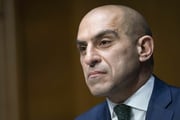
The new proposal would give the derivatives regulator direct oversight of tokens that qualify as 'digital commodities.'

The substantial fines hitting big banks for failing to meet messaging-retention requirements shows the need for direction from the top to ensure the use of monitoring systems.

The sweeping civil probes rank among the largest-ever penalties levied against US banks for record-keeping lapses.

Meanwhile, the firm's wealth management franchise reported positives for the second quarter despite the broad stock market decline seen so far this year.

The latest iteration of Chairman Gary Gensler's agenda contains 53 pending proposals. The financial industry is nervous.

While chances of passage are slim ahead of November’s midterm elections, it could act as a starting point for negotiations next year.
