
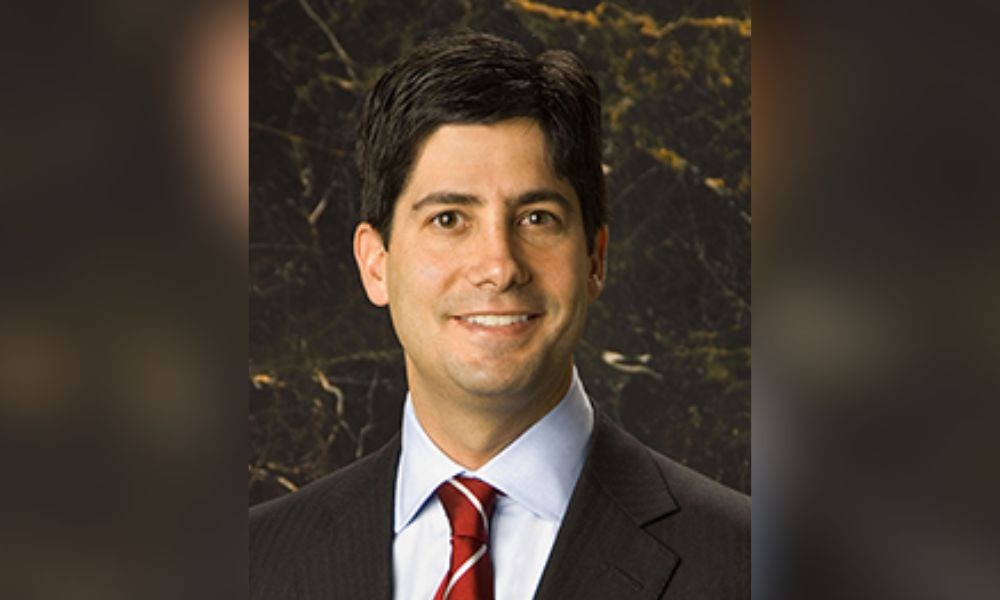
President Donald Trump’s nominee for Fed Chair Kevin Warsh is expected to be confirmed by the U.S. Senate this week, which means that advisors could soon see the rate cuts that Trump has been so aggressively pushing for, according to Robert Edwards, chief investment officer at Edwards Asset Management
“I expect Kevin Warsh to be confirmed as Fed Chair as early as this week, clearing the path for rate cuts this summer and fall,” said Edwards, in a note.
Edwards adds that softening jobs data and high U.S. rates relative to the world will fuel an “affordability” narrative, and lower rates will support higher multiples and deliver a strong tailwind for stocks.
Federal Reserve Chair Jerome Powell has resisted intense pressure from Trump to cut rates. Last month the central bank again stuck to its recent path of keeping its policy rate steady. The Fed made three consecutive rate cuts last year and its last rate cut was in December when it cut rates to 3.5% to 3.75% and it has kept that policy rate steady at its three meetings so far in 2026.
Last month’s Fed meeting was also Powell's final one as chair of the central bank before his term ends in May.
Warsh, who recently won the backing of the Senate banking committee, has faced close scrutiny over his would-be strategy at the Fed.
During a recent fiery confirmation hearing last month, Warsh said that “monetary policy independence is essential.” Warsh added that he does not believe that independence of monetary policy is threatened when elected officials state their views on rates. “Fed independence is up to the Fed,” he said.
Other economic news on deck this week includes the latest Consumer Price Index data, which will be released Tuesday. In a note, Thierry Wizman, Global FX & Rates Strategist at Macquarie Group said there appears to be a divergence in the U.S. between a still-high yearend inflation outlook and a Fed that is expected to keep the policy rate "on hold" through year-end despite high inflation expectations. “That divergence may be resolved tomorrow if a high CPI print forces an upward adjustment in USD OIS [Overnight Index Swaps] forward rates,” he added. “But reconciliation could also come from Kevin Warsh, if his tone turns more 'hawkish' postconfirmation.”
“If confirmed as expected, Warsh would likely assume the role immediately following the end of Jay Powell's term on May 15, or Friday of this week,” said Wizman. “It's after that point that we would be more careful in assuming that his tone will stay dovish.”
OIS refers to interest rate swaps.
Warsh's approach to monetary policy is shaped by a more traditional view of what the Fed should and should not do, according to Lawrence Gillum, Chief Fixed Income Strategist for LPL Financial. "Rather than leaning heavily on intervention and detailed promises about the future path of rates, Warsh has consistently argued for restraint, humility, and a greater reliance on incoming data," he said, in a note.
All the signs are that advisors can also expect a pro-AI stance from the Warsh, who has been vocal in his support for the technology. Warsh championed AI during his confirmation hearing last month. “The pace of change in these technologies is accelerating,” he said. “AI, which I think of really as American ingenuity, gives America a huge headstart relative to our competitors around the world.”
AI is already reshaping the financial landscape. A recent survey from EY found that nearly half of global consumers are using AI to drive their savings and investment decisions.
However, he acknowledged that the technology is “not without real risks and real challenges,” adding that “a forward looking, reform-oriented central bank needs to be on the front end of it.”
Last month Raymond James CEO Paul Shoukry said that AI is improving the relationship between advisors and clients but also acknowledged the technology's limitations.
AI is already having an impact on the financial advisory industry. During Osaic’s recent NXT conference in Boston CEO Jamie Price told InvestmentNews that the company’s advisors are snapping up AI tools at a record pace.

Retiring RIA seller David Laidlaw alleges the Carnegie valued his stake on $11.7 million EBITA while pitching potential buyers on $21.3 million.

New tool gives RIAs and family offices AI help vetting private market deals, with some users reportedly halving review time.

Investors got projected returns dressed up as real ones, SEC says

Parents must still act to get the $1,000 federal seed and employer contributions, giving financial advisors a role in the rollout.

FINRA booted Rudy Anguiano from the industry for “conversion - the intentional and unauthorized taking of another person’s property.”
As AI makes financial information more accessible than ever, Lana Hock explains why human judgment, trust, and empathy remain the qualities clients value most in a financial advisor
Northern Trust’s Ken Lassner shows advisors how to convert volatility into after-tax portfolio gains

