
For the first time since its 2003 launch, the Invesco S&P 500 Equal Weight ETF (RSP) has crossed $100 billion in assets under management, a milestone Invesco confirmed in a statement on Sept. 1, 2026, after the fund topped the threshold in mid-August. The fund has pulled in more than $12 billion in net inflows this year, as investors rotate away from the cap-weighted S&P 500 amid signs that the artificial-intelligence-driven mega-cap rally is losing steam. RSP, which assigns each of the index's roughly 500 constituents an equal weighting instead of sizing positions by market capitalization, has outperformed the traditional benchmark by several percentage points year to date, a gap that has reopened questions about how much concentration risk advisors' clients are carrying without realizing it.
The top 10 companies in the S&P 500 now account for roughly 37% to 40% of the index's total weight, according to S&P Dow Jones Indices data — a level of concentration this newsroom has tracked as it climbed toward historic extremes. For advisors, the milestone is less about the fund itself than about the conversation it's forcing with clients over how diversified their portfolios really are.
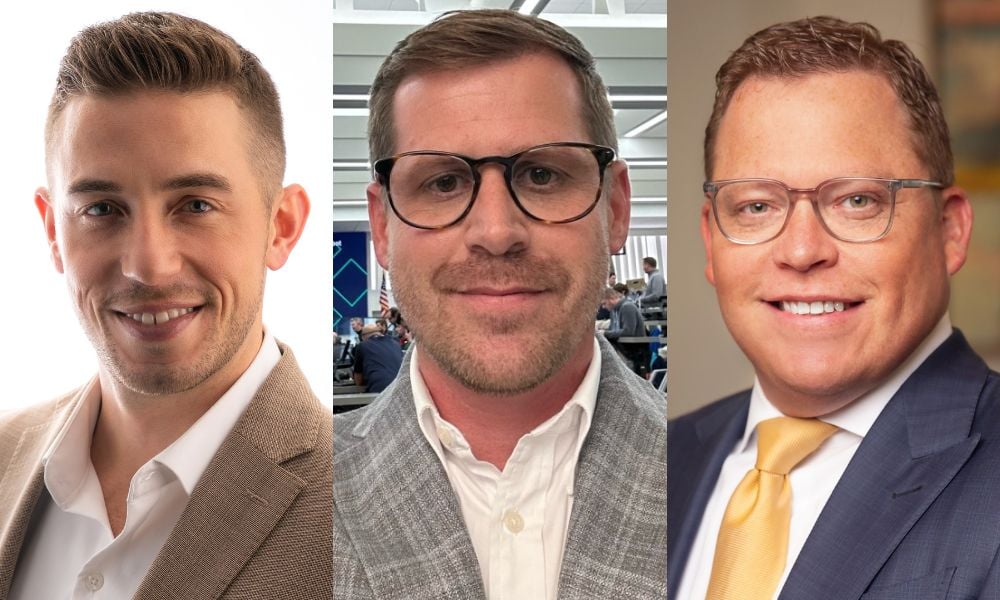
Matthew Smart, chief investment officer at WWM Investments, said he reminds clients that diversifying doesn't eliminate risk — it shifts which risks they're taking on. He points to 2022, when many investors assumed bonds would cushion their portfolios, only to watch stocks and bonds decline together.
"We want different streams of return and we want to understand exactly where the portfolio's exposures are coming from. Diversification isn't about eliminating risk. It's about making sure the risks you're taking are intentional," Smart said.
Smart said he's encouraged by the market's broadening beyond the Magnificent Seven but isn't treating it as a wholesale rotation away from mega-cap technology. Earnings growth was extraordinarily concentrated in those seven companies in 2023, he noted, and has since spread across more sectors, with estimates continuing to expand into 2027.
"We're not trying to call the end of mega-cap leadership. We're trying to make sure a portfolio doesn't require mega-cap leadership to continue in order to succeed," Smart said.
On client conversations, Smart said his approach depends on the client. For those worried the AI trade is cooling, he points out that the opportunity now extends well beyond the companies that have already captured the bulk of hyperscaler spending on chips, energy and infrastructure.
"We are looking for companies that can use AI to materially reduce costs, improve productivity and scale their businesses more rapidly. For clients who do not realize how exposed they are, we look through the portfolio rather than just at the fund names. A client can own several different ETFs and still have significant overlap in the same handful of mega-cap companies. The risk isn't necessarily owning the AI trade. It's owning far more of it than you realize," Smart said.
David Ellis, director of investments at EverPar Advisors, said he remains passive on the public equity side, comfortable owning the market as it is rather than guessing when to shift weightings. But he added that the S&P 500 is never the whole portfolio.
"Diversification for us happens outside that exposure in positions with different return drivers and different risk profiles. So when concentration builds at the top of the index, our clients aren't relying on that piece alone to carry the plan," Ellis said.
Asked whether this year's equal-weight outperformance is a durable shift or a temporary pullback in mega-cap leadership, Ellis said he doesn't know — and builds portfolios so he doesn't have to.
"Equal weight trailed cap weight for most of the decade before this one, so eight months of better performance is not the evidence I would want before making a structural change. What we are doing is rebalancing, which in this market means trimming what has run and adding to what has not. That is a discipline rather than a forecast," Ellis said. "You don't often get thanked for diversifying during the run itself — it comes afterwards."
Seth Hickle, chief investment officer at Mindset Wealth Management, said the biggest misconception is that owning the S&P 500 automatically means being diversified, since cap-weighted indexes tend to hand investors more of whatever has already rallied hardest — a dynamic this analysis of diversification beyond market-cap-weighted benchmarks has flagged as a growing blind spot for retail portfolios.
"When putting new money to work recently we have been more intentional about looking for broader and thematic exposure rather than simply adding new money to yesterday's winners," Hickle said.
Hickle said he views the rotation as a sign of a healthy bull market rather than the end of the previous leadership cycle. "Leadership taking a breather is not the same thing as leadership being broken. If this bull market is going to have staying power, we need to see other stocks get off the bench and help with the heavy lifting," Hickle said.
For clients anxious about a cooling AI trade, Hickle said the message is one of addition, not subtraction. "A pullback in market leadership doesn't invalidate the long-term investment theme. You don't have to abandon AI to diversify away from AI. You can remain invested in the theme while making sure the rest of the portfolio has an opportunity to participate," Hickle said.

Meanwhile, DPL Financial Partners adds two annuity executives and Prime Capital Financial hires a Mid-Atlantic retirement plan consultant

Andrew Komarow pleaded guilty Thursday in federal court in Hartford to defrauding three financial services companies of close to $3.3 million.

Elsewhere, Cetera picks up a $210 million Connecticut team from MML, while Wells Fargo FiNet adds a San Diego family practice from LPL

“We needed to become a more agile and efficient organization,” said American Express CEO Stephen Squeri.

Examiners will scrutinize fee conflicts, complex products and super intelligence threats as broker-dealers face fresh Reg BI and AML reviews
Knighthead Life entered the market with a competitive MYGA. A strong launch earned advisor confidence and paved the way for FIAs.
As AI makes financial information more accessible than ever, Lana Hock explains why human judgment, trust, and empathy remain the qualities clients value most in a financial advisor

