
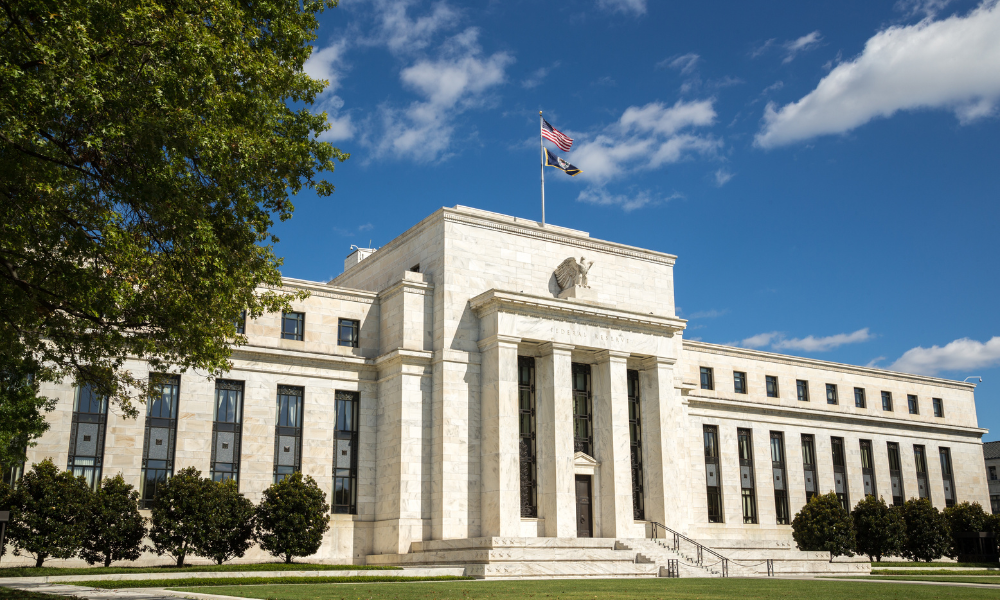
Treasury Secretary Scott Bessent on Wednesday said he will push for a new rule that candidates for regional Federal Reserve presidents must have lived in that district for at least three years.
The idea is the latest push by Bessent for a sweeping shakeup of the US central bank — which he has repeatedly accused of mission creep and having strayed from its primary mandate of setting monetary policy.
“I do believe that there is now a disconnect from the original framing” of the Fed, Bessent said in a discussion at a New York Times event. The US central bank, set up more than a century ago, established a board of governors in Washington along with 12 district banks spread across the nation. “Presidents in the regional banks were meant to be from their district,” Bessent argued, while now “there’s this idea of importing a bright, shiny object.”
The Treasury chief repeated a claim he made last week that three current Fed presidents don’t meet his criteria.
“So I am going to start advocating going forward, not retroactively, that regional Fed presidents must have lived in their district for at least three years,” he said. The new rule may need congressional approval, or could be implemented by the Fed chair and the board, Bessent said.
Under the current structure, the regional boards — excluding those who work at financial institutions — nominate a president for their district, with the Board of Governors voting to approve them. Presidents serve terms that are also up for re-authorization every five years, with the current terms coming up in February. Bessent’s proposal comes after the current Atlanta Fed president, Raphael Bostic, said he will be stepping down at the end of his term.
Bessent indicated that the Fed board could “just say, unless someone’s lived in the district for three years, we’re going to veto them.”
Some of the most vocal hawks on the Fed’s policy making committee currently are regional Fed presidents, including Dallas Fed President Lorie Logan, Kansas City Fed President Jeff Schmid and Cleveland Fed President Beth Hammack.
Last week, Bessent called more broadly for a simplification in the Fed’s operations, saying in a CNBC interview that the central bank had become too complex in how it manages money markets.
On Wednesday, he reiterated that the Fed had migrated from “a monetary interest rate function” to “a balance sheet function, which I can tell you no one understands.”
At the same time, Bessent suggested he still sees a role for the Fed to use its balance sheet as a tool in some cases. Policymakers during the financial crisis, and again after Covid struck, turned to large-scale asset purchases to sustain financial liquidity and depress longer-term borrowing costs.
In the instance of “some kind of financial instability” or a downturn in the economy, one of the responses available is for the Fed to “ease monetary conditions, maybe go to the balance sheet,” Bessent said.
That comment came in discussing what he said was his concern about the rapid growth of private credit firms in providing loans to businesses.
“My worry is that in a downturn, it could be very pro-cyclical,” he said of private credit. Investors “always panic at the bottom,” he said.
By contrast, Bessent said that with regard to regulated financial institutions, the Treasury, Fed and other regulators can give “window guidance” to loosen lending — something that would counter the down-cycle.
The Treasury chief reiterated his view that the growth of private credit is a symptom of excessive bank regulation. “We have been working with the regulators to create more credit in the regulated banking system,” he said.
© 2025 Bloomberg L.P.

Retiring RIA seller David Laidlaw alleges the Carnegie valued his stake on $11.7 million EBITA while pitching potential buyers on $21.3 million.

New tool gives RIAs and family offices AI help vetting private market deals, with some users reportedly halving review time.

Investors got projected returns dressed up as real ones, SEC says

Parents must still act to get the $1,000 federal seed and employer contributions, giving financial advisors a role in the rollout.

FINRA booted Rudy Anguiano from the industry for “conversion - the intentional and unauthorized taking of another person’s property.”
As AI makes financial information more accessible than ever, Lana Hock explains why human judgment, trust, and empathy remain the qualities clients value most in a financial advisor
Northern Trust’s Ken Lassner shows advisors how to convert volatility into after-tax portfolio gains

