
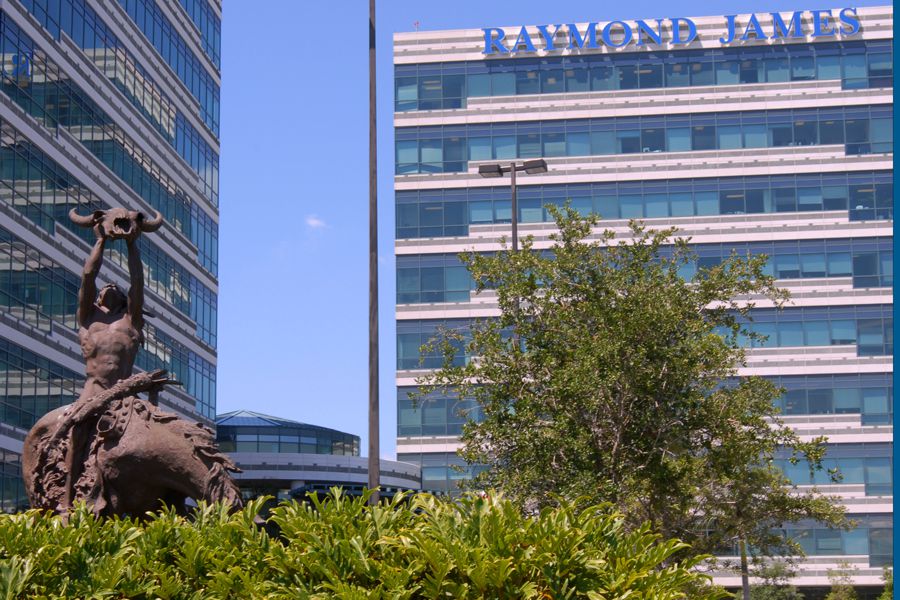
Paul Reilly, chairman and CEO of Raymond James Financial Inc., Wednesday afternoon acknowledged that buyers of registered investment advisors, commonly known as RIA aggregators, have changed the business of recruiting financial advisors over the past 12 months.
When asked about the competition in recruiting financial advisors during a conference call to discuss last quarter's earnings, Reilly echoed a common complaint among brokerage executives who eye RIA aggregators, often backed by private equity managers, with suspicion: prices.
"Probably the biggest change in the competitive landscape has been RIA roll-ups that pay prices that we can't quite figure out, and it's a bet on aggregating and being able to go to market at some point, even though those private multiples are much higher than the public multiples," he said. "That's a new competitor."
"It's kind of lead price," Reilly said. "Now [financial advisors] are selling their firms versus having people still kind of owning their businesses. So that's the newest dynamic. And in an area which I call a new competitor."
Although Reilly didn't give details on pricing, brokerage executives routinely complain in private that the price to buy RIAs has skyrocketed over the past few years. Prior to the Covid-19 pandemic, in 2019 or early 2020, the value of an RIA, based on its assets and client base, would typically have been six to 10 times the firm's EBITDA, or earnings before interest, taxes, depreciation and amortization. Some buyers are now willing to pay almost 1½ to two times that amount.
Meanwhile, Raymond James reported 8,710 financial advisors at the end of December across its various business channels, which was essentially flat from the same time a year earlier.
During the earnings call, Reilly noted that an unspecified number of the firm's advisors retired during the last three months of the year. Also, Raymond James advisors who move to the RIA side of the firm are excluded from the advisor count, since they're no longer registered with the Financial Industry Regulatory Authority Inc.
Raymond James also reported new highs in client assets under administration, reaching $1.37 trillion, up 17 percent compared to December 2022. Its domestic private client group reported net new assets of $21.6 billion for the quarter, or annualized growth of 7.8 percent.
Quarterly net revenues at the firm reached $3 billion for the three months ending in December, up 8 percent over the same quarter in 2022.

A Nationwide survey finds 47% of GLP-1 users have never discussed the drugs’ financial impact with an advisor, even as many dip into savings.

The hundreds of millions of dollars from a sale of Inspired Healthcare properties does not mean an immediate windfall for investors.

Its SEC filings said one thing - a congressional probe said another.

Sham agreements allegedly padded revenue by 345%.

"Most pre-retirees are uncomfortable making key retirement income decisions without an advisor's help," said Chris Bailey of Cerulli.
Knighthead Life entered the market with a competitive MYGA. A strong launch earned advisor confidence and paved the way for FIAs.
As AI makes financial information more accessible than ever, Lana Hock explains why human judgment, trust, and empathy remain the qualities clients value most in a financial advisor

