
Adding clients is often difficult for financial advisors during periods of market volatility or geopolitical uncertainty. Bringing over a new account becomes significantly harder when potential investors become frozen with anxiety. Prospects become less likely to pursue new advisory relationships, preferring instead to stand pat until the dark clouds pass.
During such times, wealth managers seeking to grow their businesses are frequently best served by expanding their ‘wallet share’ when increasing market share becomes too challenging.
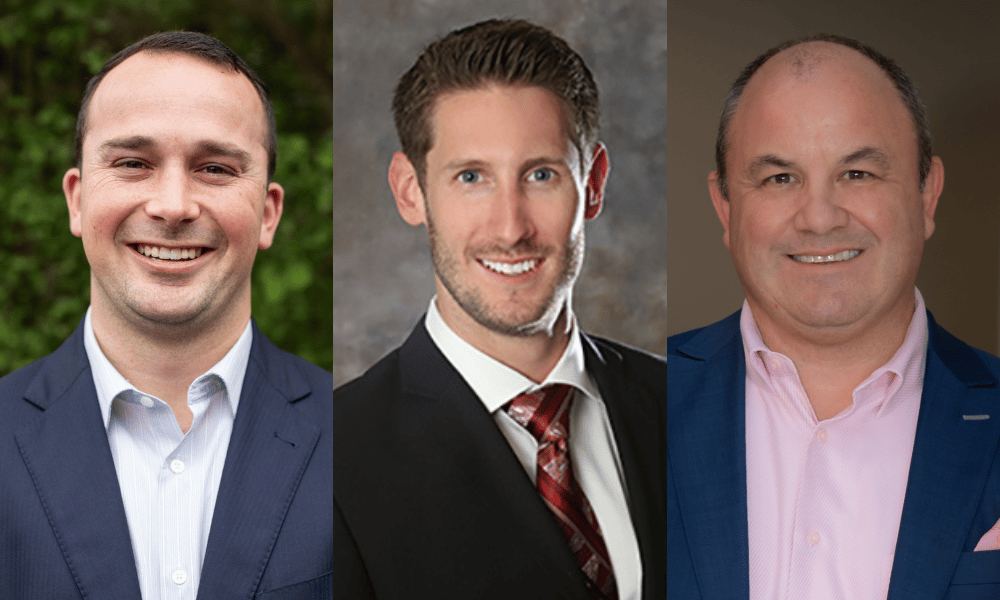
Douglas E. Howes, president of Sapphire Wealth Management, says periods like this remind him that portfolio growth and business growth are not the same thing. Markets may remain resilient while clients still feel anxious about inflation, job security, taxes, family obligations, or retirement timing.
“At Sapphire Wealth, we’ve responded by expanding planning conversations rather than increasing investment commentary. We’ve leaned harder into proactive financial planning, tax planning conversations, cash flow analysis, employer benefit reviews, estate coordination, retirement income modeling, and what we call ‘Personal CFO’ conversations, helping clients make better decisions across all areas of their financial lives, not just their portfolios,” Howes said.
Emphasized Howes: “When volatility increases, clients don’t necessarily want more market commentary, they want more clarity and more confidence around their own plan.”
Howes also believes that products alone rarely deepen relationships. In his view, growth has come less from introducing new products and more from helping clients connect investments to broader objectives: tax efficiency, retirement income, concentrated stock management, business transitions, legacy planning, and multigenerational wealth conversations.
“When clients realize their advisor is helping coordinate taxes, estate considerations, business decisions, family planning, and investment strategy together, the relationship naturally expands. The investment solution becomes part of a larger planning conversation rather than the conversation itself,” Howes said.
Elsewhere, when it comes to expanding his business during an uncertain time, Jesse Kurrasch, COO of The AmeriFlex Group, believes steady engagement with clients, through stable and straightforward communication, does much more than any single tool or solution he can provide. According to Kurrasch, the advisors he speaks with are more conflicted and worried about what comes next because so many of them don’t have a plan for their own future.
Meanwhile, advisors who serve their clients well can navigate such situations, and well-served clients understand the value of working with advisors during difficult periods.
“During our conversations, we have found that reassessing priorities and values in the face of a changing world is more important than any specific product. Once we understand where our clients stand, we are better positioned to expand the relationship by supporting their priorities,” Kurrasch said.
Finally, Dean Dillenberg, market vice president at 49 Financial, believes that when markets are steady and straightforward, people actually feel less urgency to seek guidance. In his view, when there's volatility, people get humble. They become more open to advice and more willing to lean on someone who does this professionally.
“While existing recurring revenue may soften in choppy markets, new client acquisition actually tends to accelerate,” Dillenberg said.

Elsewhere, Wells Fargo Advisors adds a $400 million Morgan Stanley veteran in Naples as an ex-Cetera advisor goes independent with LPL

According to a federal charges Bradley Heppner, 60, received more than $150 million in payments through funneling money from GWG Holdings to a shell company.

A $1B fund allegedly skimmed 30% off the top, then swapped cash for locked-up stock.

Insiders allegedly rewrote projections three times in four days.

TCI Wealth Advisors also has also tapped JIFFYAI to unify onboarding and servicing, while TradePMR adds ICE market data to its Fusion advisor platform
Knighthead Life entered the market with a competitive MYGA. A strong launch earned advisor confidence and paved the way for FIAs.
As AI makes financial information more accessible than ever, Lana Hock explains why human judgment, trust, and empathy remain the qualities clients value most in a financial advisor

