
The financial advisory industry's reputation is of being a male-dominated field, one where women have to claw their way into the business without many visible role models.
But those who had to navigate these challenges are now hopeful for the next generation, and are focused on nurturing a new wave of female financial advisors.
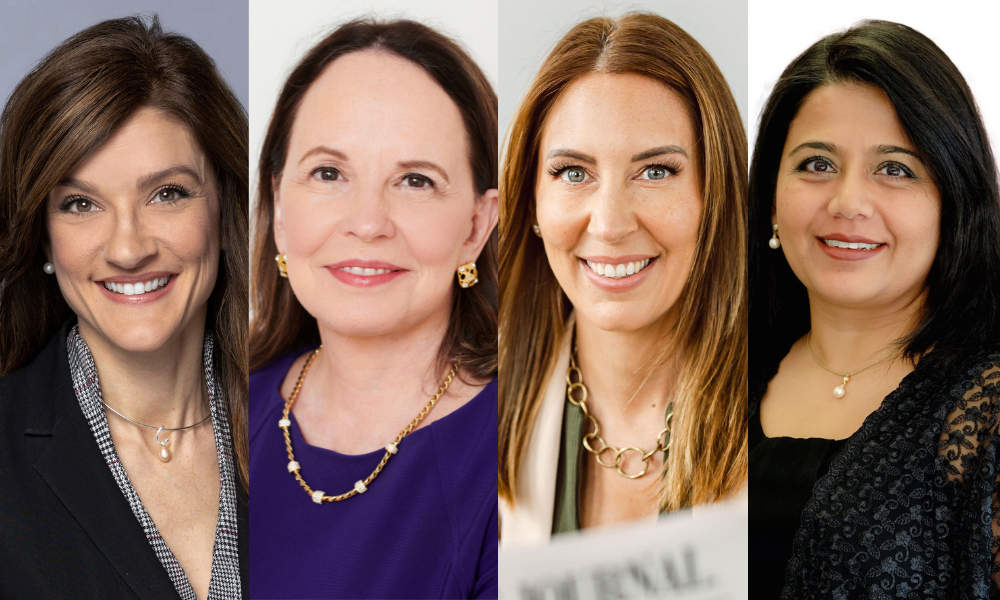
When asked what she would tell a younger version of herself, Heather Fortner gets to the point: “I don’t have to be a man to be successful.” Having learned to harness her unique skillset, Fortner has enjoyed a long, successful career on her own terms as CEO at SignatureFD in Atlanta.
As a follow-up to part one of our articles to mark Women's History Month, Fortner highlights the importance of emotional quotient, or EQ, as a facet of the job women generally thrive in. While IQ may have been more of a priority in the past, she says striking a balance is key.
“I think so many times it is the excellence in IQ that gets outweighed, and then we're trying to constantly build up the EQ as an aside,” she says. “I think that skillset is so important and something that I really focus on developing for any person I mentor.”
When Lisette Cooper first emerged into the financial planning industry, female role models were few and far between. But having watched her mother, a highly-successful mathematician, Cooper, vice chair at the Fiduciary Trust International, admits she was not as aware of the mental barriers other women entering the industry may face.
When Jennifer Aube looks back at the early stages of her career, she wishes there had been more comprehensive training that fit her needs. Having more flexibility for women is a key element of what needs to be done better, according to Aube, advisor and vice president of Jennifer Aube Wealth Management. She recalls company outings, where she wanted to attend but was unable to due to short notice and childcare.
Aube said that the ability for women to thrive in relational settings allows them to thrive in an industry that is ever-changing with technological advances.
“There's a lot that bots can do, but you can't replace that face to face, knee to knee, shoulder to cry on – someone who understands who you are,” she says.
Aube initially started a podcast interviewing a variety of successful women in their fields, though is now looking to focus the topic of providing advice and mentorship for the next generation of female advisors.
Even as a CEO, Fortner remains vulnerable, being the first to admit she hits ruts. That vulnerability allows her to ensure that she is receiving the best advice from those around her, rather than having a group of “yes” men or women surrounding her.
“The narrative was just always that you have to keep it all together and you have to be the best – don’t ever let anybody see you sweat,” she says. “It’s just not true … perfection is literally what stands in the way of progress.”
Looking at the emerging generation of female advisors, Fortner sees plenty to get excited about. Whether it is improved education before entering the industry or increased access to information in general, Fortner has no doubt the industry will be in good hands in the future.
“These kids are wicked smart, not only from a technical proficiency perspective,” she said.
While Cooper finds plenty of value in mentorship, she said sponsorship is even more important for young women to find their feet in a competitive field. Finding the latest rising star and watching her climb the corporate ladder is what Cooper finds the most gratifying part about working with young female advisors.
Sneha Shah, executive vice president at SEI, agreed with Cooper’s statement, saying that it takes a massive leap of faith to fully sponsor an emerging advisor. But she is always ecstatic when that faith pays off.
Cooper warned that while advisors are on maternity leave, they should not spend their time completely disengaged from the industry. She says she saw women who simply tuned out of their career entirely while on maternity leave were often unable to pick up where they left off once they returned. Whether it is working part time or even simply staying well-read on industry trends, Cooper emphasised the value of keeping a foot in the door while advisors take their leave.
Fortner, meanwhile, encouraged her peers to do some self reflection and determine whether they have done all they can to usher in the next generation.
“Have you made a difference in the life of one person in the next generation? Have you laid out your political and personal capital to ensure that someone else’s career is viable and successful?” she asked. “If you have, well done, and if you haven’t there’s still so much opportunity to do so.”

A Nationwide survey finds 47% of GLP-1 users have never discussed the drugs’ financial impact with an advisor, even as many dip into savings.

The hundreds of millions of dollars from a sale of Inspired Healthcare properties does not mean an immediate windfall for investors.

Its SEC filings said one thing - a congressional probe said another.

Sham agreements allegedly padded revenue by 345%.

"Most pre-retirees are uncomfortable making key retirement income decisions without an advisor's help," said Chris Bailey of Cerulli.
Knighthead Life entered the market with a competitive MYGA. A strong launch earned advisor confidence and paved the way for FIAs.
As AI makes financial information more accessible than ever, Lana Hock explains why human judgment, trust, and empathy remain the qualities clients value most in a financial advisor
