
Deal volume across North American wealth and asset management rose 20% in the first half of 2026 even as aggregate deal value fell.
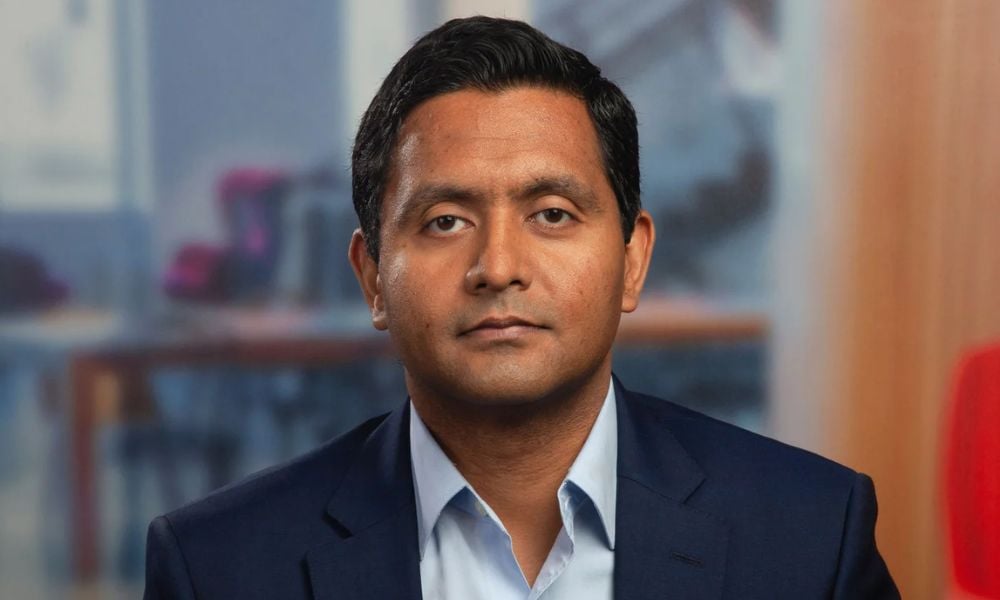
It’s a pattern that has prompted questions about whether RIA valuations are softening, but Gaurav Joshi, EY-Parthenon Global Wealth & Asset Management Sector Leader, has told InvestmentNews that the answer is no.
"The increase in deal volume alongside lower aggregate values does not suggest that RIA valuations are falling," Joshi said. "If the deal market is a vector, volume tells you the direction of travel and reflects intent, while value tells you the magnitude of activity and can be disproportionately influenced by a relatively small number of multi-billion-dollar transactions. In North American wealth and asset management, deal volume increased materially while aggregate value declined, which suggests strategic appetite remains strong even as the largest transactions become less common."
Joshi said the trend reflects continued discipline in the RIA market rather than a broad valuation reset, with multiples for top-tier franchises still elevated.
"In the RIA market, the trend points to continued discipline rather than a broad-based valuation reset," he said. "Multiples for high-quality franchises remain elevated because the fundamental investment thesis is still attractive. Financial advice remains a largely domestic, relationship-driven business with recurring revenue and favorable demographic tailwinds, making RIAs attractive compared with sectors facing greater geopolitical and cross-border uncertainty."
Higher financing costs and the emergence of AI are reshaping the calculus for buyers, though Joshi does not expect AI to disrupt the high-net-worth end of the business first.
"At the same time, higher financing costs are making acquisitions more expensive to execute, while AI is introducing questions around the future economics of advice," Joshi said. "Most investors, however, believe AI's impact will be felt first in more standardized advice and lower-balance segments rather than the high-net-worth, ultra-high-net-worth, and family office channels that many RIAs serve today."
"Elevated funding costs, macroeconomic uncertainty, and technological disruption aren't necessarily driving valuations materially lower," he added. "Instead, they are making buyers and sellers far more selective. The result is an active market with fewer blockbuster transactions and more attention around organic growth, demographics, advisor retention, integration of businesses, and the sustainability of earnings."
Joshi said high-quality, growth-oriented firms are still commanding strong pricing, and that the industry narrative is shifting from asset accumulation toward earnings resilience.
"High-quality, growth-oriented firms continue to command strong pricing," he said. "Private RIA transaction activity has kept accelerating even as listed asset-manager multiples have moved in a more mixed direction, a reminder that the RIA segment is being valued on its own fundamentals. The broader industry narrative is shifting from asset accumulation to earnings resilience. Buyers want recurring, fee-related economics, clean data and technology, and management teams that can scale post-close. Founders who can articulate that story clearly should still expect a competitive process."
EY has described a "temporary window" for US dealmaking under the current regulatory backdrop. Joshi said the phrase is less about any single rule change and more about the rare alignment of favorable conditions.
"When we describe the current environment as a temporary window, we're less focused on any single regulatory change and more on execution clarity," Joshi said. "Buyer demand remains strong, financing markets are supportive, and the regulatory background is relatively predictable. Those factors rarely stay aligned for long, and opportunities like this often narrow before the market recognizes it. Looking ahead, financial services firms face rising expectations around transparency, resilience, data governance and investor protection. Those trends will continue to raise the operational bar for both buyers and sellers."
Joshi said the message for advisors is not to rush into a deal, but to prepare while conditions hold, particularly those weighing succession.
"The message to advisors is not to rush a transaction, but to use this period strategically," he said. "Firms should evaluate strategic options, prepare for diligence, and understand how they differentiate themselves in the market. Firms that prepare now will have more optionality if the environment tightens. Founders with succession considerations should be particularly deliberate, waiting rarely improves negotiating leverage."
With fewer clean megadeal exits available to private equity sponsors, Joshi said the industry's playbook is shifting from aggregation toward building durable platforms.
"Private equity's strategy in wealth is evolving," Joshi said. "With fewer clean megadeal exits available, sponsors are placing greater emphasis on platform building rather than pure aggregation. The industry's evolution can be viewed in three stages: consolidation, integration, and expansion. Most firms have completed the first, many are still working through the second, and the real opportunity now lies in the third."
Joshi said the next phase for PE-backed platforms centers on organic growth within specific client segments rather than simply acquiring more assets.
"The next phase is ultimately about value creation," he said. "It is no longer enough to buy assets and integrate platforms. The winners will be those that can accelerate organic growth by serving distinct client segments more effectively, whether that is business owners, founders, doctors, lawyers, or families with liquidity events."
That, Joshi said, demands stronger commercial and technology capabilities alongside more institutional leadership.
"That requires stronger branding and marketing, more sophisticated digital acquisition, better use of investment and client data, and increased productivity through technology and AI," Joshi said. "It also requires deeper leadership teams that can operate an institutional business, not simply manage a collection of advisors and assets."
He added that private equity's role in wealth management is now permanent rather than cyclical.
"PE ownership in wealth management is no longer a cycle," Joshi said. "It is a structural feature of the market. That is why sponsors are investing in operating capabilities and growth engines rather than relying on the next sponsor to drive returns. Ultimately, the firms that stand out in the next phase will be the ones that can prove they can grow, not just acquire."
Asked whether buyers are chasing specialized services or simple geographic footprint, Joshi said capability now matters more than location alone.
"The shift from cost-cutting to growth is a broader wealth management trend that is playing out clearly in the RIA market," Joshi said. "Geography still matters, but on its own it is not enough. Buyers are looking for capabilities that help advisors deepen client relationships and drive organic growth, tax-aware planning, estate and wealth transfer, alternatives access, lending, family-office and institutional-quality consulting, and the digital tools that help advisors deliver all of it."
He pointed to a rise in RIAs acquiring tax and accounting firms as part of a broader model change.
"A growing number of RIAs are acquiring tax and accounting firms to bring complementary expertise in-house and strengthen access to high-net-worth clients," Joshi said. "This reflects the rise of the 'RIA of the Future' model, where advisors sit at the center of a broader financial services ecosystem."
Technology, he said, sits at the heart of what buyers are underwriting.
"Technology is also central to the investment thesis," Joshi said. "Buyers want platforms that improve advisor productivity, enhance the client experience, and support scalable growth. As our 2026 EY Future of Asset Management study highlights, future winners will need more than scale. They will need differentiated capabilities, strong technology foundations, and AI-enabled operating models. Buyers are no longer just acquiring assets under management. They are investing in the capabilities that make those assets more resilient and growth-oriented."
Foreign investment into North American wealth management more than tripled to nearly $16 billion. Joshi tied the surge to relentless wealth creation in the US.
"According to industry estimates, roughly 440,000 people in the US became millionaires over the last year, which translates to about 1,200 new millionaires every day," Joshi said. "These individuals come from a wide range of backgrounds, from employees benefiting from the growth of AI-driven businesses to entrepreneurs and tradespeople monetizing businesses through private equity transactions."
That dynamic, he said, keeps the US as the most sought-after wealth management market globally.
"That dynamic continues to make the US the most attractive wealth management market in the world," Joshi said. "The combination of sustained wealth creation, a highly fragmented advisory landscape, and long-term demand for financial advice creates a compelling growth opportunity. At the upper end of the market, firms are increasingly able to offer broader solutions that extend beyond investment advice to include lending, banking, estate planning, and alternative investments."
Foreign buyers are after more than assets under management, Joshi said, and the flow of capital is starting to run in both directions.
"Foreign investors, in addition to buying exposure to assets, are also gaining access to distribution, client relationships, advisor networks, and scalable operating platforms," he said. "The appeal is both today's assets under management and the opportunity to deepen relationships with growing segments of wealthy clients over time. This is also becoming a two-way flow. US acquirers are increasingly looking at the UK, Western Europe, and Australia, where they see attractive advice markets, strong demographic tailwinds, and different valuation dynamics."
Joshi said the underlying selection criteria for cross-border buyers looks much like that of domestic ones.
"What buyers are targeting is not scale but firms with strong client retention, durable growth, robust compliance cultures, scalable technology, and leadership teams capable of driving the business forward after a transaction," he said. "The market is becoming increasingly selective and quality-driven."
With big-ticket acquisitions harder to find, some have asked whether large buyers are redirecting capital toward recruiting breakaway wirehouse teams instead of buying firms outright. Joshi said the two channels work alongside each other, not against each other.
"Advisor recruiting and RIA M&A are complementary growth channels, not substitutes," Joshi said. "Both will continue to be used in parallel. The bigger story is that the competition for talent is increasingly tied to business quality."
Scale, he said, is becoming a prerequisite for competing on technology and AI investment, even as independent RIAs retain real advantages.
"While large buyers can compete on economics, sustainable advantage comes from providing advisors with better technology, data, product access, and operational support," Joshi said. "Scale is also becoming critical for AI investment, as the infrastructure required to deploy AI effectively is difficult to maintain at smaller firms. Independent RIAs still offer compelling advantages, including autonomy, culture, meaningful equity participation, and greater control over the client experience. But to remain competitive, they need the scale to invest in technology, compliance, planning, and service capabilities. Ultimately, the firms best positioned for long-term growth will be those that combine top advisor talent with strong institutional capabilities."
Asked whether the current wave of M&A is genuinely solving the industry's succession problem or simply deferring it, Joshi drew a clear distinction between ownership transition and client-relationship transition.
"M&A can solve the ownership transition for a founder, but it does not automatically solve the client-relationship transition," Joshi said. "That distinction matters."
The acquirers getting it right, he said, are treating succession as an ongoing operating discipline rather than a one-time transaction outcome.
"The most successful acquirers are treating succession as an operating challenge, not just a transaction outcome, investing in next-generation advisor development, building multi-advisor teams, and creating client relationships that extend beyond a single senior advisor," Joshi said.
He said culture, more than deal structure, tends to determine whether an acquisition ultimately delivers value.
"Culture is often the biggest determinant of success after a deal closes," Joshi said. "Clients and employees can embrace change, but they want continuity in how the firm serves clients. When an acquisition disrupts that culture, even well-structured deals can struggle to deliver their intended value. That's why the focus today is increasingly on building durable organizations rather than simply transferring assets or client books. Firms need the leadership, talent and operating infrastructure to support the next generation of growth."

From using projects as strategic thinking exercises to real-world challenges as problem-solving exercises, indie firms can make for more powerful talent incubators.

New BCG research names financial services among the world's most AI-exposed industries and the US as a top-tier AI economy.

Rockefeller Capital Management's Mallory Findley on how avoiding conversations risks derailing even the best-laid estate plans.

New Empower research reveals a "retirement drift" problem that hands financial advisors a direct opening to add client value.

Nevis joins Jump at RIA platform Focus as both vendors’ AI tools aim to handle account opening and notetaking.
Knighthead Life entered the market with a competitive MYGA. A strong launch earned advisor confidence and paved the way for FIAs.
As AI makes financial information more accessible than ever, Lana Hock explains why human judgment, trust, and empathy remain the qualities clients value most in a financial advisor

