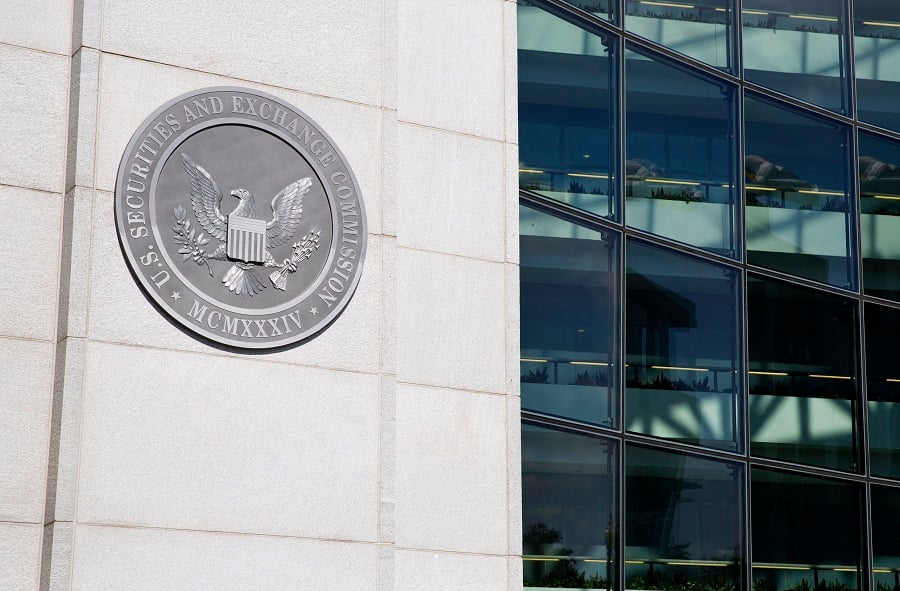
Atlanta-based investment firm Gray Financial Group Inc. has sued the Securities and Exchange Commission in Georgia federal court, challenging the agency's use of its own administrative law judges rather than federal judges to try enforcement cases.
The lawsuit is the latest challenge to an SEC practice that has been increasing since the passage of the 2010 Dodd-Frank financial reform law.
In the most recent fiscal year,
the SEC filed 57% of its cases in district court and 43% in administrative forums that are overseen by five administrative law judges the SEC hires.
The complaint, filed Thursday by Gray Financial co-founder Laurence Gray and co-chief executive Robert Hubbard, charges that the SEC's administrative proceedings violate
Article II of the U.S. Constitution because the agency's judges are separated from presidential supervision by at least two layers of tenure protection.
The lawsuit seeks to block the SEC's administrative action against the firm.
An SEC spokesperson said it is agency policy to not comment on active lawsuits.
Gray Financial officials did not respond to a request for comment.
The SEC is investigating Gray Financial to determine whether it violated Georgia law in 2012 by investing in
alternative investments on behalf of public pension funds.
According to Gray Financial's complaint, SEC-issued Wells notices in August 2014 indicated the agency had concluded that the $10 billion investment firm had violated certain federal securities laws.
The complaint also states that while there is no evidence of investment losses from the allocation to the funds of hedge funds, the SEC began “confidential and nonpublic investigation into Gray Financial.”
Although the SEC never issued formal charges, the complaint alleges that the nature of the investigation was “released to the public and national press, and in a significant way.”
According to the complaint, the consequences of the investigation being made public triggered a “harsh reality for Gray Financial and all of the employees of the firm.
“Once the investigation became public, Gray Financial had numerous consulting clients terminate their business relationships, [requests for proposals] for new business opportunities vanished and revenues declines,” the complaint states.
The SEC began using administrative forums more often as a result of the Dodd-Frank financial reform law. Under Dodd-Frank, the SEC is allowed to bring unregistered individuals and firms into administrative proceedings. Previously, the agency could only obtain penalties in these cases if they were tried in district court.
Commenting in December on the practice of the SEC relying more on in-house judges, Thomas Gorman, a partner at Dorsey & Whitney, said it gives the SEC a home-court advantage.
“It's a simpler format for them,” he added. “It gives them maximum control of how the cases proceed.”