
Having a pipeline of talent that can grow to become your firm’s senior leaders is one thing; preparing for future ownership of the business is different.
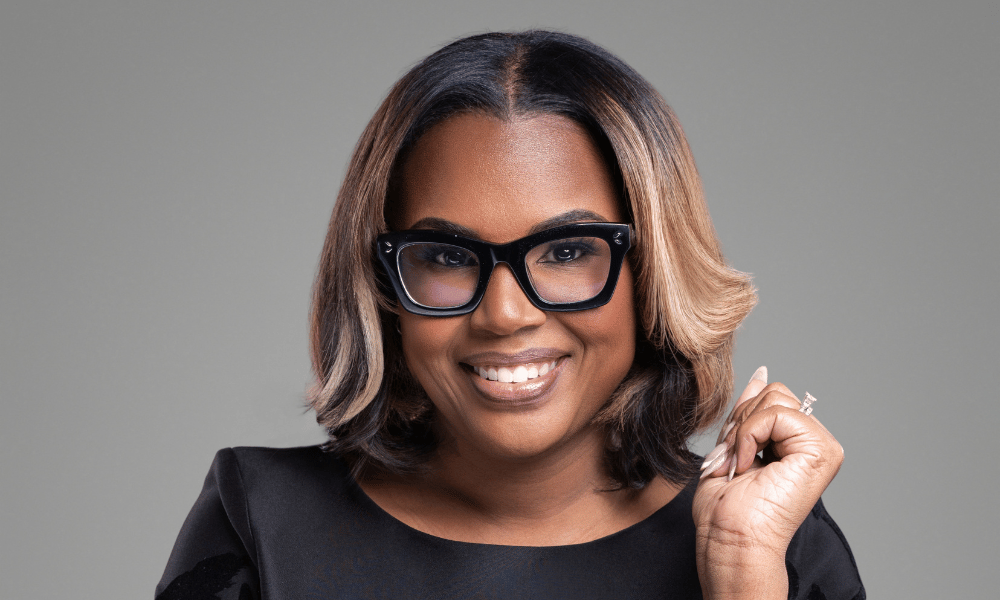
The financial advice profession is on the cusp of one of the largest generational transfers in its history as a wave of veteran advisors approaches retirement and Sheena Gray, CEO of the Association of African American Financial Advisors (Quad-A), wants the industry to reckon with what that transition really means.
For Gray, the stakes go beyond asset flows. "Succession cannot simply be a conversation about who inherits the clients," she said. "It also has to be a conversation about who has the opportunity to own the businesses serving them."
Speaking with InvestmentNews, Gray, a J.P. Morgan veteran who took the helm at Quad-A in 2024, said that the profession has long confused succession readiness with talent development and that the two are not the same thing.
For many practice owners, succession planning remains something to address when retirement is already visible on the horizon. Gray believes that instinct is costly.
"Succession should not be treated as an exit strategy," she said. "It should be part of the business strategy from the beginning. Advisors should be developing future leaders, documenting key processes, introducing the next generation into client relationships and thinking intentionally about how ownership will eventually transition. Starting early creates more options for the owner, protects the value of the business and gives clients greater confidence in its future."
Advisors who wait too long risk concentrating too much of the firm's value in a single individual. "If the owner holds the majority of the client relationships, business development and institutional knowledge, the value of the practice becomes much more difficult to transfer," Gray said. "A succession plan protects more than the financial value of the practice, it protects the relationships that created that value in the first place."
The client-retention risk is equally significant. "Clients are not simply transferring assets from one advisor to another," she said. "They are deciding whether they trust someone new with their family, their goals and often decades of financial history. That trust has to be built before the transition occurs. The transition should feel like a continuation of the relationship, not a handoff to a stranger."
Gray highlights a dimension of succession the broader industry rarely addresses openly, that access to ownership has not been equally distributed.
Talented younger advisors - and particularly Black financial professionals - have historically been developed as practitioners without being invited into conversations about equity, valuation or business ownership.
"Talented younger advisors may spend years helping build a practice without ever being included in conversations about equity, valuation or ownership," she said. "We have to start teaching advisors not only how to be exceptional practitioners, but how to become owners. That means earlier exposure to how businesses are valued, financed, acquired and operated, along with greater transparency about what a realistic path to equity looks like."
At Quad-A, this is not an abstract concern. "We represent a community of Black financial professionals who have historically had less access to ownership opportunities and generational business wealth," Gray said. "As trillions of dollars change hands, succession cannot simply be a conversation about who inherits the clients. It also has to be a conversation about who has the opportunity to own the businesses serving them. If this profession wants a strong next generation of owners, we have to intentionally build one."
That means firm owners taking concrete steps. "Owners can consider phased buy-ins, financing arrangements and gradual equity opportunities rather than assuming the next generation can finance a significant acquisition all at once," she said.
Black advisors represent approximately 2 percent of certified financial planners across the United States, according to CFP Board stats, a figure Gray is focused on changing.
Gray pushes back on the assumption that a successor needs to resemble the person who built the practice. "A successor does not need to look like the person who built the practice, come from the same background or have followed the same career path," she said. "The most important qualities are the ability to build trust, listen, lead, exercise sound judgment and understand the needs of clients and their families."
Owners should also think carefully about who is best positioned to serve the firm's future client base. "Firms should be asking whether their future leadership understands the clients they hope to serve tomorrow - not simply whether they resemble the leadership of yesterday," Gray said. "The Great Wealth Transfer is not only a transfer of assets. It is also a transfer of relationships, influence and opportunity. The right successor should be capable of preserving the relationships and values that built the firm while also having the vision to lead it into its next chapter."
For advisors in their 40s or 50s with no formal plan in place, Gray says it’s essential to first determine what you are building toward, understand the value of the practice, and decide whether the long-term goal is an internal succession, external sale, merger or another transition.
“You cannot build an effective succession strategy without knowing the destination,” she said. “Second, identify potential successors and begin developing them now. Third, reduce the firm's dependence on any one individual - document processes, distribute institutional knowledge and build client relationships across the firm."
"Succession planning is not simply about how an advisor leaves," Gray said. "It is about what, and who, they leave behind."

LPL Financial and Raymond James also add independent advisors from Osaic and Edward Jones in Michigan and Arizona.

The SEC-registered RIA advises on more than $1 billion in client assets, with no advisory fee through 2027 and no human financial advisors.

95.8% of house trades were winners. For clients? The SEC says just 14.9%.

The complaint says Duolingo added friction on purpose, then lied about it.

The four wirehouse firms lost 1,449 experienced advisors and recruited 932 in the first six months of the year, according to Diamond Consultants.
Knighthead Life entered the market with a competitive MYGA. A strong launch earned advisor confidence and paved the way for FIAs.
As AI makes financial information more accessible than ever, Lana Hock explains why human judgment, trust, and empathy remain the qualities clients value most in a financial advisor

