
The $124 trillion set to change hands in the U.S. through 2048 is no longer just a number for financial advisors to track – it's now colliding with a harder question: what happens to that money once it lands in an heir's hands. New data from Bank of America's 2026 Private Bank Study of Wealthy Americans found that 61% of ultra-high-net-worth (UHNW) respondents – those with $25 million or more in investable assets – are worried about how an inheritance will affect their children's motivation. In response, 41% are now writing specific provisions into trusts to manage that risk, and 36% are limiting how much their heirs know about the family's wealth altogether.
Cerulli Associates projects that $105 trillion of the broader $124 trillion transfer will flow directly to heirs by 2048, with $18 trillion going to charity. For advisors, the paperwork behind that shift – wills, trusts, beneficiary forms – has become the easy part. The harder work is what comes after: who administers the money, and whether giving becomes a deliberate part of a family's identity or an afterthought.
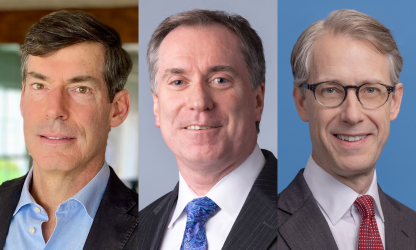
David Barnard, founder and CEO at Luminary, says most trustees aren't professionals, and that families routinely overvalue comfort over competence when naming one. "There is a reason professional trustees exist. Administering a trust, and realizing all of the benefits it is intended to provide, requires much more than knowing the family well. A friend or family member may understand the personalities and dynamics involved, but few are equipped to consistently make decisions aligned with the grantor's intent while also managing the trust with the necessary efficiency and transparency. The right trustee combines sound judgment with operational rigor and professional capability," Barnard said.
John Abbuhl, director of trust business development at National Advisors Trust, points to a similar tension between emotion and fiduciary reality. "Families sometimes view being named trustee as an honor and choose a family member or close friend without fully considering what the role requires. Serving as trustee comes with significant fiduciary, administrative and legal responsibilities. That is where a corporate trustee can provide significant value. An experienced corporate trustee understands the responsibilities of trust administration, brings objectivity to difficult decisions, and provides continuity across generations," Abbuhl said.
John Youngs, partner and CEO at Tiller Private Wealth, says donor-advised funds (DAFs) – vehicles that let donors contribute assets, take an immediate tax deduction, and recommend grants to charities over time – can be an effective way for families to pursue philanthropic goals while potentially reducing the size of a taxable estate. That approach has quietly reshaped how affluent households approach year-end giving in recent years, and donor-advised funds remain one of the fastest-growing tools for tax-efficient philanthropy among high-net-worth clients.
Youngs also flagged a technical detail with real planning stakes: the 10-year rule that applies to many inherited IRAs, under which most non-spouse beneficiaries must empty the account within a decade of the original owner's death. "Families may choose to leave Roth assets to heirs while prioritizing charitable giving through traditional IRAs, which can be particularly tax-efficient assets to leave to charity. Vehicles such as Charitable Remainder Trusts are also used by some families to pursue multiple objectives, including providing income during a donor's lifetime, potentially reducing estate or other tax exposure, and ultimately directing assets to the charities of their choice. The important thing is not to let the tax tail wag the charity dog. Prioritize your philanthropy first, then be tax-smart in how you execute it," Youngs said.
Abbuhl said private family foundations can extend that strategy across generations. "Private foundations generally must make annual qualifying distributions equal to approximately 5% of their investment assets. Families can use that annual responsibility as an opportunity to come together, discuss the organizations and causes they want to support and give younger generations a meaningful role in those decisions," Abbuhl said.
Youngs said the right time for wealth transfer conversations is as soon as heirs are mature enough to engage with the information – often well before any assets actually move. Barnard agreed, framing early planning as a matter of options rather than urgency: "There is no single right time to have these conversations. They often arise around major life events – births, marriages, liquidity events, divorces, or deaths – but the earlier the discussion happens, the more options a family generally has. As the old saying goes, the best time to plant a tree was 20 years ago. The second-best time is today," Barnard said.
Abbuhl put it more bluntly: "The right time is 'early and always' as there is no need to wait for a particular milestone." For advisors managing UHNW relationships, that increasingly means treating estate documents as the starting point of a client conversation, not the conclusion of one.

The democratization of ETFs cuts both ways

Independent broker-dealers snap up experienced advisors as competition for established practices intensifies.

Derek Flowers, a nearly 30-year veteran, is set to retire in mid-January, handing the reins to the executive who helped lead the bank's regulatory turnaround.

The campaign spans broadcast TV and streaming, as the brokerage faces slowing client net flows and an $8.1 billion advisor team that left to launch an RIA this month.

A Michigan Democrat's proposal to lower the retirement age adds a new variable to claiming strategies for clients in manual trades.
As AI makes financial information more accessible than ever, Lana Hock explains why human judgment, trust, and empathy remain the qualities clients value most in a financial advisor
Northern Trust’s Ken Lassner shows advisors how to convert volatility into after-tax portfolio gains

