
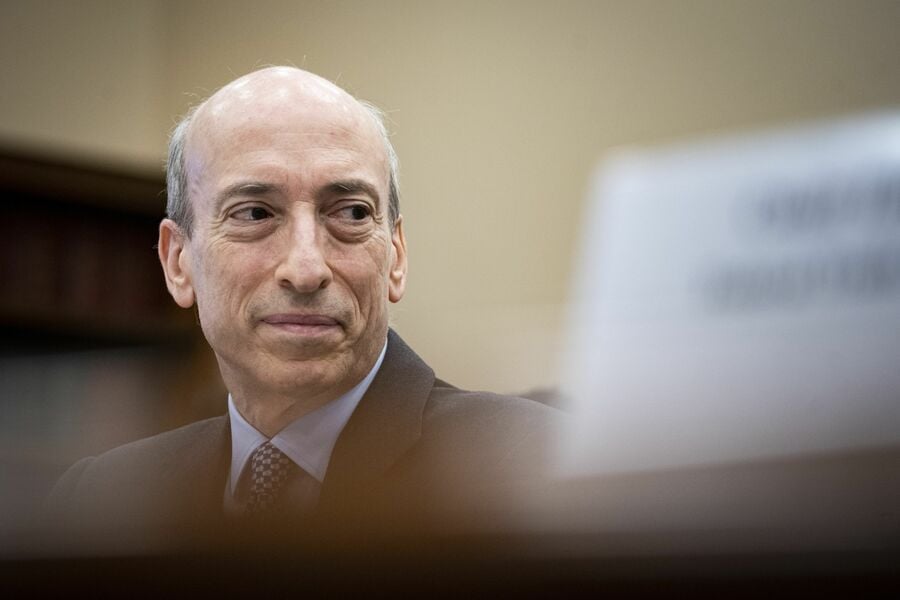
Gary Gensler’s bid to overhaul rules for the stock market is reigniting a longstanding debate over how good mom-and-pop investors really have it and whether anything Wall Street is selling is actually free.
Some industry insiders say there's never been a better to be to be a small-time trader. Buying and selling shares is cheap and easy, they say.
But Gensler, chair of the Securities and Exchange Commission, argues the $45 trillion U.S. equities market is actually littered with hidden costs and rife with conflicts of interest. There’s a “lack of a level playing field,” the SEC chief said Wednesday.
The two sides are headed for a major clash and one issue is already taking center stage: the future of commission-free trading.
Since 2019, most major online brokerages haven’t charged retail clients fees for their transactions, following a model made popular by Robinhood Markets Inc. A legion of traders who put money in the market for the first time during the Covid-19 pandemic have known nothing else.
According to some executives, the lack of commissions is a direct result of Robinhood and other retail brokerages bringing in revenue from arrangements known as payment-for-order flow, which let them sell their clients’ trade orders to market-making firms like Citadel Securities and Virtu Financial Inc. for execution.
Larry Tabb, director of market structure research at Bloomberg Intelligence, said that there’s evidence that retail investors are getting a better deal than institutional traders in the current system, which involves payment-for-order flow.
But Gensler is not a fan because while a trade may be free, there are questions over the quality of the execution and whether investors are getting the best price. He’s repeatedly suggested ending the practice, and this week he again refused to rule out pushing to ban it in the U.S. The SEC chief also suggested creating an auction mechanism in which the major market-making firms would have to compete directly to fill retail orders, rather than purchasing them from Robinhood and others.
While any changes would take months to make their way through the SEC’s byzantine rulemaking process, Gensler’s latest comments nonetheless have unleashed a flurry of speculation over what an overhaul could mean for commission-free trading.
“This could be much worse for retail investors, especially if payment-for-order flow goes away and retail traders go back to paying $5 or more for each trade,” said Mike Bailey, director of research at wealth management firm FBB Capital Partners. “If the SEC kills payment-for-order flow, then yes, commissions go higher and friction comes back into part of the capital markets.”
Chris Grisanti, chief equity strategist at MAI Capital Management, said regulators “may be trying to solve a problem that isn’t there.” However, he was skeptical that what Gensler laid out would actually result in the end of commission-free trading.
“Who’s going to want to be the first one to raise fees, and are others going to follow?” Grisanti said. Instead, brokers could try to hold onto their margins by adding fees elsewhere.
There are also retail brokerage firms seeking to gain a foothold in the market that see an opportunity in Gensler’s plans.
Kerim Derhalli, founder of the investing app Invstr, which offers commission-free trading but says it doesn’t sell clients' orders through payment-for-order-flow, asserts that the changes could bring more transparency. Even without paying brokerage fees for each transaction, ordinary traders still bear a cost, he says.
“Retail investors already understand they’re paying a price somewhere or other,” he said.
“If the cost of buying and selling becomes more explicitly known, it might discourage people from thinking they’re Gordon Gekko,” Derhalli said, referring to the fictional character played by Michael Douglas in the 1987 film “Wall Street.”

Meanwhile, DPL Financial Partners adds two annuity executives and Prime Capital Financial hires a Mid-Atlantic retirement plan consultant

Andrew Komarow pleaded guilty Thursday in federal court in Hartford to defrauding three financial services companies of close to $3.3 million.

Elsewhere, Cetera picks up a $210 million Connecticut team from MML, while Wells Fargo FiNet adds a San Diego family practice from LPL

Celebrity endorsements, $500M in claimed assets, and a state regulator stepping in.

“We needed to become a more agile and efficient organization,” said American Express CEO Stephen Squeri.
Knighthead Life entered the market with a competitive MYGA. A strong launch earned advisor confidence and paved the way for FIAs.
As AI makes financial information more accessible than ever, Lana Hock explains why human judgment, trust, and empathy remain the qualities clients value most in a financial advisor

