
Investors face a growing risk that climate change will result in a sudden loss of value, with existing portfolio models often falling short, according to an analysis by Markus Müller, chief investment officer for ESG at Deutsche Bank.
“The temptation is to assume that the effects” of global heating “will accumulate only gradually,” he said in a client note. “However, this isn’t guaranteed.”
The Deutsche Bank executive says investors need to prepare themselves for the unanticipated consequences of "fat-tail" risks associated with climate change. Though such events are deemed unlikely, their fallout can be catastrophic. At the same time, academic research suggests that climate change is a field in which such outcomes are “dangerously under-explored.”
The trajectory of climate change is proving far from linear, as the planet moves closer to a number of so-called tipping points. If breached, the physical effects of climate change could suddenly and dramatically worsen, scientists have repeatedly warned.
In a recent client note, analysts at Jefferies said investors “may not be using the most up-to-date and relevant climate models” to help them assess the risks ahead.
Müller says conventional financial models have so far struggled to handle so-called fat-tail events, with the market meltdown of 2008 standing out as a notable example. Climate change brings with it four distinct risk categories, namely physical, transition, liability and contagion risk, he said.
“The relative importance of these different sorts of risk will change over time,” Müller said.
Given the current understanding of how climate change will play out, it looks as if transition risk — which can come in the form of changing regulations, technologies and consumer preferences — will likely surface in the short and medium term, he said. The level of risk will largely depend on the steps a country takes to prepare its economy for the effects of climate change.
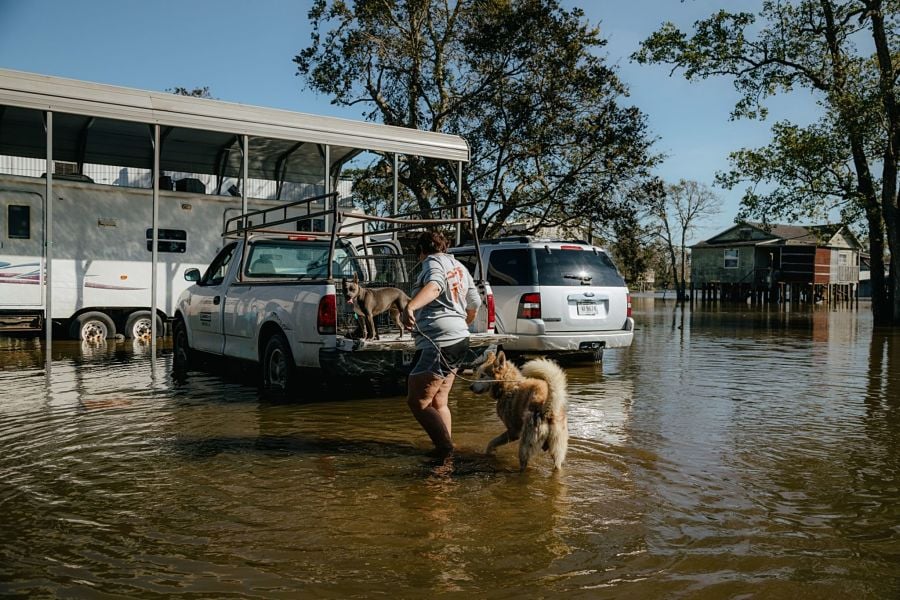
Physical risk — which can manifest itself in the form of property damage — looks set to become “increasingly significant over the medium to long term,” Müller said.
Investors are slowly getting their first glimpse of the potential losses they face as corporations across jurisdictions start having to disclose their climate risk. Such rules have already been enforced in the European Union and California, while the Securities and Exchange Commission is working on regulations with which all U.S. firms would have to comply.
If governments fail to put adequate measures in place, a possible outcome is that central banks are forced to step in by “tightening policy rates,” Müller said. “This would have the most immediate implications for bonds,” but “higher interest rates also impact equity valuations,” he said.
Compiling a portfolio that’s best positioned to cope with such risks requires that investors realize that environmental, social and governance metrics will “become increasingly material,” he said.
The transition to a more sustainable economy “will not be smooth and returns on investments will vary,” Müller said. “This process of transformation will take time and ESG investments need to reflect this.”

Elsewhere, Wells Fargo Advisors adds a $400 million Morgan Stanley veteran in Naples as an ex-Cetera advisor goes independent with LPL

According to a federal charges Bradley Heppner, 60, received more than $150 million in payments through funneling money from GWG Holdings to a shell company.

A $1B fund allegedly skimmed 30% off the top, then swapped cash for locked-up stock.

Insiders allegedly rewrote projections three times in four days.

TCI Wealth Advisors also has also tapped JIFFYAI to unify onboarding and servicing, while TradePMR adds ICE market data to its Fusion advisor platform
Knighthead Life entered the market with a competitive MYGA. A strong launch earned advisor confidence and paved the way for FIAs.
As AI makes financial information more accessible than ever, Lana Hock explains why human judgment, trust, and empathy remain the qualities clients value most in a financial advisor

