Higher taxes and debt forgiveness could work if they're done correctly.
With nearly two dozen Democratic candidates now running for president, many of the contenders are trying to stand out from the crowd by proposing various forms of tax hikes on the wealthy and tax breaks for those who aren't yet wealthy.
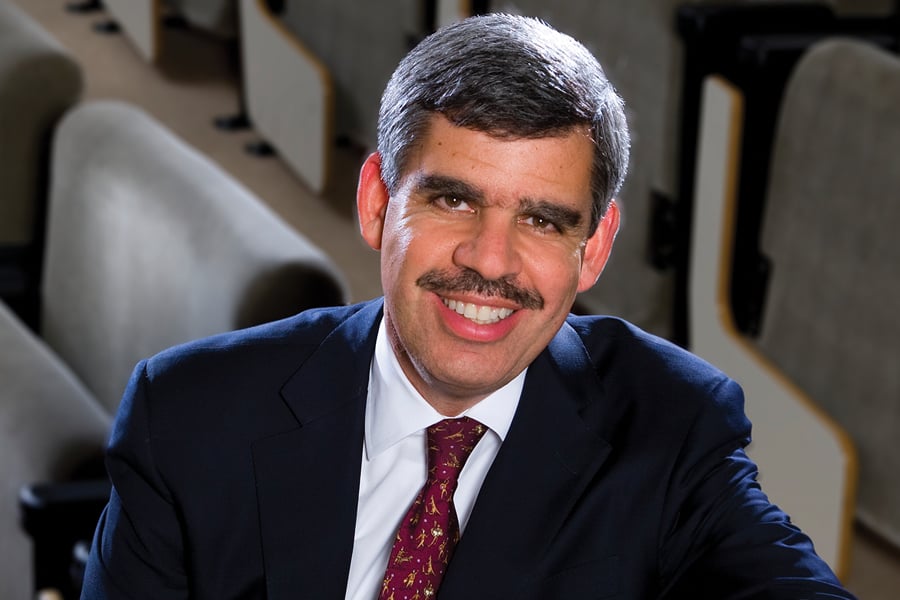
For perspective on what some of the tax proposals could mean, we asked Mohamed El-Erian, chief economic adviser at Allianz, to break it down against the backdrop of the roaring bull market, a strong economy and low unemployment.
Jeff Benjamin: What do you think is driving the calls from politicians to increase taxes on wealthy people? Is this just political noise from people running for president or is there any justification?
Mohamed El-Erian: The increased focus on increasing taxes on the rich has been driven by the post-2008 period of low and insufficiently inclusive growth, together with concern [about] high inequality, not just of income and wealth but also opportunity. There are also technocratic arguments that support the notion, starting with the need to close certain loopholes that disproportionately favor the rich, such as the treatment of carried interest.
JB: Does raising taxes really result in higher tax revenues for government, or do wealthy people have the means and resources to avoid higher taxes?
ME: If well-designed, and that's an important qualification, higher taxes on the rich can raise revenues while minimizing adverse incentive effects.
In fact, you could even have positive economic effects if the tax changes support higher sustainable demand, given that the rich have a lower propensity to consume, and if larger tax collection supports high quality, pro-growth spending, such as the modernization and upgrade of infrastructure that crowds in higher-value private sector activity.
This is particularly the case if efforts are made in the context of tax reform that remove anti-growth distortion, as well as elements like preferential tax rates for carried interest that favor the rich and that many agree can and should be corrected.
JB: What other solutions are there for generating revenue or balancing budgets that politicians could consider?
ME: One of the key fiscal issues facing the country is how to step up efforts to modernize and upgrade pro-growth infrastructure without putting an unduly heavy burden on the budgetary accounts. Fortunately, there are windows for this at this time, including public-private partnerships. And they come during a period of relatively low interest rates.
JB: Do you think the U.S. is transitioning from a capitalist to a socialist society?
ME: The main transition is one to a more inclusive, market-based system.
JB: What are your thoughts on Modern Monetary Theory as an economic solution to the country's fiscal challenges?
ME: More than the MMT is in play here. The combination of persistently low interest rates and no inflation scare following years of aggressive monetary policy are playing a role, as is concern that the benefits of central banks' unconventional policies have predominantly benefited the rich. And all this comes at a time of pent-up frustration with the aftermath of the global financial crisis characterized by low and insufficiently inclusive growth.
JB: Some presidential candidates have proposed variations on tuition-free college, but Sen. Elizabeth Warren has gone even further by proposing student-loan debt forgiveness. Does that make sense to you?
ME: For pockets of excessive indebtedness, such as certain segments of student loans and Greece, debt reduction should be considered — not because it's the easy thing to do but rather because it's the only way to deal with an overhang that can damage both actual and potential growth.