
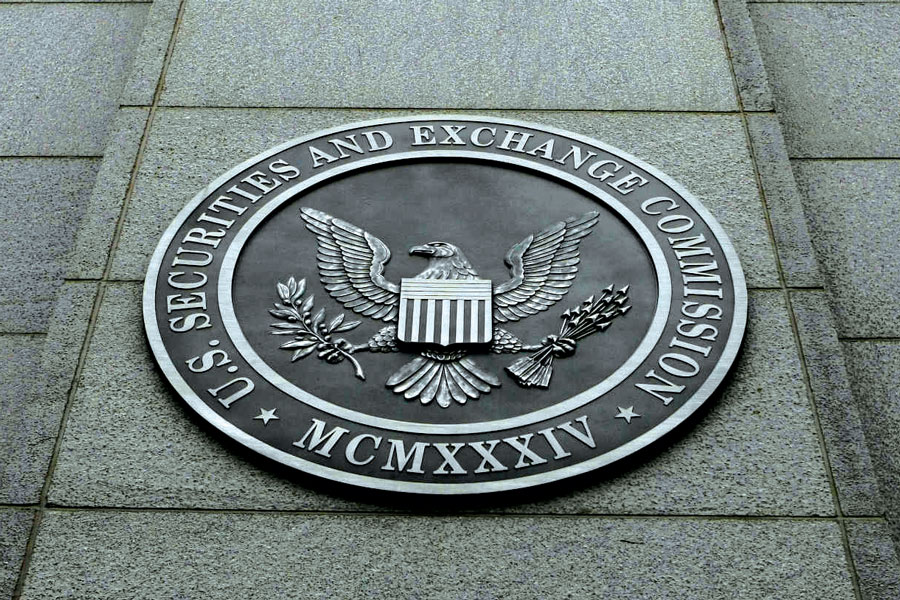
A Supreme Court decision this week upheld one of the Securities and Exchange Commission’s most powerful tools for clawing back money from fraudsters but set limits that provide some protections to financial advisers caught in the agency's cross hairs.
In an 8-1 ruling Monday, the high court held that the SEC can obtain so-called disgorgement of ill-gotten gains in federal court as long the award does not exceed the wrongdoer's net profit and is given to victims of the illegal scheme. The case involved a California couple, Charles Liu and Xin Wang, who misappropriated funds solicited to build a cancer center in California.
“It was a win for both sides,” said Nancy Hendrickson, a partner at Kaufman Dolowich & Voluck. “It’s going to be a narrower remedy for the SEC.”
Disgorgement often is central to SEC enforcement actions. During the last fiscal year, the agency ordered $3.2 billion in disgorgement, the highest amount since fiscal 2015. The SEC levies penalties separately from disgorgement.
The Supreme Court decision allows the SEC to continue to seek disgorgement in federal court, where it wins about $1 billion annually, according to Bloomberg News. The SEC also can obtain disgorgement through administrative proceedings.
The disgorgement curbs will provide at least partial relief for financial advisers who are involved in cases where disgorgement is ordered.
“It will limit the financial ruin the SEC can impose on somebody,” Hendrickson said. “Now, your financial exposure is greatly diminished.”
In an earlier case, the Supreme Court ruled that disgorgement was a penalty for the purpose of imposing a five-year statute of limitations its use by the SEC. In this week’s decision, the court said disgorgement qualifies as equitable relief, similar to restitution to harmed investors.
The ruling could help firms defend themselves against disgorgement in revenue-sharing cases, where it’s sometimes difficult to determine how investors were harmed and how to return money to them, said James Lundy, a partner at Faegre Drinker Biddle & Reath.
“This decision says disgorgement should align more closely to restitution,” Lundy said. “There are arguments from this opinion that could be fashioned to push back on a claim by enforcement to pay revenue-sharing back to the government.”
But Laura Posner, a partner at Cohen Milstein Sellers & Toll, said it's wrong to parse the Supreme Court decision as a loss for the SEC. After all, the court did not end disgorgement, and the SEC should be able to navigate the limitations placed on it.
“I don’t know how this case could be characterized as anything but a full-throated win for the SEC,” said Posner, former chief of the New Jersey Bureau of Securities. “The SEC returns to investors the overwhelming amount of money that it obtains through disgorgement.”
When disgorgement proceeds don't go back to investors, they're often used to finance investor protection and education programs.
“Most courts will find that is an equitable remedy and sufficient under [the Supreme Court’s] reasoning in Liu,” said Posner, referring to the case name, Liu v. Securities and Exchange Commission.
The Supreme Court ruling left to lower courts to decide whether disgorgement funds could be deposited with the Treasury Department.

A Nationwide survey finds 47% of GLP-1 users have never discussed the drugs’ financial impact with an advisor, even as many dip into savings.

The hundreds of millions of dollars from a sale of Inspired Healthcare properties does not mean an immediate windfall for investors.

Its SEC filings said one thing - a congressional probe said another.

Sham agreements allegedly padded revenue by 345%.

"Most pre-retirees are uncomfortable making key retirement income decisions without an advisor's help," said Chris Bailey of Cerulli.
Knighthead Life entered the market with a competitive MYGA. A strong launch earned advisor confidence and paved the way for FIAs.
As AI makes financial information more accessible than ever, Lana Hock explains why human judgment, trust, and empathy remain the qualities clients value most in a financial advisor

