
Office address: 1700 K St NW, Washington, DC 20006
Website: finra.org
Year established: 2007 Company type: non-government organization
Employees: 4,200+
Expertise: securities regulation, broker-dealer supervision, market surveillance, enforcement and disciplinary actions, investor education, dispute resolution and arbitration, trade reporting transparency, cybersecurity and fraud detection
Parent company: N/A Key people: Robert Cook (CEO); Robert Colby (chief legal officer); Todd Diganci (CFO); Marcia Asquith (EVP); Ornella Bergeron, Denise Dombay, and Maureen Delaney (SVPs)
Financing status: N/A
The Financial Industry Regulatory Authority (FINRA) is a Washington-based self-regulatory body that supervises more than 3,200 broker-dealers. It enforces rules, monitors trading, and runs tools such as TRACE, BrokerCheck, and the consolidated audit trail. In 2024, it posted $99 million net income and unveiled a crypto education program.
FINRA was officially formed in 2007 through a strategic merger. The National Association of Securities Dealers (NASD) joined forces with the New York Stock Exchange's (NYSE) regulatory division to operate as one.
This created a unified, independent regulator for America's securities industry. The move modernized oversight for a changing market and strengthened investor protections nationwide.
FINRA's story actually began decades earlier, in an era of economic recovery. The NASD registered with the Securities and Exchange Commission (SEC) in 1939. This registration formalized what traders had been doing informally for generations.
Congress had established the SEC in 1934 following the devastating market crash of 1929. Two years later, lawmakers passed the Maloney Act to regulate off-exchange securities trading more effectively.
The NASD spent 68 years evolving to match the changing securities landscape and technology. By the early 2000s, fragmented regulatory oversight became increasingly inefficient for a modern industry.
The 2007 merger created the Financial Industry Regulatory Authority by combining the NASD's institutional knowledge with the NYSE's regulatory expertise. This unified regulator now oversees all brokers and firms across US markets comprehensively.
As 2024 closed, the Financial Industry Regulatory Authority issued substantial penalties against three major firms. These companies faced settlements for sending inaccurate trade information and filing flawed Focus reports. Year-end enforcement actions let both regulators and firms resolve lingering compliance issues cleanly.companies faced settlements for sending inaccurate trade information and filing flawed Focus reports. Year-end enforcement actions let both regulators and firms resolve lingering compliance issues cleanly.
Into 2025, FINRA's Regulatory Oversight Report highlighted three major threats to the industry. Cybersecurity vulnerabilities from third-party technology providers topped concerns alongside AI compliance challenges. Investment fraud schemes also continue to shift as bad actors devise new ways to deceive clients.
FINRA regulates broker-dealers and investment firms in America by combining enforcement with educational resources to protect investors and maintain market integrity:
The Financial Industry Regulatory Authority also addresses emerging threats like cybersecurity risks and artificial intelligence compliance challenges. The organization remains focused on supporting a healthy, trustworthy securities market for all participants.
The Financial Industry Regulatory Authority reports that investor protection and market stability form the core of its mission. The regulator values its employees and delivers market-rate compensation with benefits such as:
The Financial Industry Regulatory Authority also says that it does not discriminate in hiring based on disability, veteran status, and other protected classifications under federal, state, and local law. It complies with 41 CFR regulations protecting disabled individuals and veterans.
Robert W. Cook is the Financial Industry Regulatory Authority's president and CEO, with prior experience directing the SEC's trading and markets division. Before FINRA, Cook was a partner at a law firm in Washington. His education includes a JD from Harvard Law School, a master's degree from the London School of Economics, and an undergraduate from Harvard.
The Financial Industry Regulatory Authority's leadership team includes the following key executives:
These executives manage the Financial Industry Regulatory Authority's daily operations while upholding the organization's core mission to protect investors.
FINRA launched a targeted probe into broker-dealers underwriting small foreign company IPOs to combat pump-and-dump schemes. The regulator required detailed supervisory procedures and due diligence records for offerings between January 2023 and September 2025. This enforcement action positions the Financial Industry Regulatory Authority as a proactive market protector against cross-border securities fraud.
The organization also penalized First Trust Portfolios, an ETF provider, in 2025 with a $10 million settlement for excessive gifts to broker-dealer representatives. The violations spanned from 2018 through February 2024 and included luxury courtside tickets and concert events. This enforcement action illustrates FINRA's commitment to preventing investor harm through strict non-cash compensation oversight.

Regulator says the firm caused recruits to take nonpublic personal client information.

New regulations and the changing technological and media landscape raise many vexing and interrelated questions for advisers, their firms and the investing public.

The broker transferred funds from the investment account of a couple whose portfolio he managed directly into bank accounts he controlled, according to the Department of Justice.
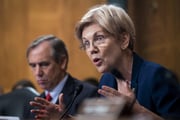
'Investors harmed by Robinhood’s trading restrictions should be able to argue their case in court, rather than in closed-door proceedings that are too often rigged against claimants,' Warren wrote in a letter to Finra CEO Robert W. Cook.

Member firms and trade associations representing them told Finra their pandemic experience has shown that supervisors don’t need to look over the shoulders of registered reps physically to ensure they’re following the rules.

For independent advisory firms and advisers, the Biden administration’s approach to regulation will be among the most consequential outcomes of the November elections.

Short-term mutual fund trades and variable annuity switching is generally regarded in the retail securities industry as a way for brokers and advisers to increase commissions at the expense of clients.

Those who oversee the markets are not built to react quickly to disruptions within them. Theirs is a world of study and deliberation. They have to listen to a wide range of public input. and they often leave much regulatory ambiguity in place.

SEC obtains judgments against Seth Leyton and the trust of the orchestrator of a fraud involving collateralized mortgage obligations.
A retailing matriarch won the decision against her grandsons, who invested her money in complex products. J.P. Morgan and the grandsons were also found liable for elder abuse under Florida law.

The broker-dealer self-regulator cited a surge of new retail investors entering the markets via online platforms, which has led to a spike in more sophisticated kinds of trading, such as options.

While users of the trading platforms claim in court filings that they suffered losses from the restrictions, legal experts say brokerages have broad powers to block or restrict transactions — all of which is spelled out as part of customer agreements everyone signs to gain access to the services.
Atlanta-based broker Tyler Delahunt had been discharged by the wirehouse over alleged outside investments.
Charles Kenahan had already been barred by the state of New Hampshire in December.

The regulator says the firm didn't properly screen more than 1,000 nonregistered employees.
