
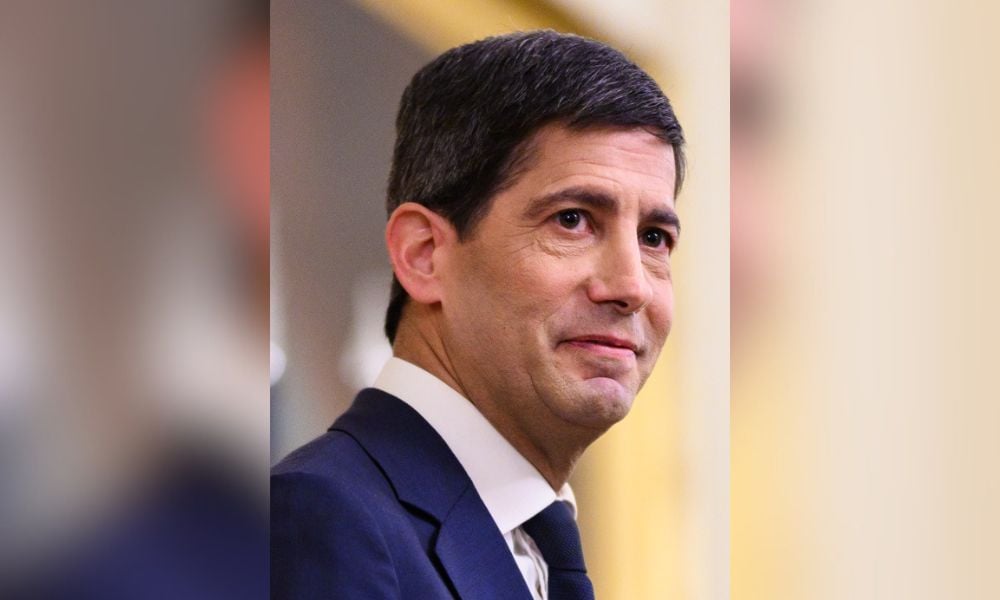
Federal Reserve Chair Kevin Warsh gave an upbeat read on the US economy Friday, crediting a widening wave of business investment for its durability. He again declined to say whether the central bank will raise interest rates again this year.
Speaking at the International Monetary Fund and World Bank annual meetings in Bangkok, Warsh said an investment boom that started with artificial intelligence is spreading into other sectors. That is lifting growth, he said, and it is also adding to near-term price pressure. He would not preview the Fed’s last two policy meetings of 2026.
“I don’t prejudge meetings,” Warsh said during a conversation with IMF Managing Director Kristalina Georgieva, which was reported by Reuters and other outlets. “I don’t believe in saying now what I might do at the meetings that we have in the balance of this year.”
Warsh has avoided forward guidance on rates since he took over as Fed chair in May. He did defend last month’s tightening, which lifted the benchmark federal funds rate by a quarter point to a range of 3.75% to 4%. The Fed’s unanimous September rate decision under Warsh was the central bank’s first increase in three years.
“We made very clear that we would deliver price stability, and we removed a dose of accommodation about a month ago,” Warsh said.
The September move ran counter to President Donald Trump’s repeated demands for lower rates. Trump criticized the Fed’s rate-setting committee after the decision but has continued to back Warsh, whom he appointed earlier this year.
Other Fed officials have been more open about where they stand. Minutes from the Sept. 15-16 meeting, released last week, showed most policymakers expected another increase would likely be appropriate before year-end. In recent weeks, nearly all Fed officials have said further tightening is probably needed. Most have also said they want more economic data before acting, which traders read as a sign the Fed will hold in October.
That view held this week even after September readings on consumer prices and producer prices both came in hotter than expected. Both measures moved further from the Fed’s 2% target.
Warsh described inflation as a problem shared by many economies.
“I came out of meetings here yesterday and today and it’s hard to be in a discussion with central bankers and not compare notes and hear the same thing about the surge in prices,” he said.
Policymakers worldwide have answered with what Warsh called “a synchronous tightening in monetary policy in most places around the world, and that means there’s no free riders.”
Warsh sees AI spending as a large part of the near-term problem. Over the medium term, he sees it as a source of faster productivity growth, a view he's held even during his confirmation hearing at the Senate in April.
“It’s obviously hitting the demand side of the economy before it’s going to hit the supply side of the economy,” he said. “We don’t know in the next 12 or 18 months its effect on employment, but if you believe like I believe, which is it will make economies and countries that put it to good use more productive, that it’s going to make it so that we will have more wealth, then that has to be a very good thing.”
He warned that the path would be “very bumpy.” A Fed task force studying AI’s effects on productivity and jobs will hold a field hearing in the San Francisco Bay Area next month, marking the group’s first public session.
Warsh said investment spreading beyond AI is giving US growth extra support.
“It means we’ve got plenty of tailwinds that are giving some strength and durability to this economy,” he said. “That sort of momentum is certainly not found everywhere in the world.”
He said the global economy was also “showing resilience that I’m not sure I would have predicted five or six months ago, given what’s happening in geopolitics and hotspots around the world.”
Earlier this week, the IMF projected that AI investment would keep global growth above 3% this year. The fund said that would partly offset the drag from oil prices hovering above $100 a barrel. It also said heavy debt loads and a possible sharp pullback in AI investment and asset values threaten the outlook.
Warsh said central bankers in Bangkok agreed on protecting price stability, which he said gives businesses and households confidence.
He closed on an optimistic note about the US.
“I believe optimistically — you might think naively — at least in the United States, we’re going to come out of this stronger with a more durable economy, more capable of leading the world on economic growth,” he said.

Shorter waits for failed SIE and Series 7 candidates take effect Jan. 19, speeding the path to registration

Raymond James and Cetera also welcomed advisors from UBS and LPL as competition for experienced teams stays fierce

Jim Walesa worked in the securities industry for 39 years before leaving in 2021.

As the market turned from pricing in cuts to betting on hikes this year, the developing reality of a K-shaped economy has had real implications for households and investors alike.

Alleged cash payments, stolen client data, and a court that jumped the gun
Knighthead Life entered the market with a competitive MYGA. A strong launch earned advisor confidence and paved the way for FIAs.
As AI makes financial information more accessible than ever, Lana Hock explains why human judgment, trust, and empathy remain the qualities clients value most in a financial advisor

