
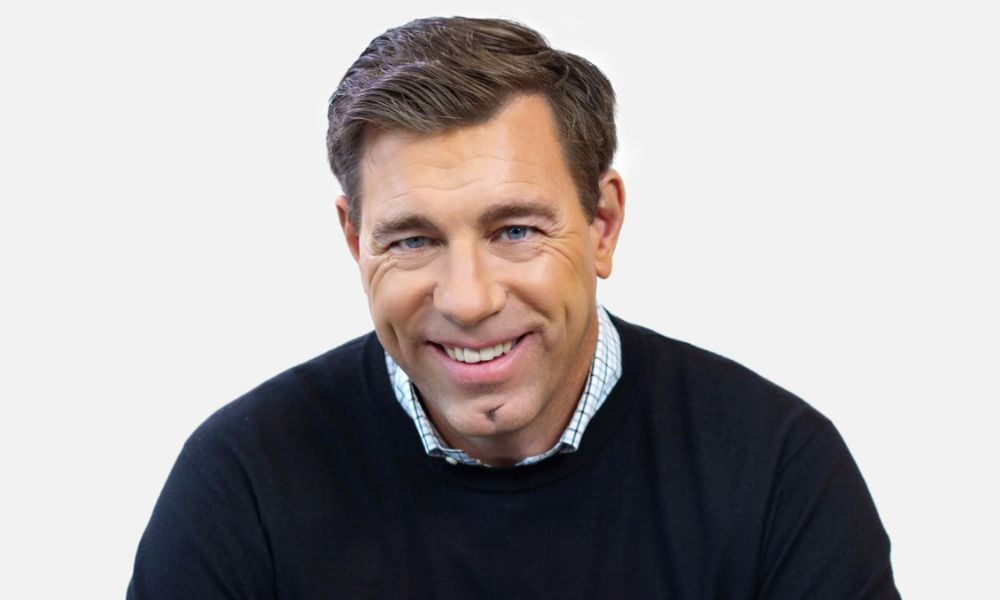
Rich Steinmeier, who took over unexpectedly as CEO of LPL Financial Holdings Inc. last fall, wants the independent broker-dealer behemoth to compete with the top tier wealth management firms on Wall Street.
But one area that LPL lags behind its rivals is how it pays its executive leaders. According to a filing with the Securities and Exchange Commission this week, Steinmeier’s total compensation, a mix of salary, stock and other incentives, is targeted to reach $12 million in 2025.
While that’s more than double the $4.7 million Steinmeier was paid in 2024, when he was LPL’s chief growth officer and a managing director, that’s still a far cry from the compensation of LPL’s top rivals in the wealth management industry.
For example, James Cracchiolo, CEO and chairman of Ameriprise Financial Inc., made $28.8 million in 2024, according to a recent filing with the SEC. LPL and Ameriprise recently have engaged in a series of federal court battles over recruiting advisors.
At Morgan Stanley, James P. Gorman received total compensation of close to $33 million in 2023; he was chairman and CEO of Morgan Stanley until the end of that year. And Walt Bettinger, former CEO and co-chair of the Charles Schwab Corp., at Schwab made $23.9 million in 2023, the last year information was available. He stepped down at the end of last year.
Dan Arnold was LPL’s CEO until last October, when the firm’s board fired him for making statements, still not yet known publicly, to employees that violated the company’s code of conduct. Steinmeier was initially appointed as interim CEO but then the role became permanent just weeks later.
“Look, I think it’s unfair to compare Steinmeier’s compensation to longtime CEO like Gorman, who ran Morgan Stanley for years,” said Danny Sarch, an industry recruiter. “By all accounts, Steinmeier has been a big part of LPL’s success over the last five years, before he got bumped up to CEO.”
“He’s a quality executive and also a veteran of UBS and Merrill Lynch,” Sarch added.
Steinmeier’s 2025 compensation package was initially revealed in October when he became CEO. An LPL spokesperson declined to comment for this article.
In an interview with Barron’s this week, Steinmeier said LPL is no longer simply the largest independent broker-dealer in the industry, meaning its main clientele are brokers and financial advisors who are self-employed. He’s thinking of LPL in a different way.
LPL in the past has “competed in a narrower segment of the industry,” Steinmeier said. “I’m saying we are reclassifying this firm and competing against Merrill Lynch, Morgan Stanley, and Charles Schwab. Those are great firms.”
Independent broker-dealers have traditionally been looked down upon by Wall Street because those financial advisors historically generate on average the lowest amount of annual revenue, meaning they are the least profitable advisors to work with. Wirehouse advisors are traditionally the most profitable, followed by independent registered investment advisors.
RIAs, however, in the past decade have been the focal point for the advice industry because they routinely have the best profit margins. Independent broker-dealers like LPL have long worked with financial advisors who work as RIAs while the large wirehouses have traditionally shunned such advisors because they are afraid of losing control of the relationship with the client.
“We intend to be better,” Steinmeier told Barron’s. “We want to support advisors better than anyone else.”

The financial advice industry has been facing inquiries into its cash sweep programs for years now.

Investor money allegedly went to strip clubs, exotic cars, and landscaping

Procyon adds $415 million in assets under management in New Jersey while Savant picks up a $213 million Southern California planning firm

With a growing number of real estate-rich Baby Boomers aging into retirement, some advisors may be failing to consider all the options available for those clients' assets.

Cornerstone Advisors study reveals compliance bottlenecks stall campaigns weeks after customer opportunities close.
As AI makes financial information more accessible than ever, Lana Hock explains why human judgment, trust, and empathy remain the qualities clients value most in a financial advisor
Northern Trust’s Ken Lassner shows advisors how to convert volatility into after-tax portfolio gains

